
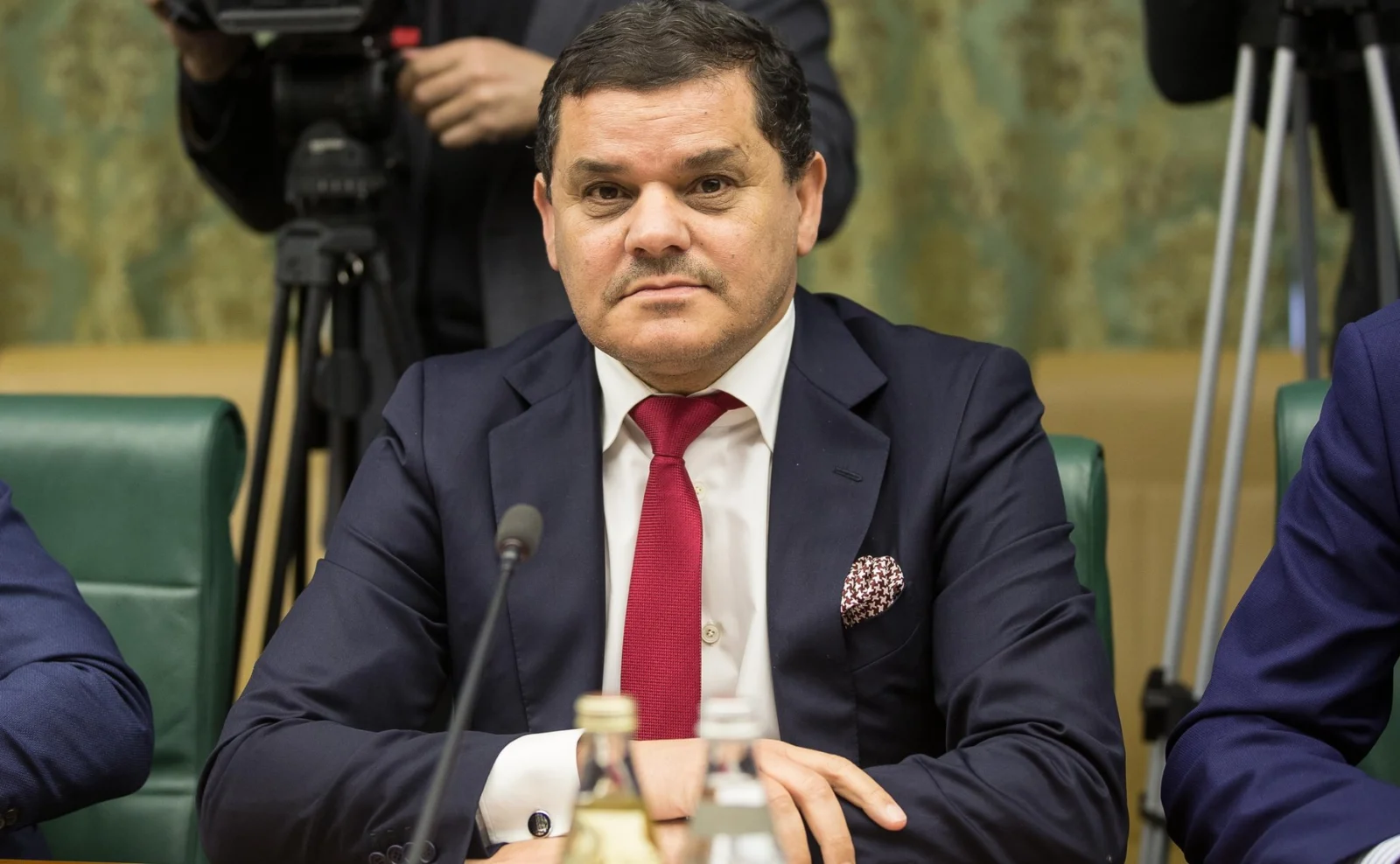
Abdul Hamid Dbeibah, prime minister of Libya’s Government of National Unity, met General Dagvin Anderson, commander of US Africa Command (AFRICOM), in Tripoli to discuss strengthening military and security cooperation between the two countries.
According to a Tripoli-datelined report by the Qatar News Agency (QNA), Saturday’s meeting covered support for efforts to unify Libya’s military institution. The two sides also exchanged views on developing the army’s capacity and improving the effectiveness of its personnel.
They discussed expanding cooperation in training, professional development and capacity building, and stressed closer coordination against shared security challenges.
Dbeibah and Anderson also reviewed preparations for the upcoming Flintlock 2027 military exercise. The QNA report gave no details on how Libya will take part or where the exercise will be held.
Background
Libya has been unable to restore political unity since Muammar Gaddafi was toppled in 2011. The country is in effect divided between the UN-recognised Government of National Unity in Tripoli and a separate administration in the east backed by forces loyal to Khalifa Haftar. The goal of “unifying the military institution” mentioned at the meeting concerns the two separate armed structures that are the most concrete result of that split.
Relations between Washington and Tripoli have been uneven in recent weeks. Libya summoned the US chargé d’affaires to the Foreign Ministry and delivered a protest note after President Donald Trump described the country as a “hotbed of terror”. In the same period, the 11-year-old international aviation restrictions imposed during the civil war were lifted. According to the Tripoli-based Transport Ministry, the number of transit flights through Libyan airspace is expected to rise from a monthly average of 2,000 to about 62,000 a month in the winter season. In the 2014 fighting, nearly 20 passenger aircraft at Tripoli International Airport were badly damaged, and for years the country could fly to only a limited number of destinations.
Why it matters
The AFRICOM commander being received at prime-ministerial level in Tripoli shows that relations strained by the protest note are continuing in the security field. Unifying the army is seen as one of the preconditions for a lasting political settlement in Libya. US involvement through training and capacity support could also affect the balance between the country’s east and west and Libya’s ties with its regional partners.
Source: QNA · Image: Council of the Federation of the Federal Assembly of the Russian Federation, CC BY 4.0