
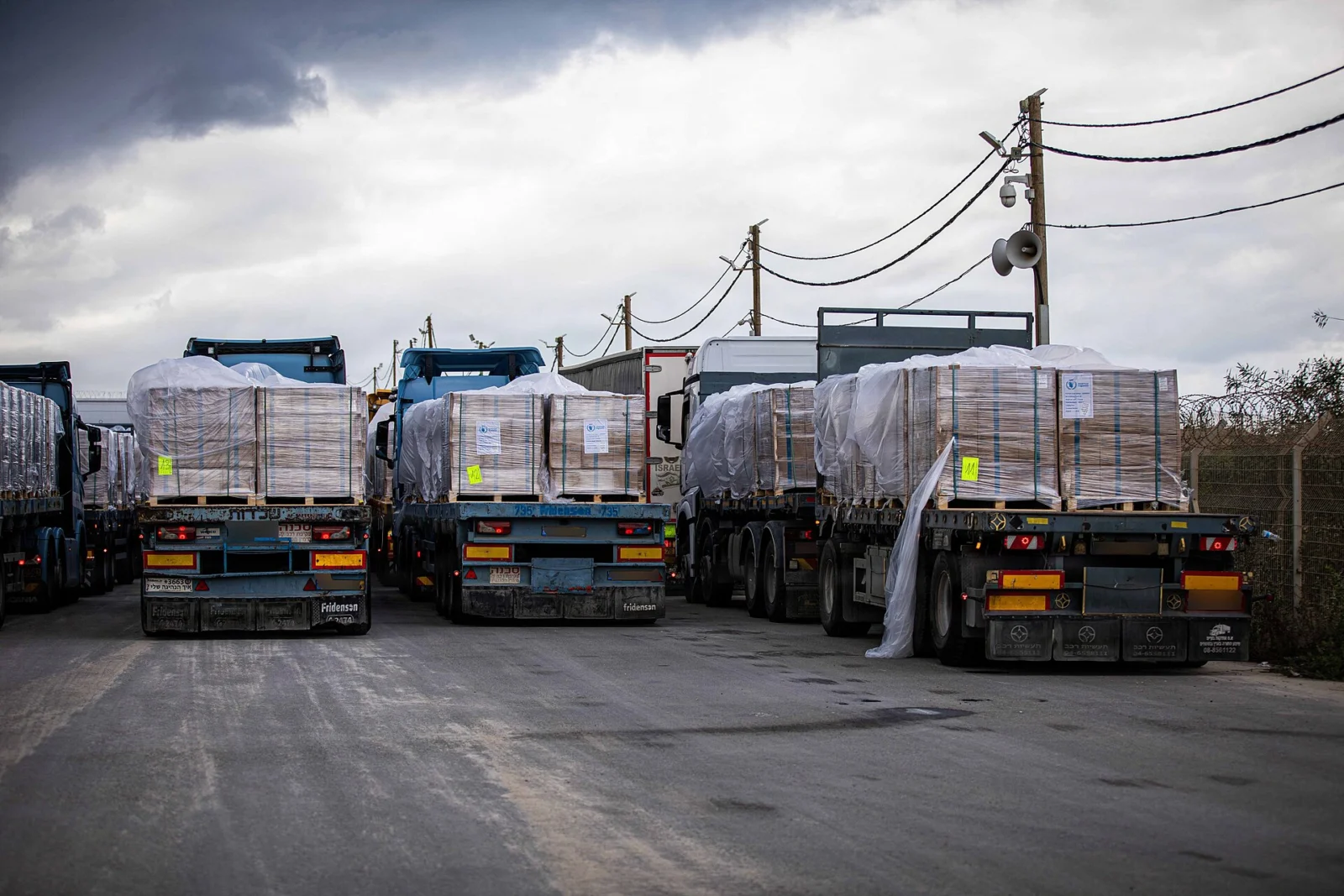
The European Union has asked Israel to reopen all border crossings and allow humanitarian aid to reach the Gaza Strip without delay or obstruction, saying the ongoing humanitarian crisis there has been made worse by flooding and winter conditions.
The EU’s written statement expressed “serious concern” at the continuing humanitarian crisis in Gaza. According to the statement, severe flooding and winter weather have further worsened living conditions for an already exhausted population, increasing insecurity and human suffering.
The EU asked Israel to guarantee the distribution of humanitarian aid and early recovery support “at scale” and on a sustained basis. It stressed that Israel must enable the work of the UN and its agencies and of humanitarian organisations, including non-governmental organisations.
The bloc underlined that international humanitarian law must be respected in all circumstances and called for the protection of civilians, civilian infrastructure, health workers and health facilities. According to Middle East Monitor, the EU also described the recent air strike on Nasser Hospital in Khan Younis as “extremely concerning”.
The statement said aid must be used only for peaceful purposes and must not be diverted by armed groups. The EU noted that military attacks continue a year after the ceasefire was declared, and that access restrictions are causing shortages of basic supplies such as adequate shelter, medicine and medical equipment.
Background
Although a ceasefire has been in force in Gaza since 10 October 2025, attacks have not stopped entirely. Six Palestinians were killed in strikes across the Strip on Friday. With the arrival of winter the situation of families living in tents has worsened; the Health Ministry in Gaza said a nine-month-old baby had died of cold, the first such case this winter.
The strike on the Nasser Medical Complex also drew international reaction. Eighteen Arab and Islamic countries, including Türkiye, condemned it in a joint statement.
Why it matters
The EU is among Israel’s largest trading partners and funds a significant share of humanitarian aid to Gaza. Its explicit call for all crossings to be opened shows that restrictions on aid are now a main agenda item not only for UN agencies but for Europe as well. Whether shelter and medicine deliveries increase in the coming weeks, as winter hardens, will directly affect the course of loss of life in Gaza.
Source: QNA, Middle East Monitor · Image: U.S. Army photo by Staff Sgt. Michael Ito, Public domain