
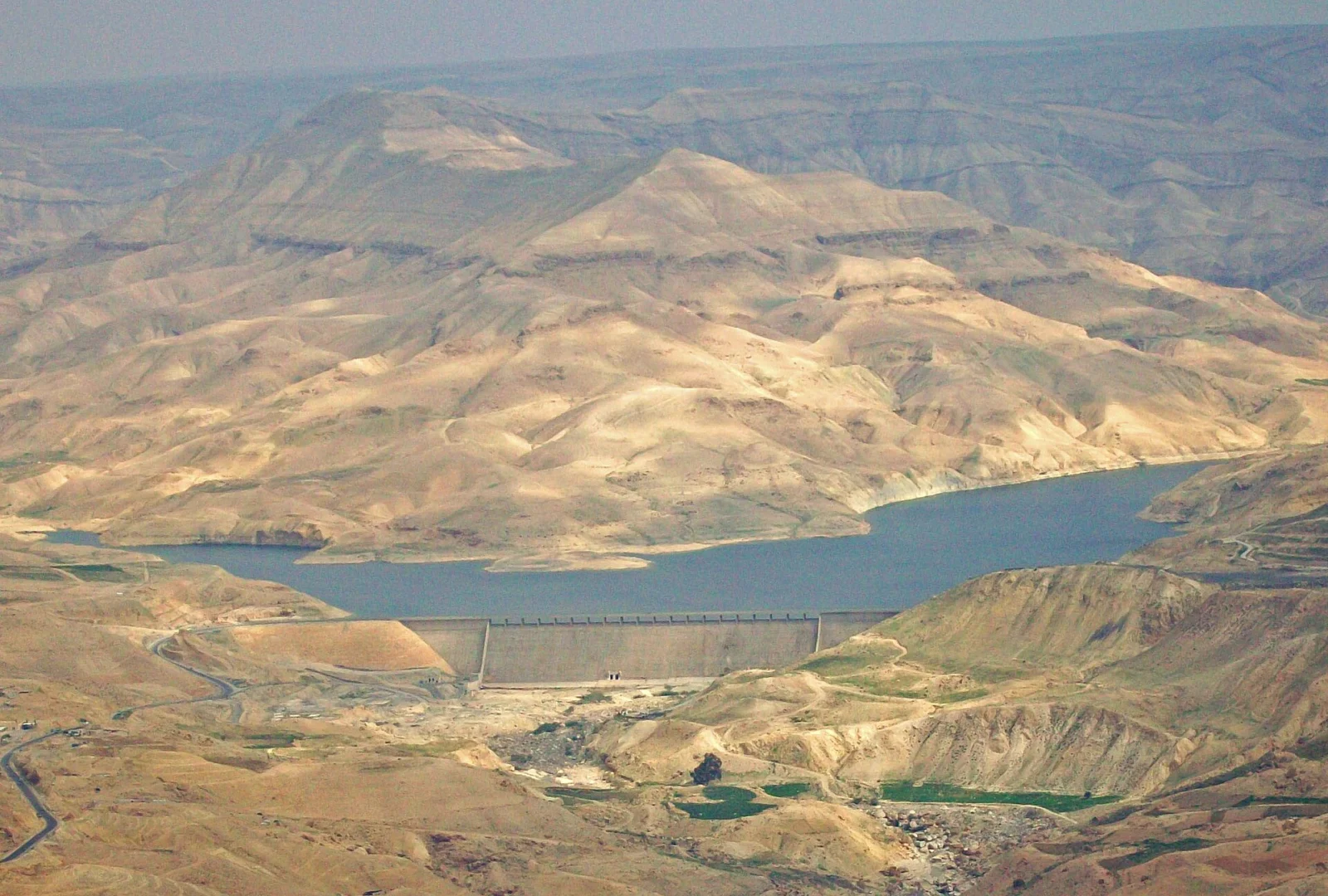
Jordan will present the 450-megawatt Mujib Pumped-Storage Hydropower Plant and a 200-megawatt solar and battery storage project to international investors at the Jordan-EU Investment Conference 2026, to be held next Thursday on the shore of the Dead Sea. According to Jordan’s official news agency Petra, investment opportunities worth more than $15 billion in total, from transport to water, will be showcased.
European Commission President Ursula von der Leyen is expected to attend the conference, which takes place on 19 November at the King Hussein bin Talal Convention Centre under the patronage of King Abdullah II. Petra says the event will bring together more than 700 executives, investors and policymakers from Jordanian, European and international companies and from finance and development institutions. Investors will be able to discuss projects, financing and regulatory conditions directly with the relevant bodies.
Mujib plant: seven hours of storage
To be developed as a public-private partnership, the Mujib facility will offer 450 megawatts of capacity and seven hours of energy storage. Built near the existing Mujib Dam, it will run as a closed-loop system circulating water between two reservoirs through pressurised pipes, using two reversible pump-turbine units of 225 megawatts each. The aim is to store surplus electricity from renewable sources and feed it into the grid during peak evening demand, balance the grid and reduce dependence on imported fuel. The project will follow a Build-Own-Operate-Transfer (BOOT) model.
The second energy project combines a 200-megawatt solar plant with a four-hour, 100-megawatt battery storage system. It will be carried out on a Build-Own-Operate (BOO) basis, with the National Electric Power Company (NEPCO) as the main buyer. The energy portfolio also includes a proposal for a 100-megawatt wind farm.
Other opportunities include the national freight railway, the Aqaba-Maan dry port, the Madouneh logistics centre, the development of the Jaber border crossing, a light rail system, rainwater harvesting at schools and industrial zones, and a factory for newborn incubators. According to Petra, the railway’s second phase will extend from Maan to Mudawwara and Jaber, then to Zarqa, Irbid and the Saudi and Iraqi borders. Construction of the Aqaba-Maan dry port is planned for 2027-2028, with road operations starting in 2029 and rail service in 2031.
Background
According to Petra, one aim of the Mujib project is to reduce Jordan’s dependence on imported fuel; the war in the region and the tension around the Strait of Hormuz have made security of energy supply even more important for countries in the region. The European Union’s contacts with regional states are also continuing: EU Commissioner Brunner recently discussed refugee support with Egyptian Foreign Minister Abdelatty.
Why it matters
A pumped-storage plant could allow Jordan to make greater use of renewable energy by shifting solar and wind power into the night. The conference will also be the first concrete test of how much interest European capital shows in Jordanian infrastructure in a region overshadowed by war. If the railway and dry port projects go ahead, Jordan could become a stronger logistics hub on the trade corridor between the Gulf and the Levant.
Source: Petra, Petra, Petra · Image: Daniel Case, CC BY-SA 3.0