
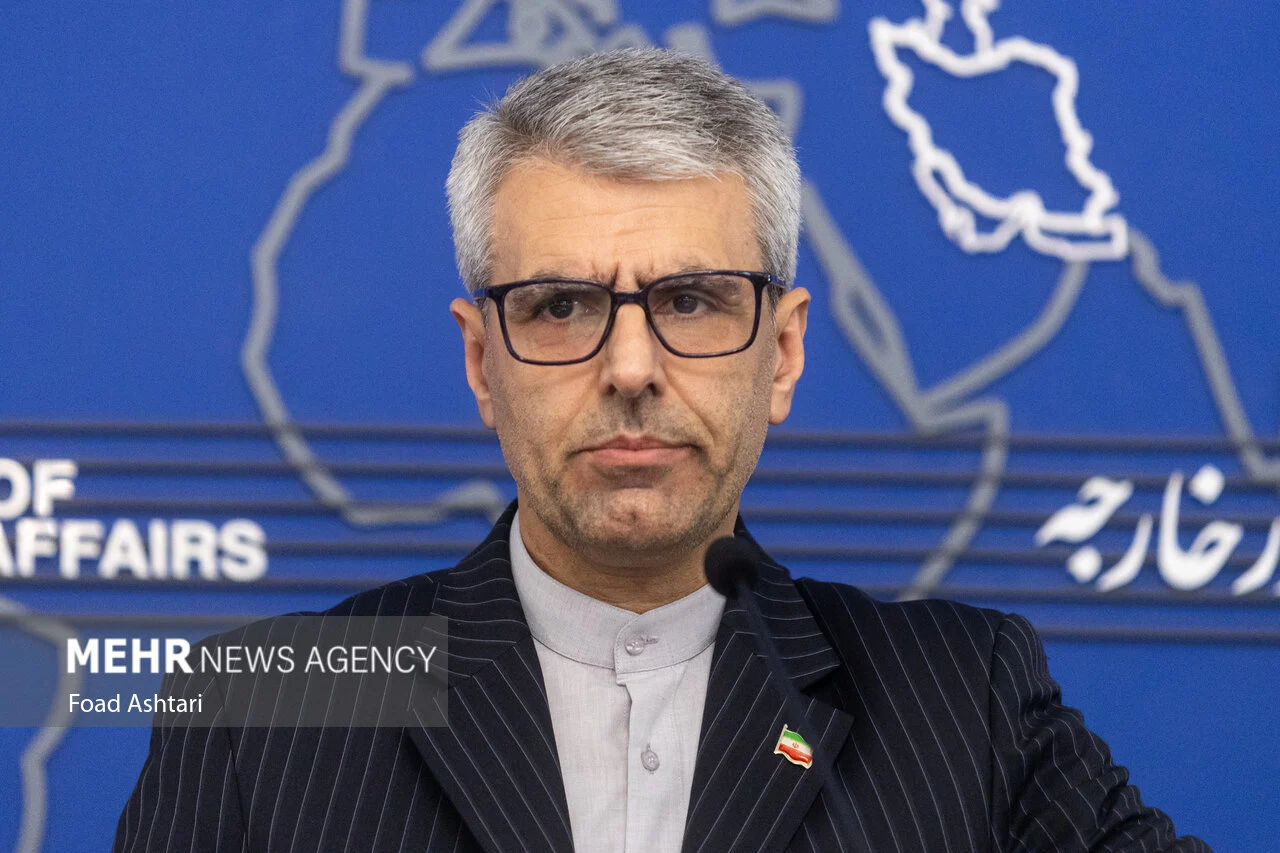
Iran’s Foreign Ministry spokesman Esmaeil Baqaei accused the International Atomic Energy Agency (IAEA) of acting under the influence of the United States and European countries at a news briefing in Tehran on Sunday, 15 November.
According to Middle East Monitor, which cited the semi-official Tasnim news agency, Baqaei said: “Beyond this formal damage, the agency’s insistence on one-sided and biased reporting about Iran’s peaceful nuclear program, which is caused by the political approaches of some of its managers and the influence of the US and European countries, has caused an irreparable blow to the technical and international credibility of this institution.”
The spokesman also criticised Washington, accusing it of “emptying the concept of diplomacy and negotiation from its true meaning.” The report did not explain what Baqaei meant by “formal damage” or say whether the IAEA had responded. Earlier the same day the spokesman had also reacted to the US blockade threat.
Tension in Bahrain on the same day
Baqaei’s comments came shortly after the Islamic Revolutionary Guard Corps said it had targeted a US early-warning radar system at al-Riffa Air Base in Bahrain with six drones. Bahrain’s Defense Force said its air defenses intercepted and destroyed several Iranian aerial attacks, accusing Tehran of continuing its “systematic hostile approach.”
Background
Regional tensions have escalated since the US and Israel launched attacks on Iran in February, triggering retaliatory Iranian attacks that targeted several countries in the region. A ceasefire was reached in April. The two sides signed a memorandum of understanding in June to resolve their conflict, but negotiations stalled and fighting resumed in July.
Tensions between Iran and the US also continue over navigation through the Strait of Hormuz, a strategic waterway for global energy and commodity supplies. On the same day, Iran’s parliament speaker Mohammad Bagher Ghalibaf said his country would not remain in a state of “neither war nor peace.”
Why it matters
The IAEA is the only international body that monitors Iran’s nuclear programme. Tehran’s view that the agency’s reports are biased makes it harder for Iran to accept inspections and the international decisions based on those reports. The statement shows that common ground on the nuclear file is also narrowing at a time when military tensions persist and talks are stalled.
Source: Middle East Monitor · Image: Foad Ashtari, CC BY 4.0