
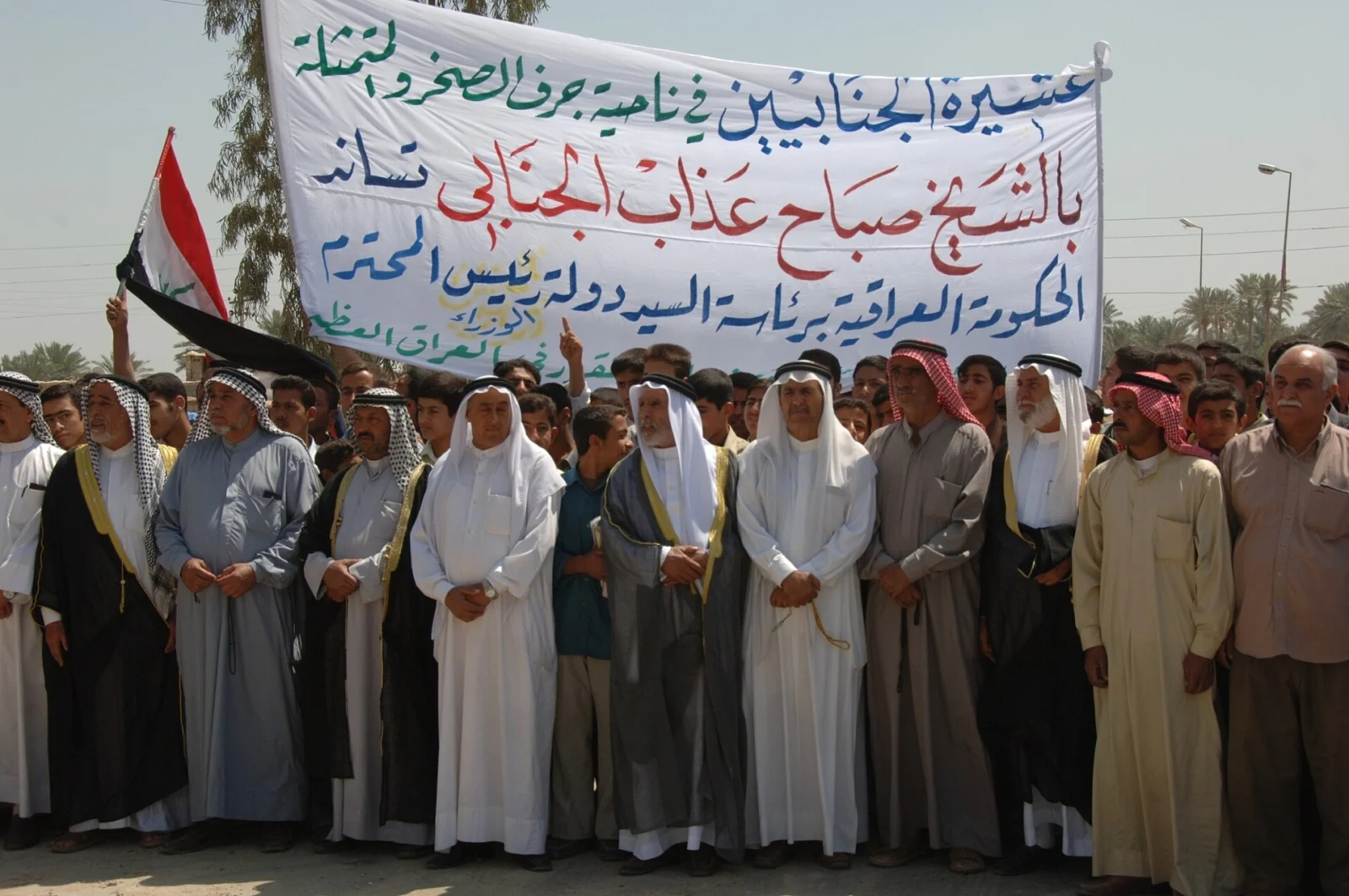
Iraq’s armed group Kata’ib Hezbollah said it would not withdraw from its stronghold of Jurf al-Sakhr, south of Baghdad, despite an ultimatum issued by Prime Minister Ali al-Zaidi as the government prepares a possible deployment of state forces to the area.
According to Middle East Monitor, citing Agence France-Presse (AFP), the remarks came on Tuesday during a media tour the group organised in Jurf al-Sakhr. Senior Kata’ib Hezbollah figure Abu Talib al-Saidi firmly rejected any possibility of leaving the area.
“I can say with absolute certainty that the dream they harbour—that the Kata’ib would withdraw from Jurf al-Sakhr—will never be realised,” al-Saidi said. He added that any withdrawal would come only at the cost of the group members’ lives, invoking its fighters, its wounded and those killed in previous conflicts.
The statement comes as the government pursues efforts to disarm armed factions and bring weapons under state control. Last month, al-Zaidi announced that three of the five factions that had agreed to disarm had already handed over their weapons, while talks continued with the remaining groups.
According to a statement from the prime minister’s office, al-Zaidi stressed the government’s responsibility to protect Iraqi lives and prevent further bloodshed. “Iraqi blood is our responsibility; it is our duty to spare the lives of all Iraqis,” he said, reaffirming his commitment to strengthening state institutions. He criticised groups and individuals who exploit state institutions for their own interests at the expense of the wider population, and warned that attempts to weaken the state or threaten its authority would not be tolerated.
Background
The dispute over Jurf al-Sakhr reflects wider tensions between the Iraqi government and armed factions over the authority of the state and control of weapons. Al-Zaidi and other officials have repeatedly named a state monopoly on arms and the rule of law as central priorities of the government’s security policy. Parliament approved the remaining members of al-Zaidi’s cabinet in October, completing the formation of the government. Reports published last week by the European Union Agency for Asylum also pointed to continuing political fragmentation in the country.
Why it matters
Kata’ib Hezbollah’s open refusal suggests the government’s disarmament drive has reached its hardest stage. While three of five factions laying down their arms counts as progress, deploying government forces to an area seen as the group’s stronghold carries the risk of a direct confrontation between Baghdad and armed factions. The outcome will show how far the government can go towards its goal of keeping weapons only in the hands of the state.
Source: Middle East Monitor · Image: Spc. Tiffany Dusterhoft, Public domain