
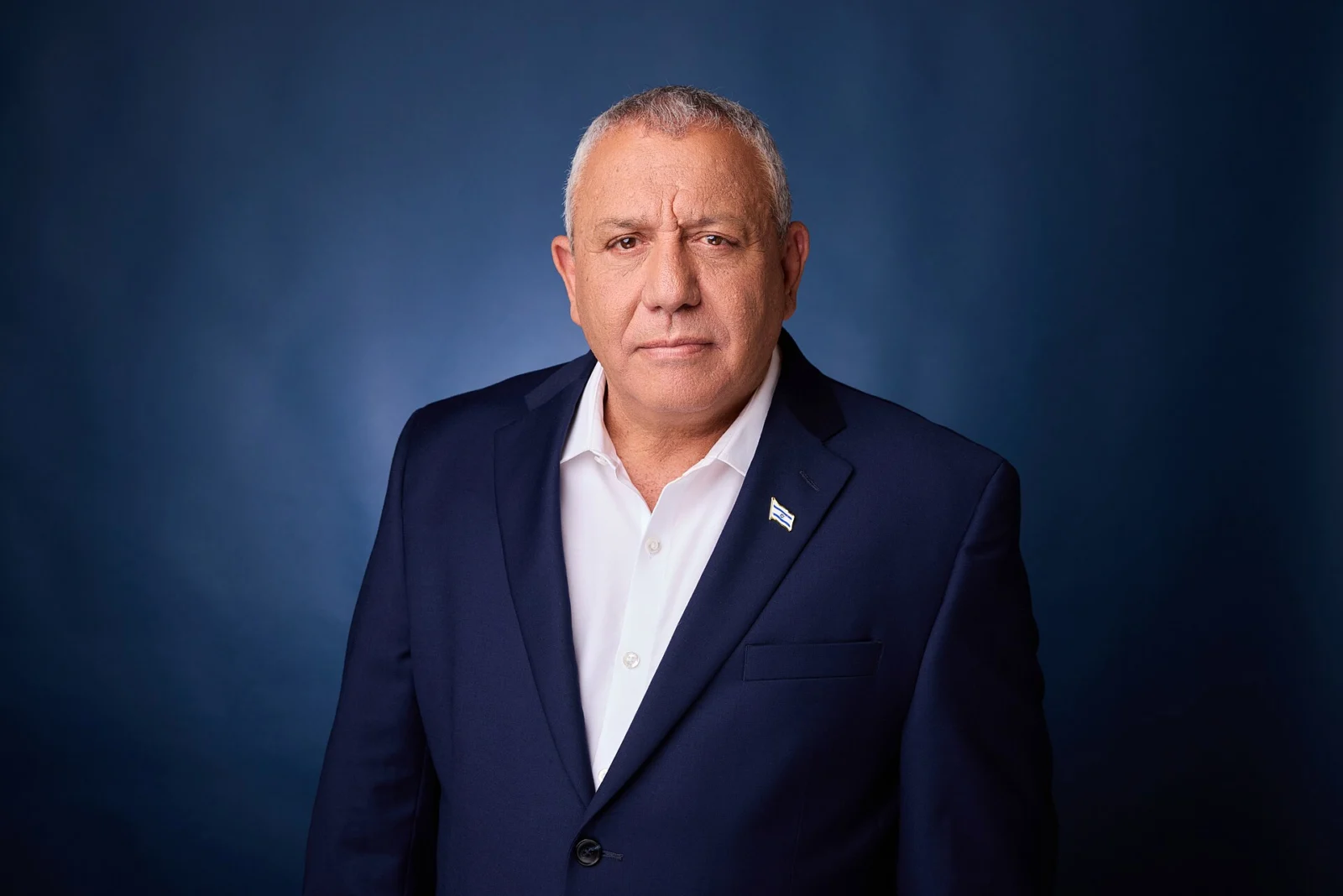
Leaders of Israel’s opposition “change bloc” have said that replacing caretaker Prime Minister Benjamin Netanyahu as quickly as possible is their “highest priority”. They stressed that they are working to form a national emergency government led by Gadi Eisenkot, who has been tasked with forming the next government.
According to Middle East Monitor, citing Israel’s Channel 12, Eisenkot met Yair Golan, Naftali Bennett, Avigdor Lieberman and Yair Lapid on Wednesday, 18 November, to review progress in coalition talks. A joint statement issued after the meeting said: “All party leaders agree that their highest priority is to form a national emergency government led by Gadi Eisenkot and to replace Benjamin Netanyahu as prime minister as soon as possible.”
The leaders also discussed how they have used their majority in the Knesset, pointing to the election of lawmaker Matan Kahana as speaker. “We are coordinating, we recognize the importance of this stage, and we are trying to speed up the formation of a new government,” Golan, leader of the Democrats, told Channel 12. Lapid said: “Bennett and I continue to work hard to form a government of change led by Eisenkot.” He separately told the daily Yedioth Ahronoth that the bloc wanted an effective government capable of dealing with Israel’s security, economic and political challenges.
The change bloc and two Arab lists, the Joint List and the United Arab List, together hold 67 seats in the 120-member Knesset, 19 of them held by the Arab lists. President Isaac Herzog gave Eisenkot the mandate on 8 November. Eisenkot has 28 days from his appointment to form a government, with a possible 14-day extension. If he fails, another member of the Knesset can be given the task.
Background
Netanyahu has led a far-right government since late 2022. He is on trial on corruption charges, and the International Criminal Court has sought his arrest since 2024 over alleged war crimes in the Gaza Strip. Before the speaker vote, Kahana had rejected a conditional offer of support from Netanyahu and Finance Minister Bezalel Smotrich.
Why it matters
A 67-seat majority including the Arab lists appears numerically sufficient to end Netanyahu’s long hold on power. But forming a government depends on ideologically distant parties and the Arab lists reaching agreement under one roof. A new government could directly shape Israel’s policy on Gaza, Lebanon, Syria and Iran.
Source: Middle East Monitor · Image: יהב טרודלר (Yahav Trudler – Yahav Studio), CC BY-SA 3.0