
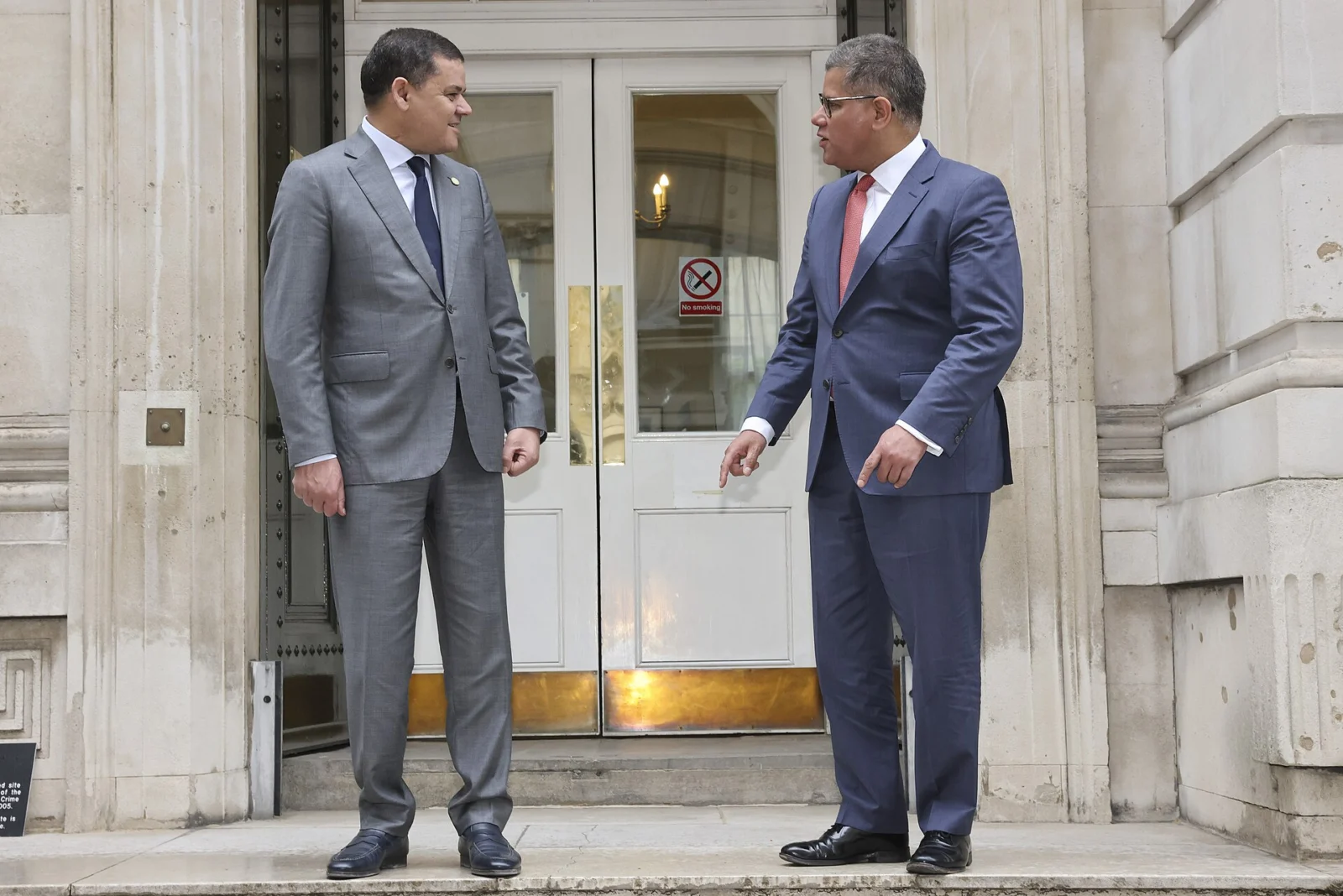
Egyptian President Abdel Fattah el-Sisi and Libyan Government of National Unity Prime Minister Abdul Hamid Dbeibeh discussed cooperation in trade, investment, energy and reconstruction in Cairo on Thursday, and witnessed the signing of agreements and memoranda of understanding across several sectors.
According to the Egyptian presidency’s statement, reported by Middle East Monitor, Sisi stressed the need to strengthen trade and investment ties and expand cooperation in energy and reconstruction in a way that serves both countries’ interests. He also reaffirmed Cairo’s commitment to supporting Libya’s security and stability and preserving its unity and territorial integrity.
Dbeibeh expressed his appreciation for the visit and stressed Libya’s keenness to develop relations in various fields. He raised consular issues concerning entry visas and residency permits for Libyan citizens in Egypt, as well as the situation of Libyan students. According to the statement, Sisi directed officials to take “positive steps” to address them.
The documents signed cover lake and fisheries development, natural gas infrastructure, petroleum refining and natural resources. They also include cooperation in knowledge and scientific research, labour, training, capacity-building, consultancy, technical support and leadership development, as well as support for small and medium-sized enterprises, media cooperation and government communication.
Background
Dbeibeh arrived in Cairo on Wednesday for a visit whose length was not announced. The Egyptian Cabinet said it aimed to advance cooperation frameworks and deepen ties. The two sides also discussed regional developments and stressed the need for continued coordination to promote regional peace and stability.
Dbeibeh, who heads the Tripoli-based Government of National Unity, has stepped up his foreign contacts in recent weeks; last weekend he discussed military and security cooperation with the commander of US Africa Command (AFRICOM).
Why it matters
Egypt is Libya’s eastern neighbour and is directly affected by developments there. Agreements on energy topics such as gas infrastructure and refining point to a wish to build long-term links between the two economies.
The attention given at the top level to visa and residency problems faced by Libyans in Egypt also touches daily life between the two countries. Whether Sisi’s instruction turns into concrete arrangements, and how far the memoranda are implemented, will be watched.
Source: Middle East Monitor · Image: UK Government, CC BY 2.0