
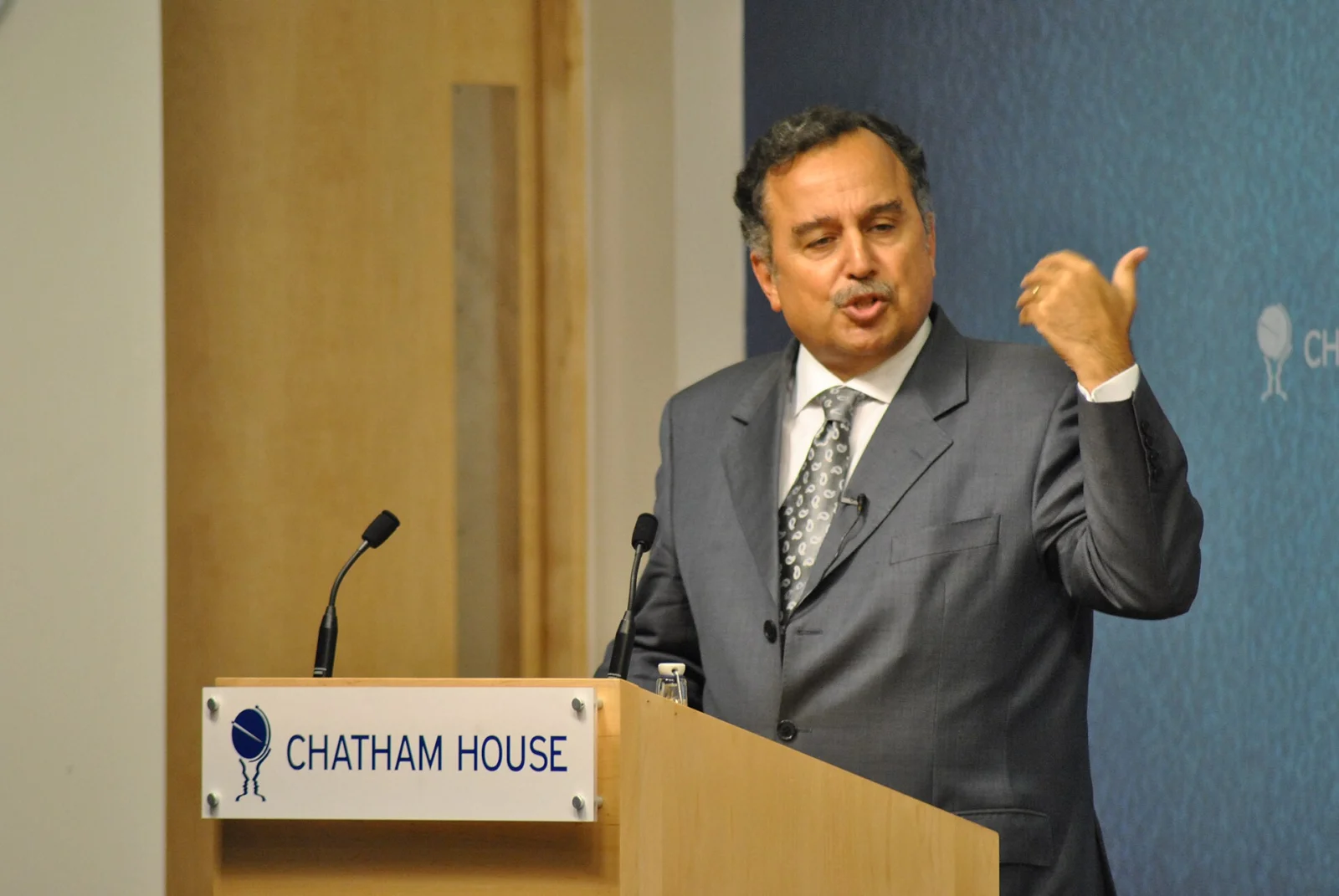
Arab League Secretary-General Nabil Fahmy has called for humanitarian aid to reach the Gaza Strip without obstruction, speaking at the MED Dialogues forum in the Italian city of Naples. He described food security as an essential component of Arab national security.
According to the official Palestinian news agency WAFA, Fahmy made the remarks on Friday, 20 November, at the 12th edition of the forum. He pointed to the impact of conflict, displacement, water scarcity and supply-chain disruption on food security in the region.
Fahmy urged a shift from responding to crises to preventing them. He called for wider cooperation between Arab and Mediterranean countries to address the risk of disrupted supplies of food, fertiliser and shipping, for information-sharing, and for coordinated efforts to diversify supply sources and keep essential goods flowing.
He closed by saying the Palestinian issue remains a priority for the Arab League, and that a just and comprehensive peace requires an end to the occupation and the establishment of an independent Palestinian state on the 4 June 1967 borders with East Jerusalem as its capital. The WAFA report did not cite any specific aid mechanism or figures, nor any Israeli response to the speech.
Background
The MED Dialogues, which bring together officials from Mediterranean and Middle Eastern countries, are being held in Naples this year. At the same forum, Afrah al-Zouba, foreign minister of Yemen’s internationally recognised government, said Red Sea security begins with stability in Yemen. This week the Arab League also welcomed sanctions announced by the United Kingdom and Australia over settlement activity in the West Bank. A ceasefire has been in force in Gaza since 10 October 2025, but Israeli strikes continue intermittently.
Why it matters
By putting aid access to Gaza and food security at the centre of his speech at a European forum, the Arab League’s top official framed the humanitarian crisis as a regional security issue. His emphasis on fertiliser and shipping supplies is also linked to the impact of tensions in the Red Sea and the Strait of Hormuz on regional economies, while his restatement of the two-state solution shows the Arab position on Gaza’s future has not changed.
Source: WAFA · Image: Chatham House, CC BY 2.0