
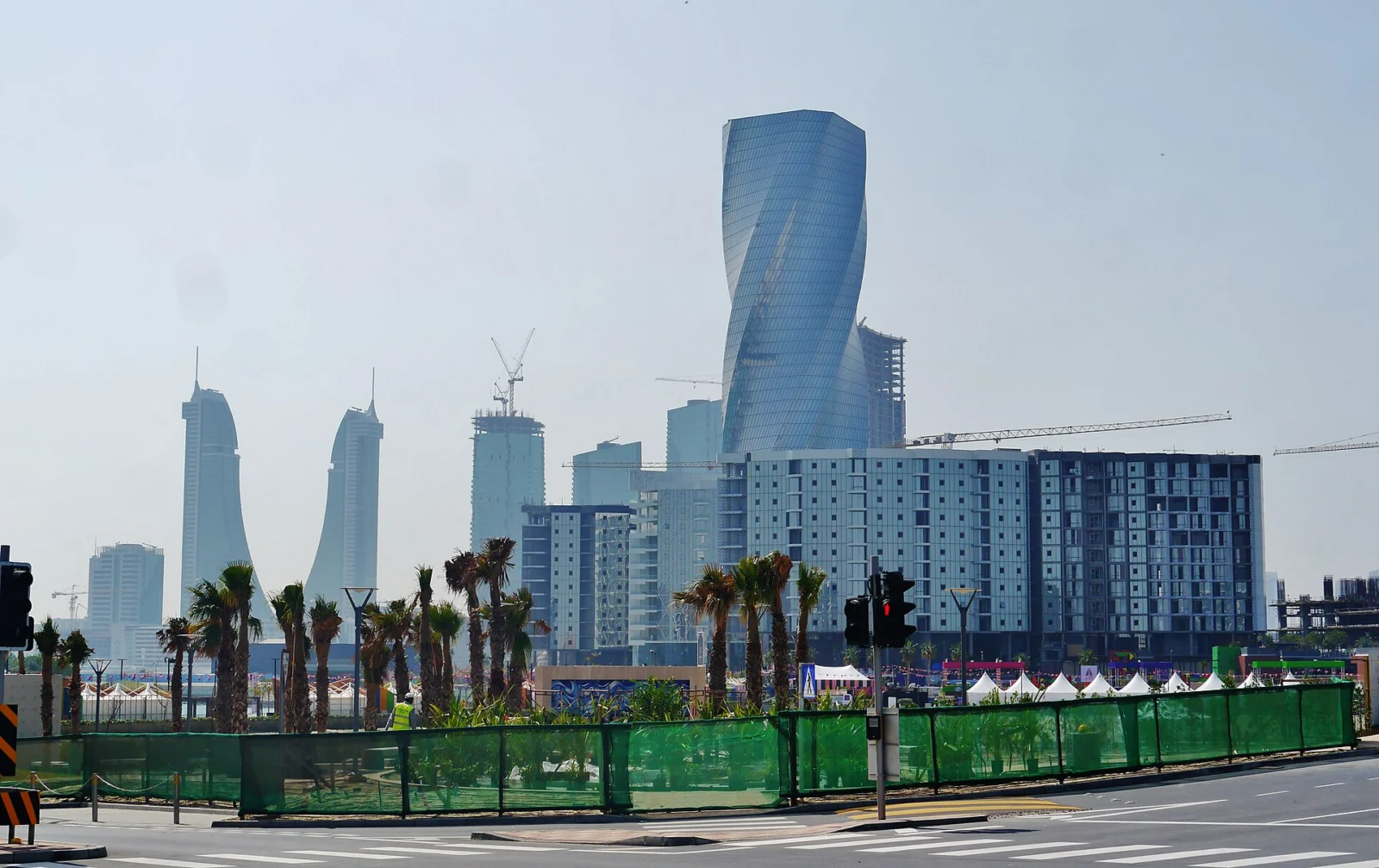
Bahrain’s Interior Ministry issued an alert on Sunday over a possible threat and urged citizens and residents to take shelter in the nearest safe place. Around the same time, Iran’s Revolutionary Guards claimed to have struck a US air defence radar at the Riffa helicopter base in Bahrain with six drones.
According to a Manama-datelined report by the Qatar News Agency (QNA), the ministry issued a “possible threat alert” on its X account. The public was asked to stay calm, go to the nearest safe location and follow developments only through official channels. The ministry said the alert was meant to protect public safety; it gave no details on the nature or source of the threat.
In a statement carried by Iran’s Mehr News Agency, the Revolutionary Guards’ public relations office described the attack as the “second phase” of its response to the US military’s “aggression”. According to the statement, a radar belonging to a US air defence system at Riffa was targeted by six drones of the Guards’ Aerospace Force. The Iranian side claimed the drones hit the target precisely and that explosions were heard in different parts of Bahrain.
The same statement repeated that the Strait of Hormuz is “closed” and warned that any US attack would be met with a harsher response. The Guards also said more drones were directed at US targets in this phase than in the previous one. Neither the US nor Bahrain has confirmed any damage or casualties, and no US military response to Sunday’s claim appeared in the sources.
Background
This is not the first time the Revolutionary Guards have said they targeted a US radar in Bahrain. A similar statement was made on Friday; US Central Command (CENTCOM) denied it, saying two drones launched towards Bahrain had been shot down with no injuries or damage.
Bahrain recently called a UN Security Council meeting to discuss threats to maritime security in the Middle East, where Gulf states held Iran responsible for attacks in Hormuz.
Why it matters
Bahrain’s call for people to take shelter shows that the conflict between Iran and the US has begun to affect civilian life in the Gulf states directly. Because the two sides’ accounts do not match, the picture on the ground is hard to verify independently. More frequent threat alerts could also put pressure on air traffic, energy shipments and foreign investment in the region.
Source: QNA (Katar Haber Ajansı), Mehr (İran), Mehr (İran, Fars aktarımı) · Image: Zairon, CC BY-SA 4.0