
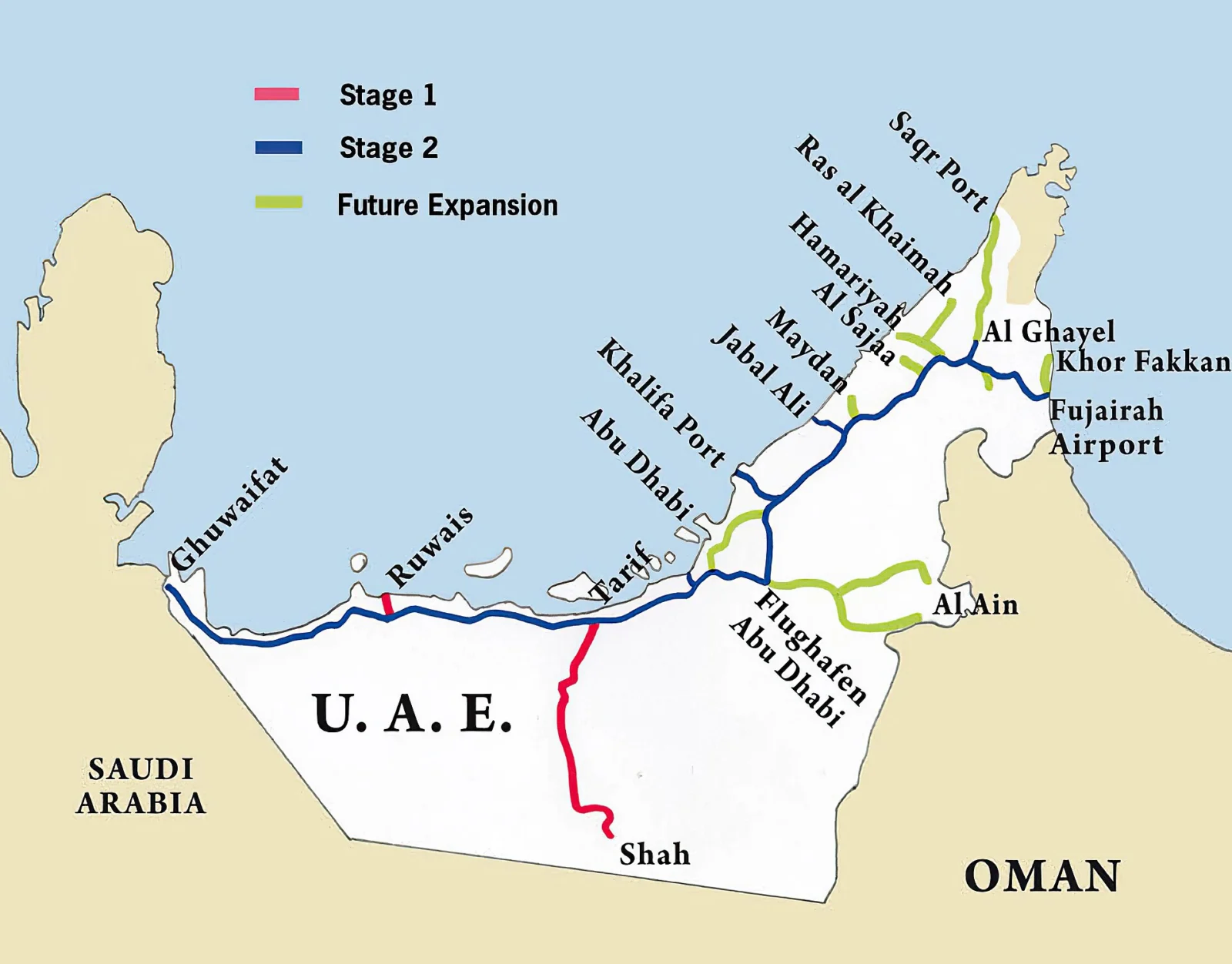
The 1,768-kilometer Gulf Railway, which will connect the six member states of the Gulf Cooperation Council (GCC), has gained new urgency because of security risks in the Strait of Hormuz. The network is 55.92 percent complete and is scheduled to open in December 2030.
According to Middle East Monitor, citing Anadolu, the project became more pressing after Tehran closed the strait when the United States and Israel launched strikes on Iran on 28 February, disrupting maritime shipping. Regional states have since been searching for alternative trade and supply routes.
The project was approved by the GCC Supreme Council in December 2009 and is overseen by the Gulf Railway Authority, established in December 2021. Its basic infrastructure is estimated to cost around $15.4 billion to $16 billion, while experts point to financing, operating standards and regional tensions as the main hurdles.
The line will run from Kuwait to Dammam in Saudi Arabia, continue through Qatar and the United Arab Emirates, and extend via Sohar to the Omani capital, Muscat. A planned bridge will connect Saudi Arabia with Bahrain. The route covers 672 kilometers in Saudi Arabia, 461 in the UAE, 330 in Oman, 141 in Qatar, 111 in Kuwait and 53 in Bahrain.
Passenger trains, running on a European signaling system, will travel at 200 kilometers per hour and freight trains at 80 to 120 kilometers per hour. The network is projected to carry 6 million passengers and 200 million tons of freight by 2030, rising to more than 8 million passengers and 271 million tons by 2045.
Background
Kuwaiti economist Nader al-Obaid said the network would ease pressure on sea routes and strengthen regional trade and logistical integration, and could attract global firms and open access to Iraqi and Iranian markets once stability returns, supporting food security. Energy and economics specialist Nihad Ismail said completion hinges on resolving the US-Israel-Iran conflict, warned that Tehran could see efforts to bypass Hormuz as an attempt to weaken its regional role, and urged Gulf states to explore ways of including Iran in regional infrastructure.
Why it matters
The closure of Hormuz exposed how heavily Gulf economies depend on a single sea passage. A rail corridor could reduce that dependence, but the 2030 target remains uncertain until financing and regional security issues are resolved.
Source: Middle East Monitor · Image: Reinhard Dietrich, CC BY-SA 4.0