
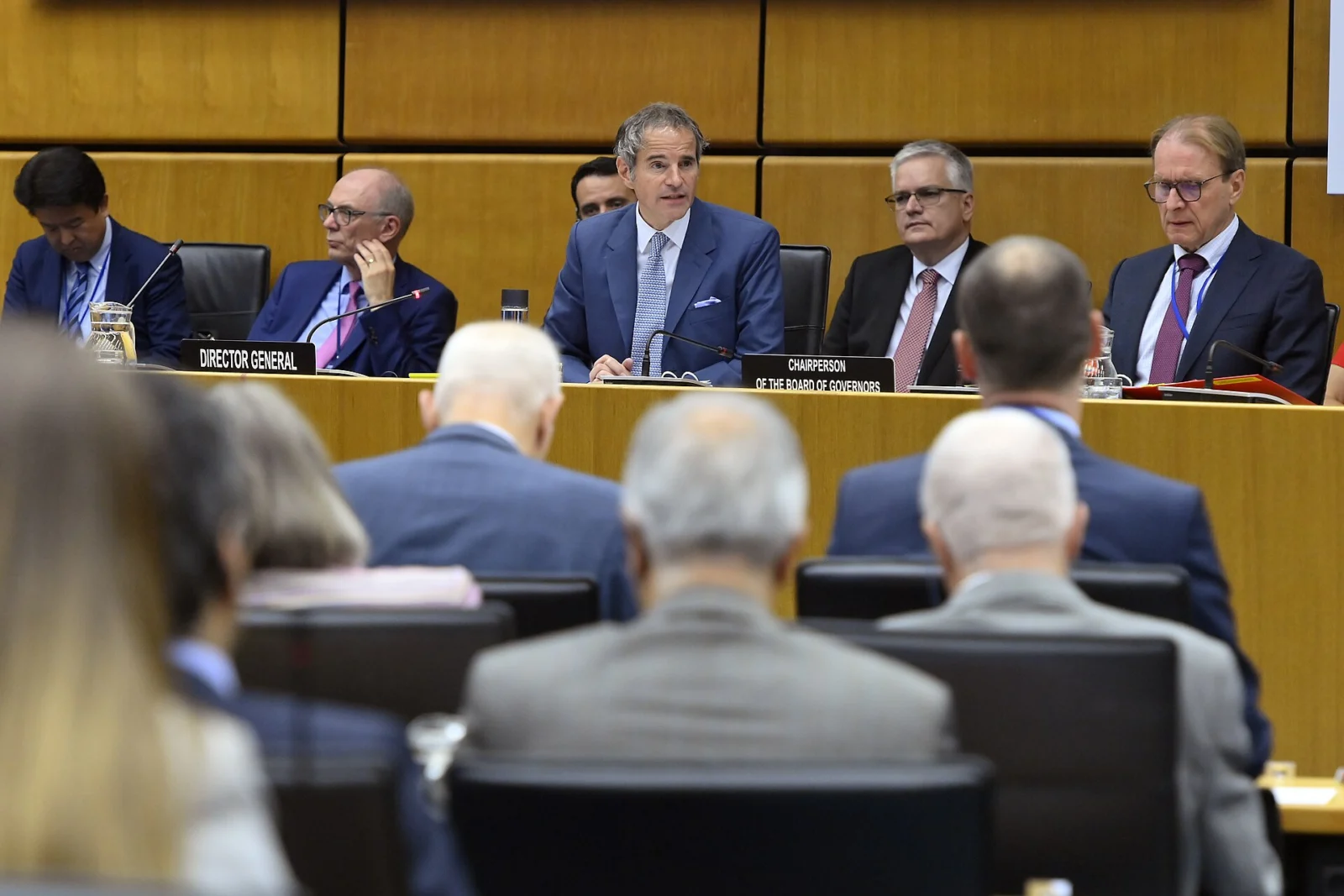
International Atomic Energy Agency (IAEA) Director General Rafael Grossi has said a return to diplomacy and negotiations over Iran’s nuclear programme is imperative, warning that the agency is still unable to carry out essential verification work at most of Iran’s declared nuclear facilities.
Grossi made the remarks on Wednesday, 18 November, in his introductory statement to the IAEA Board of Governors in Vienna, Middle East Monitor reported. “A return to diplomacy and negotiations aimed at finding a solution to issues related to Iran’s nuclear program is imperative,” he said.
The IAEA chief said the agency had received no information from Tehran on the status of Iran’s declared nuclear material and facilities, apart from the Bushehr nuclear power plant. He added that the agency had been denied access to carry out on-site verification.
According to Grossi, the agency lost continuity of knowledge over previously declared stocks of uranium enriched up to 60% after the military attacks of June 2025. Without access and up-to-date information, he said, the IAEA cannot determine whether declared nuclear material has been diverted from peaceful activities.
Grossi encouraged Tehran to consider gradual technical measures that would allow inspectors to return. “Such gradual, technical, incremental steps could pave the way to normal safeguards implementation in Iran while contributing to a confidence-building atmosphere conducive to a wider agreement,” he said. No Iranian response to the statement was included in the source at the time of publication.
Background
In September, the IAEA’s 35-member Board of Governors adopted a resolution reporting Iran to the UN Security Council for the first time in 20 years, citing violations of its non-proliferation obligations. Tehran has kept up its criticism of the agency: on 15 November, Iranian Foreign Ministry spokesman Esmaeil Baghaei accused the IAEA at a press conference in Tehran of acting under the influence of the United States and European countries.
According to Grossi’s statement, since the June 2025 attacks the agency has been unable to confirm through its own inspections where Iran’s highly enriched uranium is located or how much of it remains.
Why it matters
The IAEA is the only international body able to monitor nuclear material in Iran independently. Its open admission that it does not know the fate of uranium enriched up to 60% shows that uncertainty over Iran’s nuclear capabilities persists. With tension between Washington and Tehran running alongside mediation efforts in the region, the gradual technical steps Grossi proposed stand out as a possible middle path for the return of inspectors, though whether they are accepted depends on Tehran.
Source: Middle East Monitor · Image: IAEA Imagebank, CC BY 2.0