
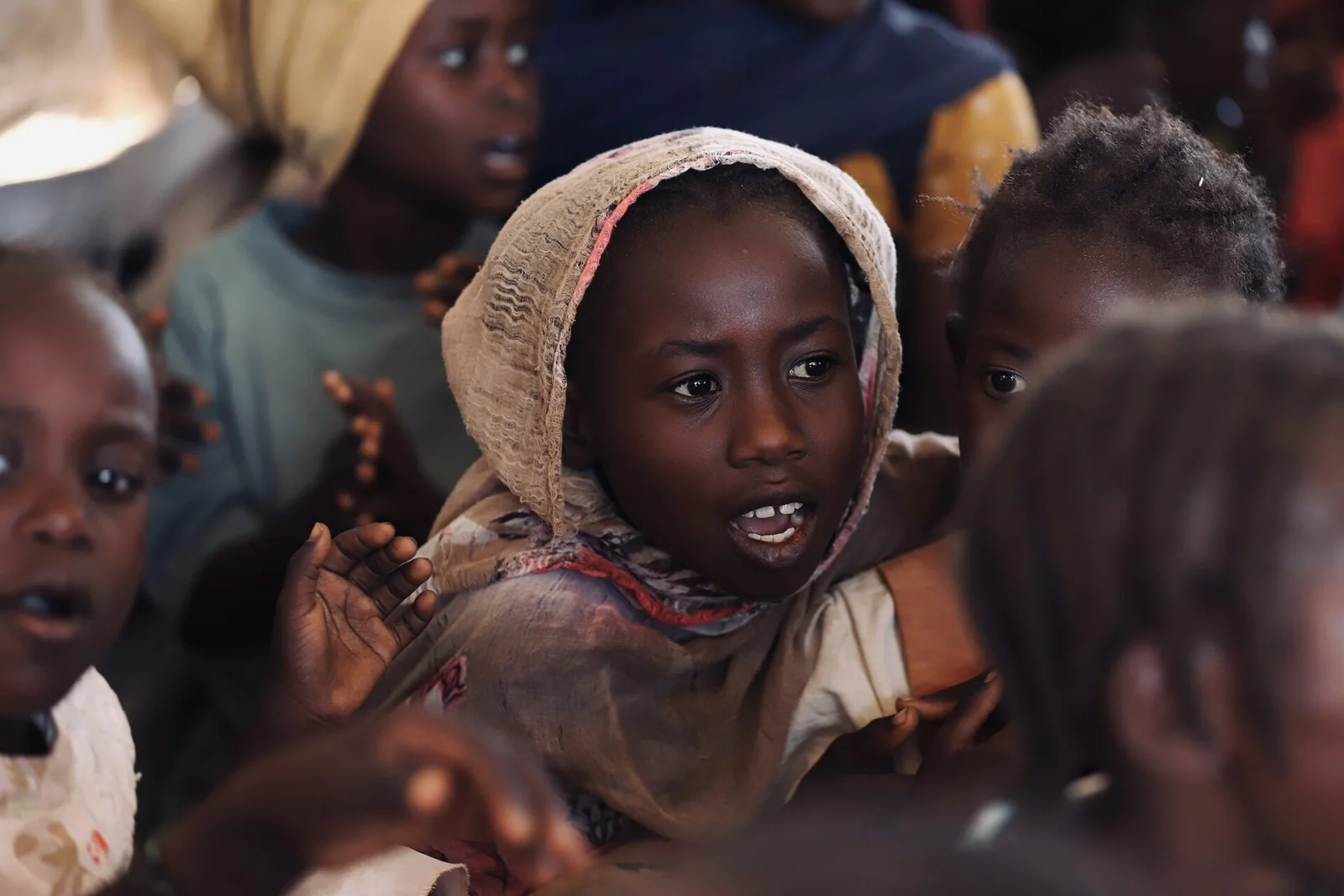
The International Organization for Migration (IOM) says more than 382,000 people have been displaced over the past year from Sudan’s three Kordofan states: North, West and South Kordofan. According to figures the agency released on Monday, the displacement took place amid continued fighting between the Sudanese army and the paramilitary Rapid Support Forces (RSF).
The IOM statement, reported by Middle East Monitor, puts the exact number at 382,252 people who left their homes in the region between 25 October 2025 and 25 October 2026. Those displaced did not gather in a single area: they spread across 103 locations in 16 of Sudan’s 18 states.
IOM said its field teams monitoring displacement recorded 120 incidents during the period that forced people to flee different parts of the Kordofan region.
Khartoum State, which includes the capital, received the largest share of people fleeing Kordofan: 155,818, or roughly 41 per cent of the total. It was followed by North Kordofan with 70,205 and White Nile State with 48,254. North Kordofan’s place as the second-largest destination indicates that a significant portion of those who fled stayed within the Kordofan region itself.
The statement gave no details on the conditions in which displaced people are sheltering, or on returns.
Background
The war between Sudan’s army and the RSF began in 2023. In recent weeks the front line in Kordofan has been active. On 16 November the Sudanese army said it had taken the Al-Saatat area, covering five localities north-east of Abu Zabad in West Kordofan, from the RSF and was advancing towards the town of Abu Zabad; the RSF did not comment. A few days earlier the army and its ally, the Joint Force, announced they had retaken Sarif Ankush and surrounding areas along the Al-Huwei axis in North Kordofan.
Displacement is not limited to Kordofan. IOM recently reported that at least 1,515 people had left their homes within two days in North Darfur and Blue Nile states because of deteriorating security, with most of those fleeing North Darfur crossing the border into Chad.
Why it matters
Kordofan is a front where both the army and the RSF have recently reported territory changing hands. IOM’s one-year data set gives a concrete measure of what that fighting costs civilians: hundreds of thousands of people have lost their homes and scattered across almost the entire country. The fact that the largest group sought refuge in Khartoum State adds to the pressure on services and aid operations around a capital already badly damaged by the war. And with displaced people spread over 103 separate locations, reaching them becomes harder for humanitarian organisations.
Source: Middle East Monitor · Image: Ahmed 222222, CC0