
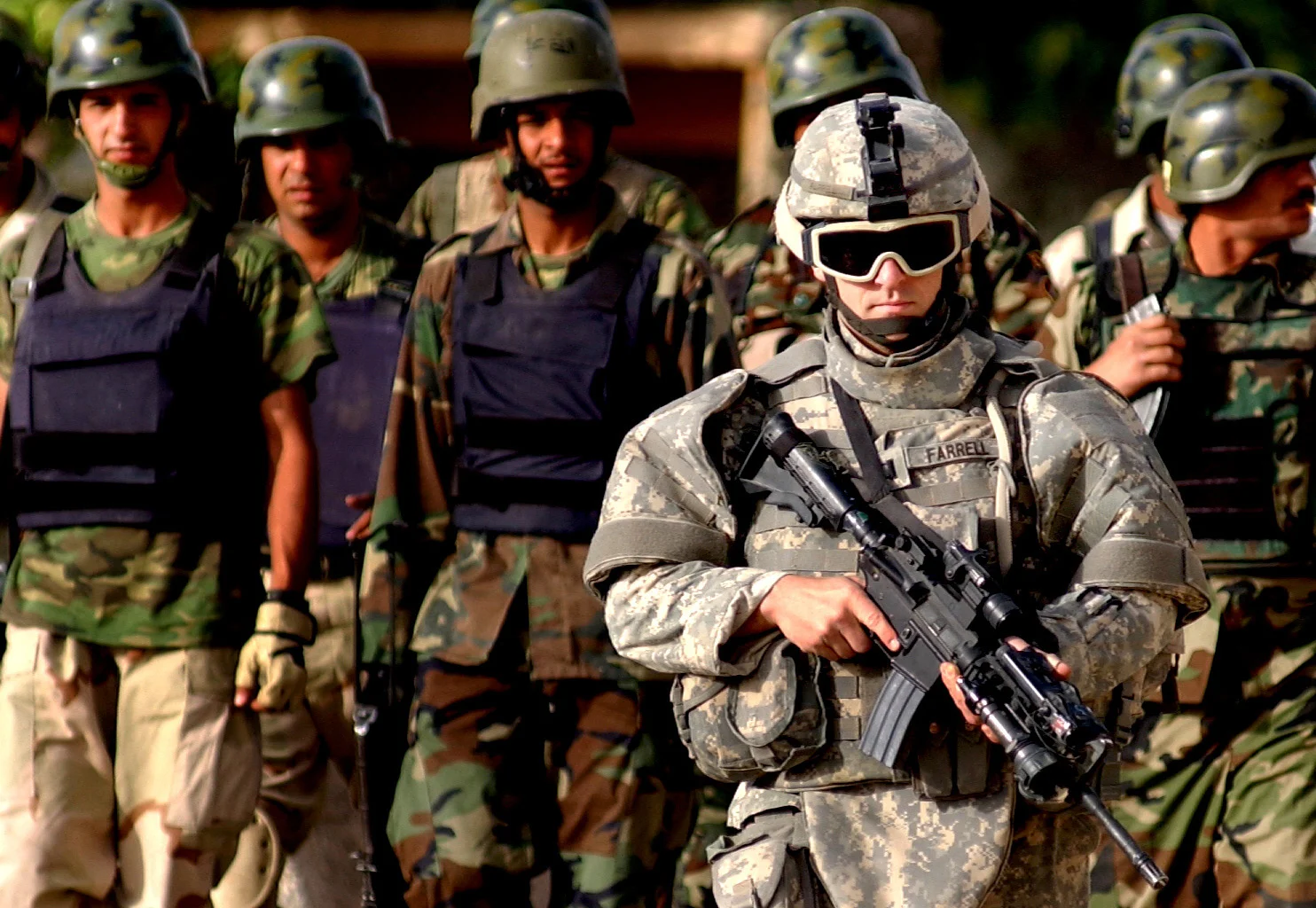
Iraq’s Federal Police announced on Friday, 20 November, the opening of a new headquarters for security and army forces in Jurf al-Nasr in northern Babil province, as state troops began redeploying and redistributing areas of responsibility in an area long under the influence of the armed group Kataib Hezbollah.
According to Middle East Monitor, citing the state-run Iraqi News Agency (INA), the headquarters was declared officially open at a news conference in Jurf al-Nasr by its commander, Hatem Hamid.
Sabah al-Numan, spokesman for the commander-in-chief of the armed forces, said troops had begun redeploying on Friday. He added that Prime Minister Ali al-Zaidi, acting as commander-in-chief, had given the headquarters full authority to maintain security and enforce the law in the area.
Saad Maan, head of the Security Media Cell, said the main road through Jurf al-Nasr would open to the public at 6 am local time on Saturday, 21 November. He said the Energy Police had started securing the oil pipeline in the area on Friday, while a commando battalion had been assigned to protect oil transport lines. INA also reported that the army chief of staff had arrived to oversee the redistribution of units.
The move followed al-Zaidi’s order to set up a new command to direct and oversee security forces in the area. The prime minister had earlier dismissed five senior security officials as part of an investigation into alleged oil smuggling in Jurf al-Sakhar. Kataib Hezbollah denied the allegations, saying an inspection had found no pipeline violations and that the tanks and facility there were used to fuel military vehicles.
Background
Jurf al-Nasr, formerly known as Jurf al-Sakhar, lies south of Baghdad in northern Babil province. Iraqi forces and Popular Mobilisation Forces factions retook it from ISIS in 2014. Since then it has remained under tight security, with armed factions, chiefly Kataib Hezbollah, keeping their influence, and many displaced residents have yet to return. On 18 November Kataib Hezbollah said it would not withdraw despite the government’s deadline, and a day later the director-general of the state Oil Pipelines Company was detained in the smuggling inquiry.
Why it matters
Jurf al-Nasr is one of the most sensitive tests of the balance between the Iraqi state and armed groups close to Iran. Whether state forces can hold the area and reopen its main road will show how far Baghdad can assert authority over territory controlled by armed factions, while guarding the pipelines is part of an effort to protect the oil revenue on which Iraq’s economy depends.
Source: Middle East Monitor · Image: RUSSELL LEE KLIKA from Indy, usa, CC BY 2.0