
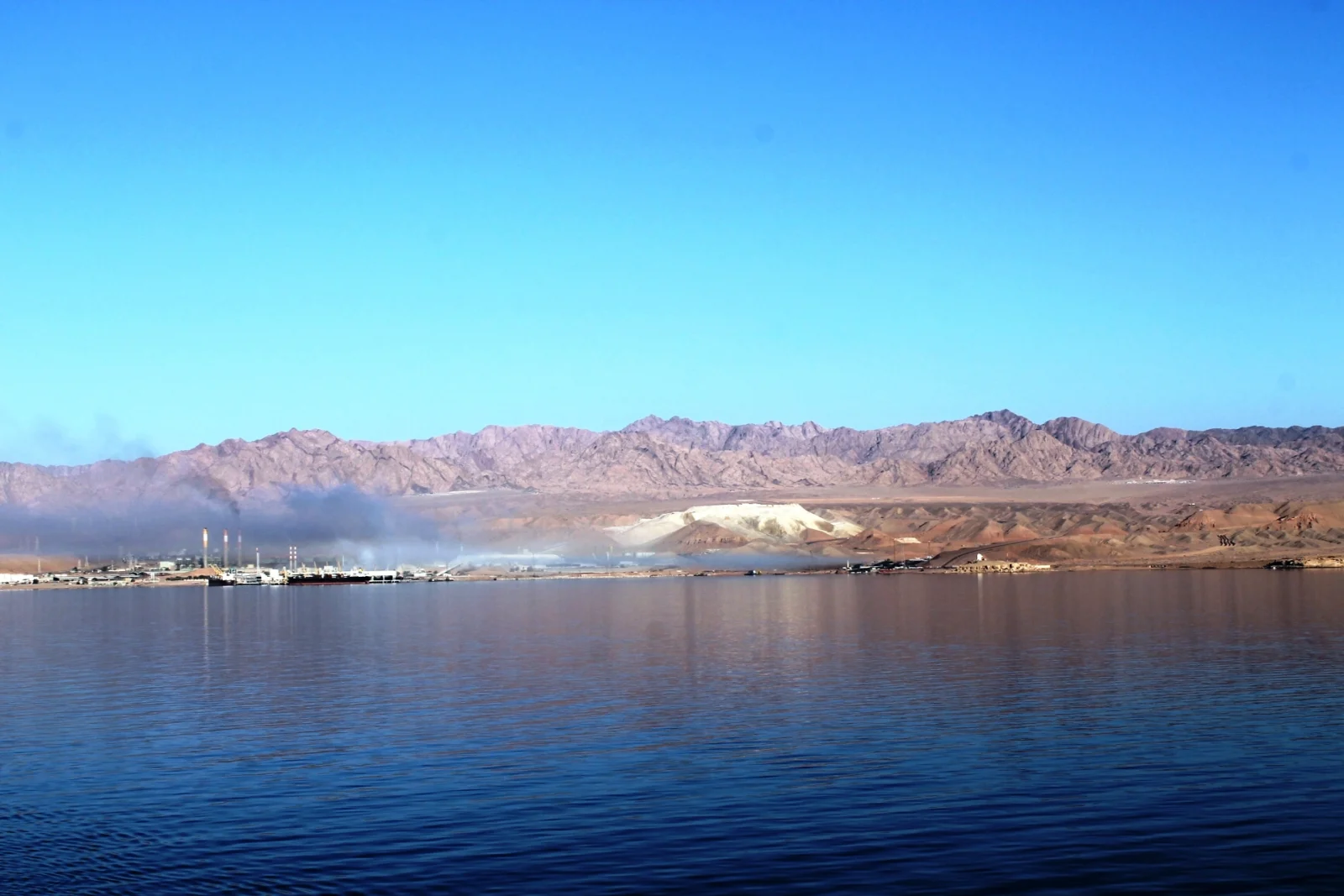
Jordan has signed a $6.6 billion agreement with French infrastructure firm Meridiam to start works on the Aqaba-Amman Water Desalination and Conveyance Project, which will supply 300 million cubic metres of drinking water a year from the Gulf of Aqaba, about 40 percent of the country’s drinking water demand.
According to the Jordan News Agency, Petra, the agreement was signed on Thursday, 19 November, during the Jordan-EU Investment Conference at the Dead Sea. Prime Minister Jafar Hassan witnessed the signing, while Minister of Water and Irrigation Raed Abu Soud and Meridiam CEO Thierry Déau put their names to the deal. Minister of Planning and International Cooperation Zeina Toukan was also present. The signing followed a cornerstone ceremony held under royal patronage the previous day.
Petra described the scheme as “the largest strategic investment in the Kingdom’s history”. It is financed through a broad national and international partnership bringing together the government, the private sector, Jordanian banks, international financial institutions and donors. The project follows a public-private partnership model, with a Meridiam-led consortium developing it and global water group Suez acting as technical and operational partner.
Pumping of desalinated water is scheduled to begin by the end of 2030. The core of the infrastructure is a 417-kilometre pipeline from Aqaba to Amman, with pumping systems lifting the water up to 1,100 metres above sea level. Solar power facilities with a capacity of 300 megawatts will generate around 30 percent of the project’s electricity needs.
Once operational, the project is expected to raise annual water availability per person from 60 to 110 cubic metres. Petra said weekly water supply across the governorates would triple, from one day to three days.
Background
The deal was signed at the first investment conference jointly organised by Jordan and the European Union, which King Abdullah II opened. Petra reported that grant and concessional loan agreements with the EU were also signed at the same gathering. A day before the signing, on 18 November, a cornerstone ceremony for the project was held under royal patronage.
Why it matters
An annual 60 cubic metres of water per person places Jordan among the most water-scarce countries in the world, and many governorates currently receive piped water only one day a week. A line covering roughly two-fifths of drinking water from the sea could sharply reduce the country’s dependence on rainfall and groundwater. The size of the deal and its public-private model also make it a test of Jordan’s ability to attract foreign investment, with the late-2030 pumping target the first measure of success.
Source: Petra (Ürdün Haber Ajansı) · Image: Totoyba2, CC BY-SA 3.0