
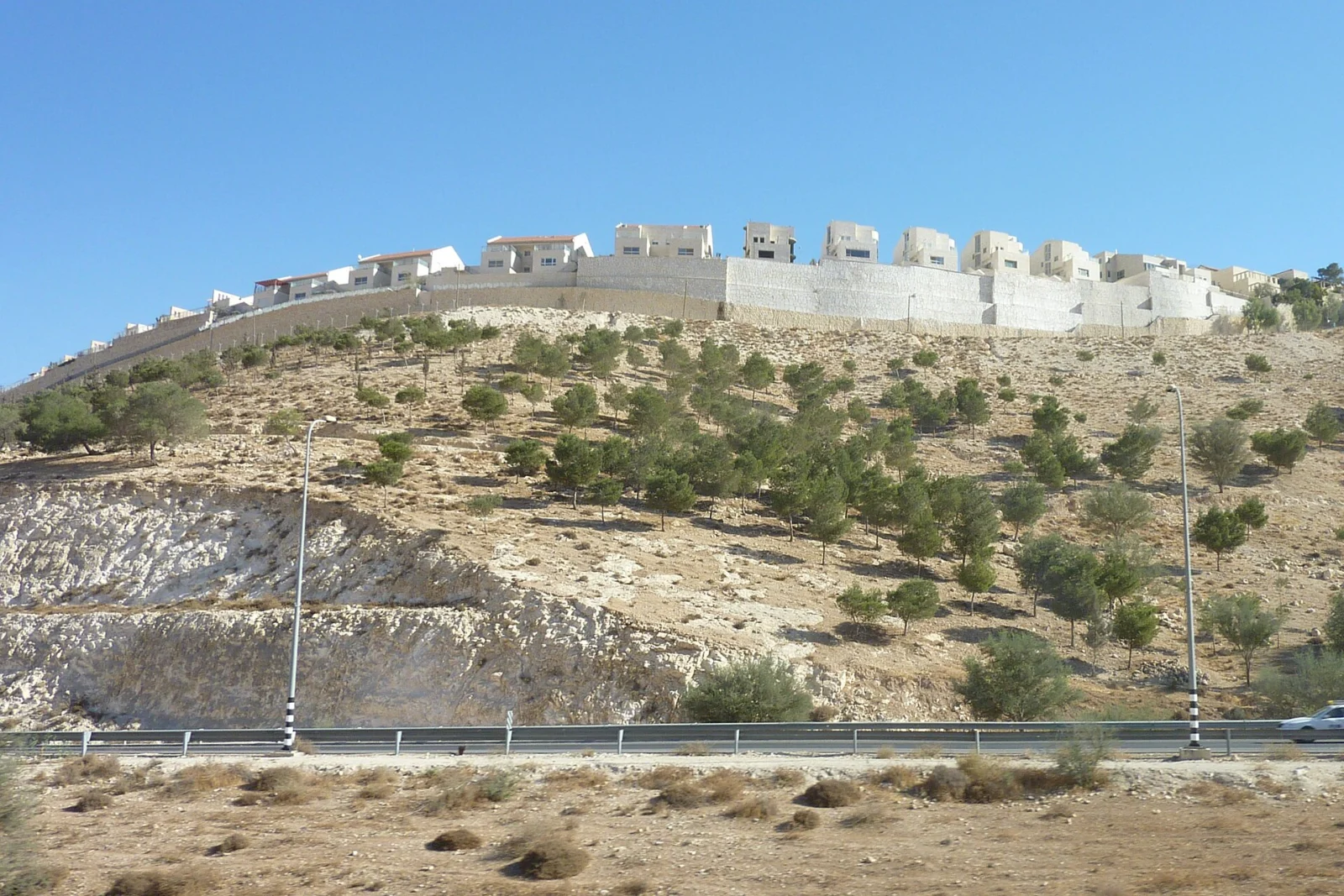
The British government has imposed sanctions on eight Israeli companies involved in building and expanding settlements in the occupied West Bank, and on Tzav 9, a group that has blocked aid convoys heading to Gaza. Under the measures announced on Tuesday, the companies’ assets are frozen and their directors are disqualified from holding their posts.
According to the government statement reported by Middle East Monitor, the sanctions are meant to disrupt the flow of money to the companies and hinder their ability to support ongoing construction. The eight firms are involved in the planning, construction, supply or marketing of settlement housing units and public infrastructure in West Bank settlements. Their names were not given in the report.
The statement said the Israeli government had not only failed to halt settlement expansion but had facilitated and encouraged it, noting that the number of settlements approved during the current government’s four years in office exceeds the total approved over the previous twenty years. The move follows a pledge by Foreign Secretary Ed Miliband on 8 September to act against the accelerating pace of settlement construction.
Miliband also addressed the construction plan for the E1 area east of Jerusalem ahead of the bidding deadline: “Defending the two-state solution is a core principle of this government’s policy. Therefore, my message regarding the E1 area is clear: do not submit bids, do not build, and do not profit from undermining the two-state solution.”
Tzav 9 organised blockades of aid convoys bound for Gaza and continued these activities as recently as last October, the statement said. Its assets are now frozen and some members are barred from administrative positions. “We will not stand idly by while those who obstruct desperately needed humanitarian aid deepen the unbearable suffering of civilians in Gaza,” Miliband said. Citing UN figures, the statement added that more than 150,000 tents and 300,000 plastic sheets are waiting outside Gaza, that recent flooding has displaced about 4,000 families and that around 1.4 million people live in tents or makeshift shelters.
Background
The package was made possible by an expansion of the UK’s human rights and international humanitarian law sanctions regime, introduced on 13 October, which allows sanctions on “individuals and entities involved in serious violations of international humanitarian law.” The Foreign Office is also promoting separate legislation to ban imports of settlement goods and restrict advertising in the UK for properties there, while stressing that it continues to encourage trade with Israel inside the Green Line. On 12 November Britain announced an additional £5 million for UNICEF’s winter preparations in Gaza, and more than 50 countries have urged Israel to lift aid restrictions.
Why it matters
The sanctions target companies working directly on settlement construction and a group obstructing aid, moving London’s opposition to settlements from statements to economic pressure. The warning issued before the E1 tender could also weigh on companies considering bids, and the planned import ban would add further pressure on the settlement economy if it becomes law.
Source: Middle East Monitor · Image: Mujaddara, CC BY-SA 3.0