
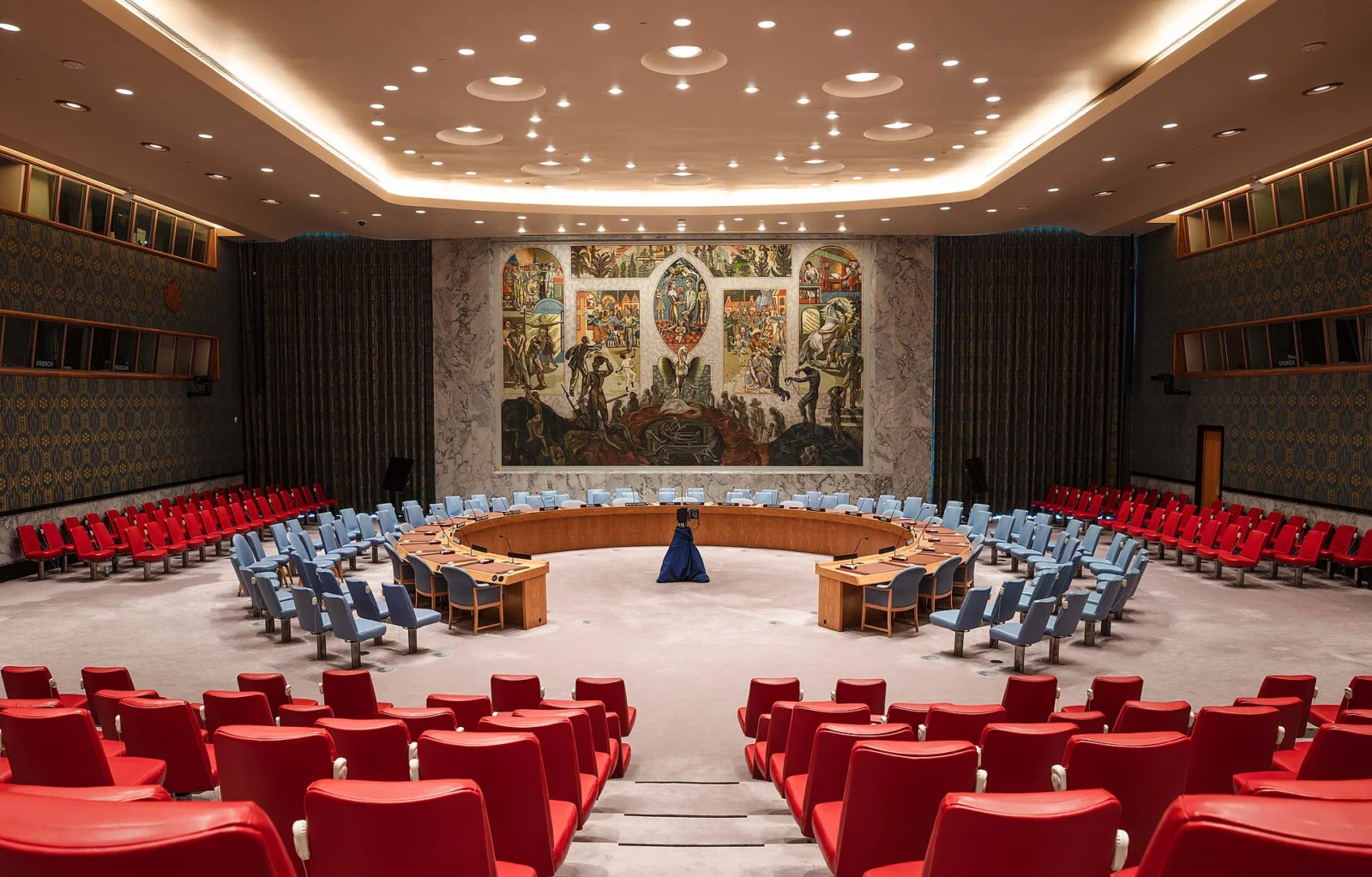
The UN Deputy Special Envoy for Syria, Claudio Cordone, told the Security Council that preparations for a permanent constitution and inclusive elections need clear processes and timelines as Syria approaches two years since the start of its new era. “Time is ticking,” he said.
In his 16 November briefing, Cordone focused on the political transition, the economy and reconstruction, and stability and security. He described the interim People’s Assembly as a key milestone and welcomed the formal submission of the draft Law on Transitional Justice to the Assembly last week. He urged an open and transparent review, saying justice must not be selective and accountability must apply to crimes “regardless of the perpetrators or the victims”. Elections, he said, require an independent electoral body, legislation and the identification of eligible voters, and his office has presented proposals to the government.
On the economy, Cordone noted the World Bank’s estimate of $216 billion for rebuilding damaged physical assets alone. He welcomed the creation of the Syria Recovery and Reconstruction Trust Fund, while warning that unresolved housing, land and property claims and unequal access to services remain deep sources of grievance.
On security, he said implementation of the 29 January agreement in the northeast continues, with former SDF personnel appointed to security posts, and called for investigations into reports that more than 100 Kurdish families trying to return to Tel Abyad in late October faced violence and intimidation. Sweida remains in a tense stalemate, he said, with the government deploying more forces amid reports of continued Israeli support to local armed actors. Israeli incursions, checkpoints, detentions and shelling continued in violation of Syria’s sovereignty, and a man with a disability was killed during an Israeli operation in Jamla, western Daraa, on 21 October; the Israeli military said the incident was under review. Cordone also said civilians, including three children, were reported killed in Jordanian airstrikes in Daraa on 27 October that Jordan said targeted Daesh, and welcomed the two countries’ agreement on a joint security committee.
Background
Bashar al-Assad’s government fell on 8 December 2024. According to UNHCR, about 1.85 million Syrians have since returned from abroad and 2.1 million internally displaced people have gone home. Cordone repeated the Secretary-General’s call for an end to violations of the 1974 Disengagement of Forces Agreement.
Why it matters
The briefing shows Syria’s transition advancing institutionally while core questions on the constitution, the election timetable, minority rights and security remain open. The scale of reconstruction depends heavily on international support, and Cordone stressed that Syria must keep shielding itself from regional conflicts, while operations against Daesh cells show the security threat persists.
Source: BM Suriye Özel Temsilciliği (ReliefWeb) · Image: Wikiweeki, CC BY 4.0