
UNRWA is the United Nations agency created to assist Palestine refugees in the Near East. Since 1950 it has run schools, clinics and relief services in Jordan, Lebanon, Syria, the West Bank and Gaza; in recent years it has also been at the centre of a financial crisis and a legal and political dispute with Israel.
What does UNRWA stand for?
The full name is the United Nations Relief and Works Agency for Palestine Refugees in the Near East. The word “works” reflects its original task: alongside direct relief, it was to run works and development programmes for refugees.
When and why was UNRWA founded?
According to UNRWA, more than 700,000 Palestinians were displaced between April and August 1948 during the Arab-Israeli war. On 19 November 1948 the UN General Assembly set up a temporary body, UNRPR, under Resolution 212 (III). It then created UNRWA with Resolution 302 (IV). UNRWA and English Wikipedia date the resolution to 8 December 1949, while Turkish Wikipedia gives 9 December 1949. The agency began operations on 1 May 1950.
Who counts as a Palestine refugee?
Under UNRWA’s definition, a Palestine refugee is a person whose normal place of residence was Palestine between 1 June 1946 and 15 May 1948 and who lost both home and means of livelihood as a result of the 1948 conflict. Descendants of male refugees, including adopted children, are also eligible to register. The agency served about 750,000 refugees in 1950 (Turkish Wikipedia puts the initial figure at about 500,000); today some 5.9 million people are eligible for its services.
Where does UNRWA operate?
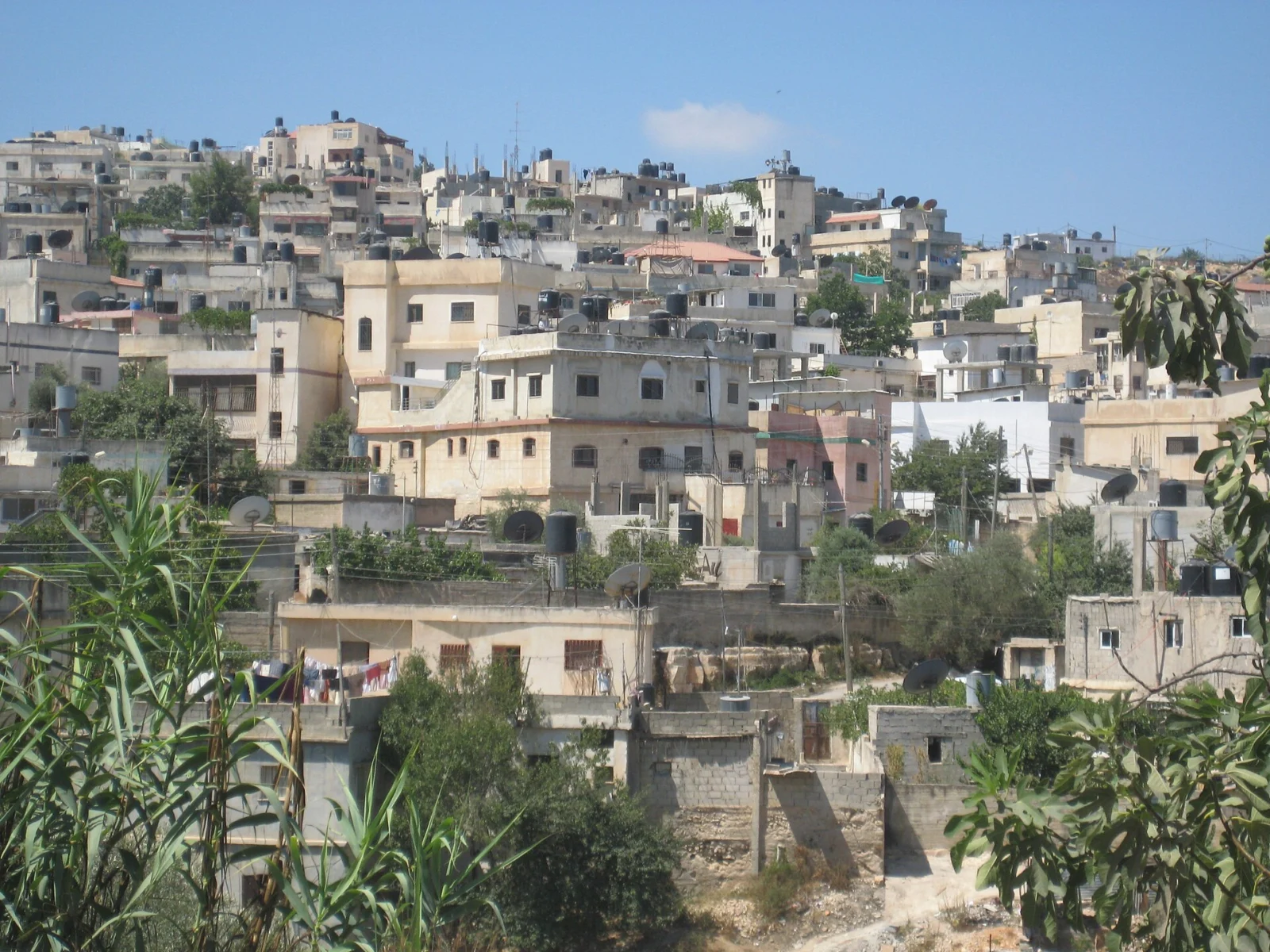
It has five fields of operation: Jordan, Lebanon, Syria, the West Bank including East Jerusalem, and the Gaza Strip. Nearly one third of registered refugees, more than 1.5 million people, live in 58 recognised camps; the rest live in cities and towns. Ten camps were added after the 1967 war. UNRWA does not own, administer or police the camps, which is the responsibility of host authorities; it provides services and runs its own installations.
What does UNRWA do?
Its services cover education, health care, relief and social services, camp infrastructure, microfinance and emergency assistance, including during armed conflict. According to Wikipedia, it runs 711 elementary and preparatory schools, eight vocational schools and two teacher training institutes. It employs more than 30,000 staff, about 99% of them locally recruited Palestinians. Education is the largest item: in 2019, 58% of spending went to education and 15% to health.
How is UNRWA funded?
The budget relies almost entirely on voluntary contributions from states; Wikipedia gives the 2020 budget as $806 million. The General Assembly renews the mandate every three years, most recently until 30 June 2029. The United States was long a leading donor; it stopped funding in August 2018, resumed in April 2021 and halted again in January 2024. Money remains tight: acting Commissioner-General Christian Saunders has said the 2026 budget gap has reached $250 million.
What were the 2024 allegations?
In January 2024 Israel alleged that twelve UNRWA employees took part in the 7 October 2023 attacks. Many donors, including the United States, Germany, the United Kingdom, Japan, Canada and Italy, suspended funding. An investigation by the UN Office of Internal Oversight Services, released in summer 2024, found that nine staff members may have been involved; their employment was terminated. For nine others the evidence was insufficient, and no evidence was obtained against one. An independent review led by former French foreign minister Catherine Colonna, published on 22 April 2024, said the agency’s neutrality had at times been undermined, but that Israel had not provided evidence that many employees belonged to armed groups. Most donors resumed funding in the following months; the US freeze was made permanent until 25 March 2025.
Why did Israel ban UNRWA?
On 28 October 2024 the Knesset passed legislation ordering UNRWA to cease any activity in territories claimed by Israel within 90 days; the ban took effect on 30 January 2025. Israel also accuses the agency of “perpetuating the refugee issue”. In an advisory opinion on 22 October 2025, the International Court of Justice said Israel “has not substantiated its allegations” that a significant part of UNRWA’s staff are members of Hamas or other armed factions, and that ending cooperation with the agency breached its obligations under the Geneva Conventions and the UN Charter. The court noted that 360 UNRWA staff had been killed during the war.
Why it matters
UNRWA is the largest provider of schooling, medicine and food aid for millions of people in Gaza and the region’s camps, and no other body is ready to replace it. Its refugee definition is also part of the final status debate: the right of return and the number of refugees are among the hardest issues in peace talks. Donor decisions and Israel’s ban therefore directly shape the humanitarian situation on the ground. The agency continues to work through the crisis and has decided to renew the contracts of about 3,000 staff in Gaza for one year.
Source: Vikipedi (İngilizce), UNRWA, Vikipedi (İngilizce), UNRWA October 7 controversy, Vikipedi (Türkçe), UNRWA, UNRWA, Who we are, UNRWA, Palestine refugees · Image: Khaldun Bshara, CC BY-SA 3.0