
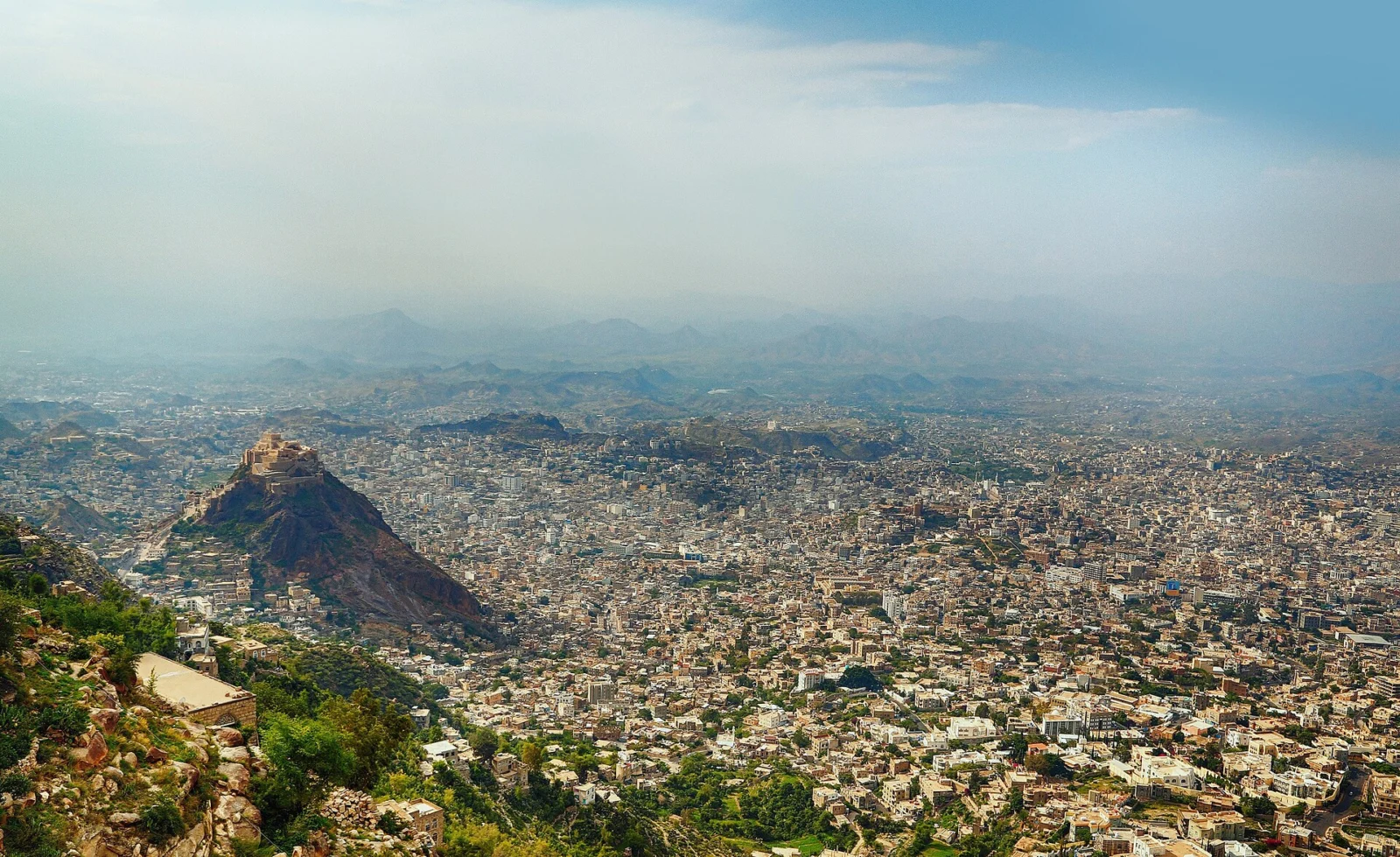
The International Organization for Migration (IOM) says nearly 357,000 people have been displaced in Yemen since early August as fighting between government forces and the Houthis has escalated. Taiz province in the south-west has received the largest number.
In a statement issued on Thursday and reported by Middle East Monitor, the UN agency said 356,602 people were displaced between 1 August and 17 November. Of these, 145,344 went to Taiz, 95,580 to Lahj and 71,706 to Aden.
The IOM also recorded displacement in Abyan, Al-Dhale, Shabwa, Hodeidah, Marib, Hadhramaut and Al-Mahra, showing that the impact of the fighting extends well beyond the front lines, across a wide area from the west of the country to the east.
The displacement has accelerated alongside a military operation called “Dawn of Yemen”, launched on 5 October. Presidential Leadership Council Chairman Rashad al-Alimi has said the operation aims to reclaim state institutions from the Houthis and retake the capital, Sanaa.
Background
The offensive follows an escalation that began in July, the most extensive since a truce in April 2022 brought relative calm. Yemen has been in conflict since the Houthis seized Sanaa and several provinces in September 2014; a Saudi-led Arab coalition intervened in March 2015 in support of the government.
Recent UN reporting points the same way. In a report dated 10 November, the UN Office for the Coordination of Humanitarian Affairs (OCHA) said the number of displaced was approaching 330,000. Although the two agencies’ figures rest on different methods, a gap of roughly 27,000 within about a week suggests displacement has not slowed.
Why it matters
Taiz, Lahj and Aden are not only receiving the displaced but also lie close to areas of intense fighting. The concentration of new arrivals in these provinces adds pressure on already limited shelter, water and health services.
As long as the government’s operation towards Sanaa continues, displacement figures are expected to rise. With winter approaching, funding and access problems facing aid agencies will become more visible alongside growing needs. The IOM’s next updates and the course of the front lines will be watched.
Source: Middle East Monitor · Image: المصور أنس الحاج, CC BY-SA 2.0