
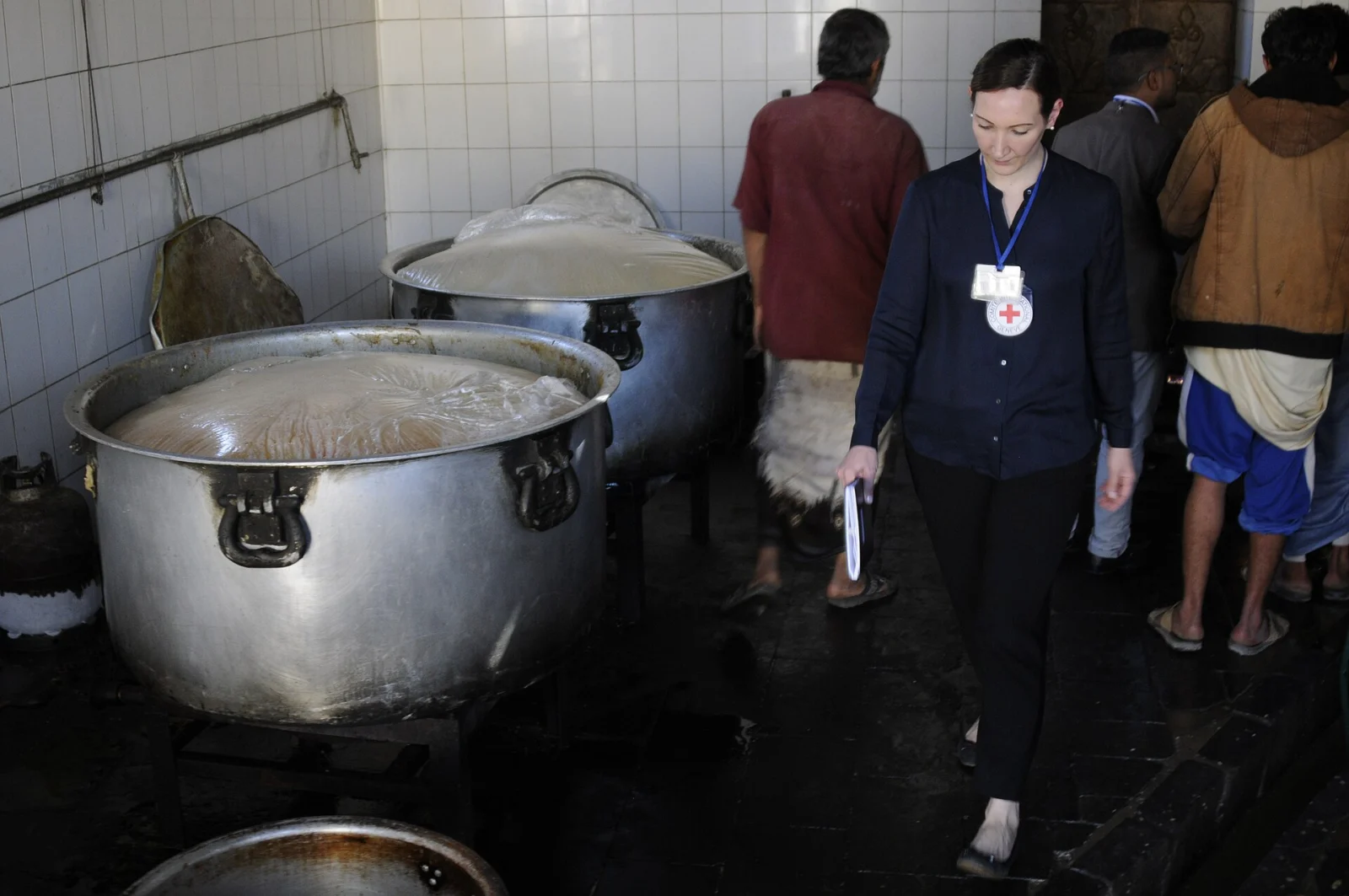
The International Committee of the Red Cross (ICRC) announced that 600 people detained in connection with the conflict in Yemen were unilaterally released on Sunday by authorities in Sana’a. The release took place with the organisation’s support.
In a statement from Sana’a, the ICRC said its delegates held private interviews with each detainee ahead of the release and provided assistance to support their dignified return home. ICRC medical staff also checked the detainees’ health and arranged additional help where it was needed.
The statement said the release was initiated by the National Committee for Prisoners Affairs and does not fall under the Stockholm Agreement. The ICRC stressed that it played no role in deciding who or how many people would be freed.
The organisation said it remains ready, at the request of the parties, to act as a neutral intermediary in future releases, transfers and repatriations of people detained in connection with the conflict, as it has done in previous years. The statement did not give the identities of those released or say which side they belonged to.
It was the second release in Sana’a supported by the Red Cross in a month. On 17 October the ICRC said it had supported the release of 159 detainees in the city.
Background
The capital Sana’a is under the control of the Houthis. The release comes as fighting in the country has intensified again. The International Organization for Migration has said the number of people displaced in Yemen has passed 340,000.
On Saturday the Yemeni army accused the Houthis of targeting the interim capital Aden with ballistic missiles, while the Saudi-led coalition said it destroyed two drones heading for Riyadh. An article published on the ICRC website in October said Yemen’s health system was facing mounting pressure as fighting intensified.
Why it matters
The fate of detainees and prisoners is one of the most sensitive humanitarian issues of the war in Yemen. Freeing hundreds of people at once has a tangible effect for thousands of families at a time when tensions on the front lines are rising.
The release is nonetheless a unilateral step rather than the result of a deal between the parties, and the Red Cross makes a point of saying it had no say in who was chosen. Whether the other side will respond with a similar move, and whether this could open the way to a wider exchange, is not yet known.
Source: Uluslararası Kızılhaç Komitesi (ICRC) · Image: Photographer : ABDULLAH, Mohammed Copyright : ICRC Confidentiality level : public Publicat, CC BY-SA 3.0