
Saudi Arabia’s King Salman bin Abdulaziz has replaced the commander of the Saudi-led military coalition backing Yemen’s internationally recognised government, after Houthi forces pushed toward the southern city of Aden and government troops pulled back from strategic areas near the Bab al-Mandab Strait.
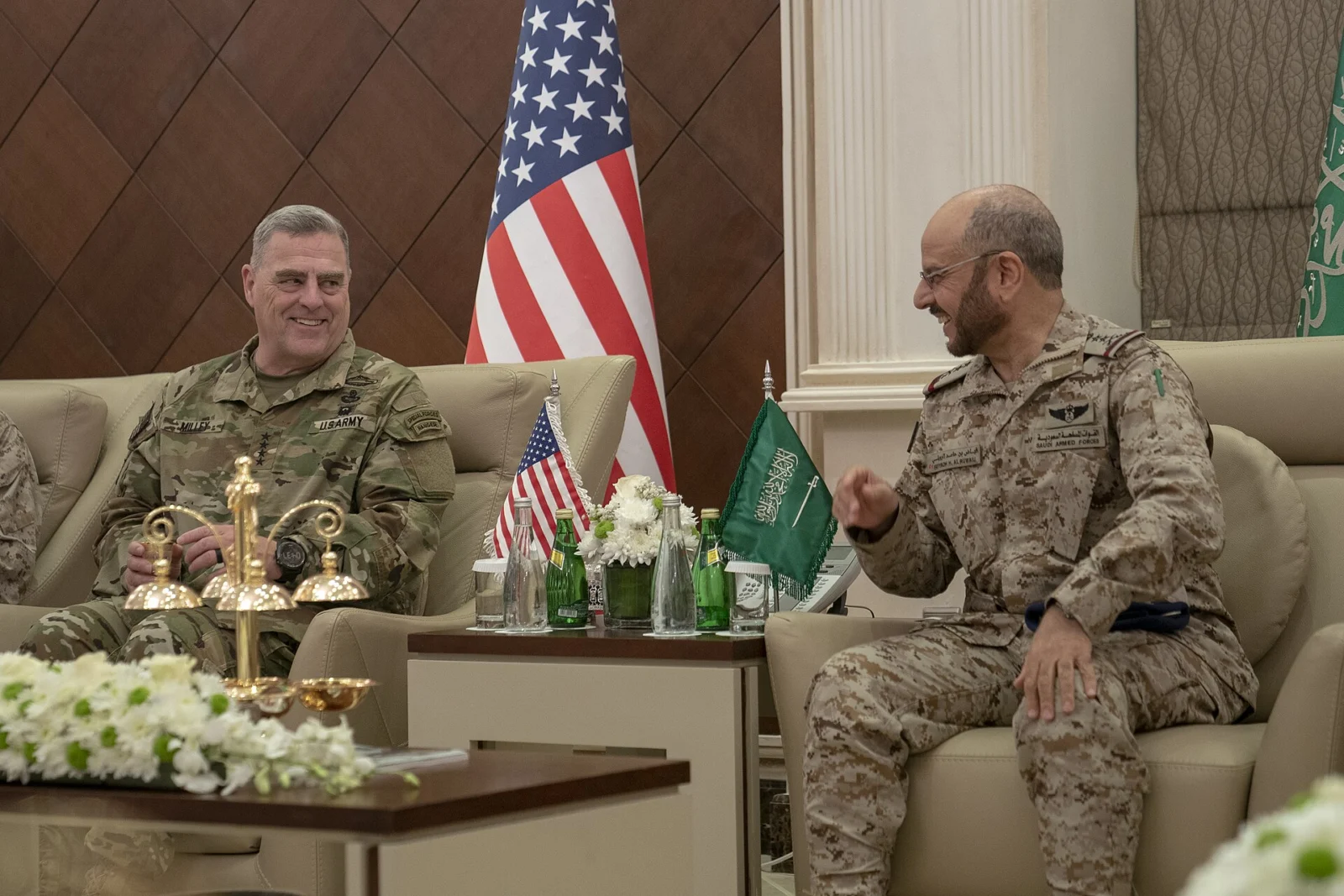
Under a royal decree announced on Monday, 16 November, by the Saudi Press Agency (SPA) and reported by Middle East Monitor, Lieutenant General Fahd bin Hamad bin Abdulaziz Al-Salman was appointed adviser to the defence minister for military affairs. General Fayyad bin Hamed bin Ruqad Al-Ruwaili, chief of the Saudi General Staff, will take on the role of Joint Forces commander in addition to his current duties.
Al-Salman had overseen the coordination of the coalition’s military operations since August 2024. The coalition intervened in Yemen in March 2015 in support of the government.
The change follows a string of setbacks for government forces, which have lost substantial ground since the Iran-backed Houthis launched a surprise offensive in September. Despite weapons and air support from the coalition, government troops have withdrawn from several strategic positions, allowing the Houthis to extend their control along the western coast and near Bab al-Mandab. A government counteroffensive launched in early October has so far failed to reverse those gains.
By Sunday, 15 November, Houthi forces had advanced through Lahj Governorate to positions roughly 60 kilometres from Aden, the government’s temporary seat. Pro-government forces had earlier said they were repositioning troops from Dhubab airport and the Bab al-Mandab area in western Taiz Governorate, describing the move as an effort to strengthen the defences of Aden and neighbouring provinces. Local sources said Houthi fighters then moved into the vacated positions.
Senior Houthi official Hussein al-Ezzi wrote on X that the movement did not intend to advance further toward Aden. He said he hoped people in southern Yemen would not let Saudi Arabia and its allies use Aden or other areas as bases against the Houthis, adding that Sanaa was calm but would firmly defend what he called its “legitimate rights”.
Separately, the coalition said on the same day that it had intercepted and destroyed two Houthi drones launched toward the Mecca and Riyadh regions. Saudi Arabia has faced repeated Houthi attacks in recent weeks on energy and transport infrastructure, military sites and Riyadh’s financial district.
Background
Yemen’s war began in 2014 when the Houthis seized Sanaa; the Saudi-led coalition intervened the following year, and the government later set up a temporary headquarters in Aden. A truce that had largely held since 2022 collapsed in July 2026, and fighting has intensified since then. Earlier on Tuesday, the UN refugee agency said clashes had reached the Kharaz refugee camp in Lahj.
Why it matters
The leadership change signals Riyadh’s dissatisfaction with the military situation in Yemen. With Houthi forces around 60 kilometres from Aden, the government’s temporary seat is under direct pressure, while shifting control around Bab al-Mandab is being closely watched for its implications for shipping through the narrow gateway to the Red Sea.
Source: Middle East Monitor · Image: Chairman of the Joint Chiefs of Staff, Public domain