
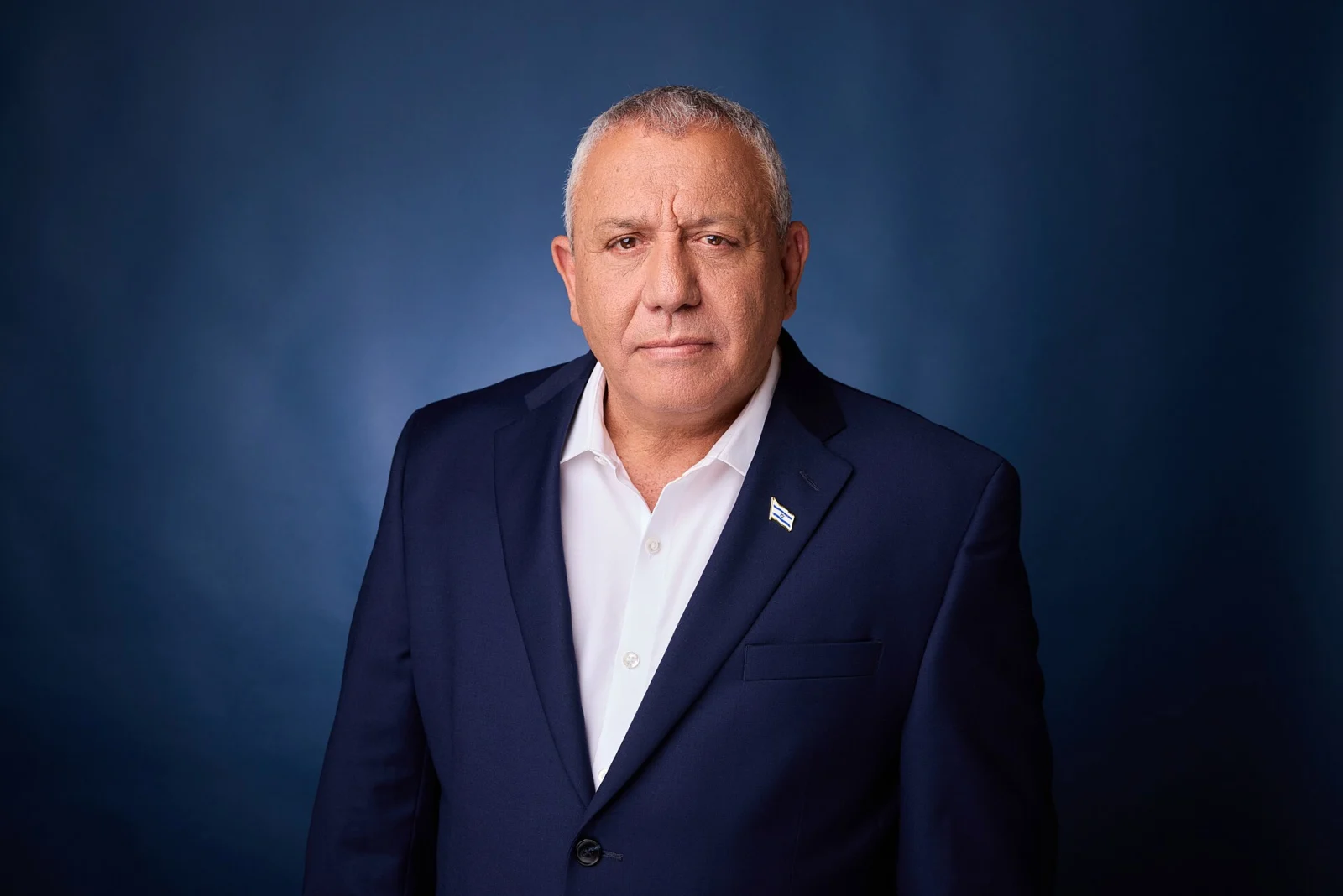
Israeli political and military analysts say Prime Minister Benjamin Netanyahu has put the Iranian threat back at the centre of politics to obstruct Gadi Eisenkot, who holds the mandate to form a government, or to force a unity government under his own leadership. According to the analysts, the Israeli army sees the danger from Iran as real but not imminent.
According to Middle East Monitor, Haaretz military analyst Amos Harel wrote on Friday that Netanyahu revived the Iran issue after his claims about Arab parties “stealing the election” faded. “The tale of how the Arab parties stole the election evaporated into thin air this week. The Iranian diversion, in contrast, is still alive and kicking,” Harel wrote. He said Netanyahu was citing an “urgent and extraordinary security threat from Iran” to call for a unity government that includes Eisenkot, on Netanyahu’s terms and under his leadership, while continuing to promote a possible attack on Iran under a transition government with US cooperation, or at least its tacit consent.
Harel said Chief of Staff Eyal Zamir opposes another attack on Iran at present, and that the army wants domestic political stability, public consensus and coordination with the US administration before any new confrontation. The army expects Iran to respond with ballistic missile and drone attacks on the home front for an unknown length of time. Still, Harel wrote, the chief of staff largely accepts that a third campaign against Iran will be needed in the future.
Maariv’s Ben Caspit wrote that Netanyahu is trying to persuade Trump to enter another round with Iran after his election defeat, while the defence establishment sees no urgent need. Yedioth Ahronoth analyst Ron Ben-Yishai said Netanyahu could use intelligence on Iran to argue both for a national unity government and for a joint military operation with the United States now. He said the core dispute between Jerusalem and Washington is how long Iran would need to achieve those capabilities and whether the threat warrants an immediate strike. The New York Times reported on Wednesday that Netanyahu is seeking to persuade Washington to join a four- to seven-day air campaign against Iran. US President Donald Trump said on Thursday he was in no hurry to decide.
Background
In October’s election, Netanyahu’s camp won 53 of the Knesset’s 120 seats, against 67 for parties opposed to him, including 19 held by Arab parties. President Isaac Herzog gave Eisenkot the mandate on 8 November. Eisenkot has called for a broad national emergency government, while Netanyahu has proposed a unity government of Zionist and Haredi parties under his leadership, citing Likud’s 27 seats against 21 for Eisenkot’s Yashar party. On 14 November Netanyahu invited Eisenkot to unconditional talks; Eisenkot called the offer a “media manoeuvre.” The two sides disagree over the premiership, the make-up of the government and ultra-Orthodox conscription.
Israel, with US support, launched a 12-day war on Iran on 13 June 2025, and Israel and the United States began a second war on 28 February 2026. The sides reached a ceasefire in April and signed a framework memorandum in June, but implementation stalled over the nuclear programme, sanctions and navigation in the Strait of Hormuz.
Why it matters
Who forms Israel’s next government is closely tied to the chance of a new war with Iran. If the analysts are right, the Iran threat has become a tool for Netanyahu both to stay in power and to split the opposition. The gap between the army and the political leadership over how urgent the threat is, along with Washington’s caution, are among the main factors that will decide whether the region slides into a new confrontation in the coming weeks.
Source: Middle East Monitor · Image: יהב טרודלר (Yahav Trudler – Yahav Studio), CC BY-SA 3.0