
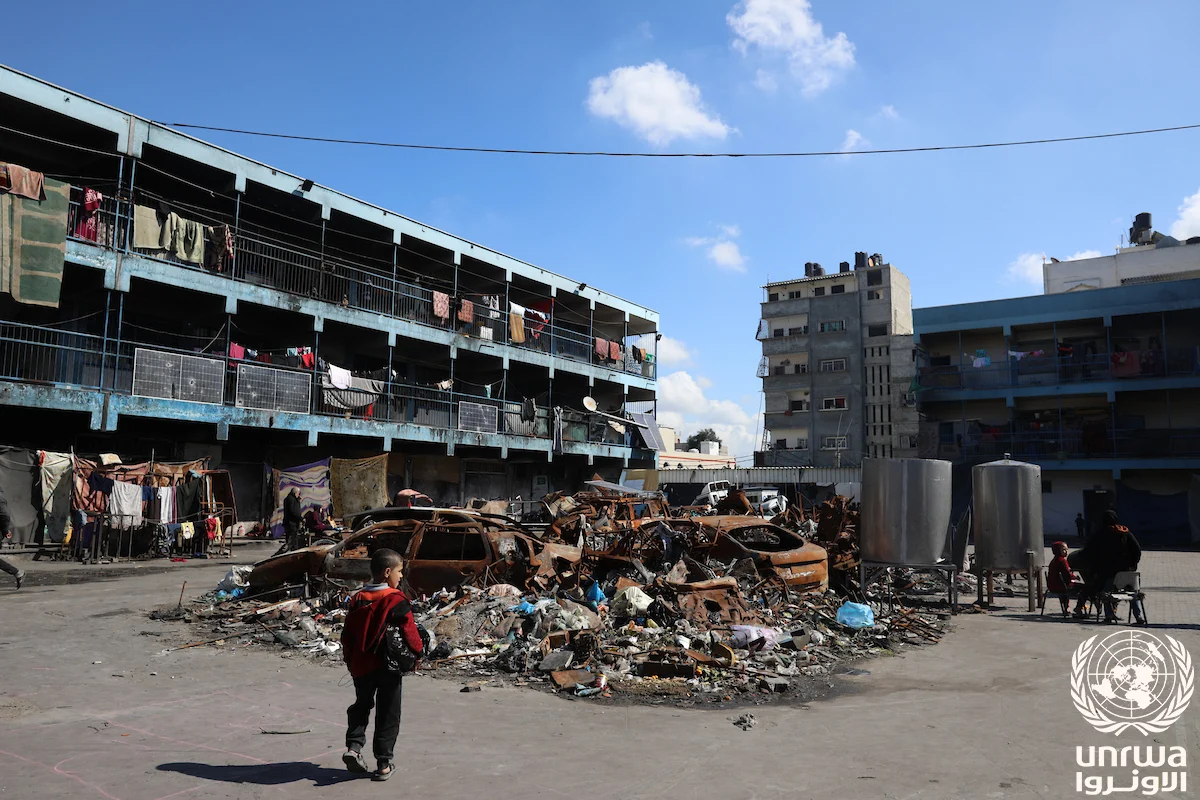
The Education Cluster, which coordinates humanitarian education work in the Gaza Strip, has published an assessment of 962 learning spaces across Gaza’s five governorates. The sites have 581,111 children enrolled and 15,709 teachers, but more than half were classed as “at risk” or “critical”.
The assessment was carried out between 21 May and 12 August 2026. With no permanent education infrastructure in place, schooling in Gaza has been kept going by temporary learning spaces, community-led initiatives and private learning spaces despite severe disruption. Most sites said they were fully functional and were using content consistent with the curriculum of the Palestinian Ministry of Education and Higher Education, though the report notes that these answers say little about teaching time, safety or resources.
Using a ten-point checklist, 362 spaces were rated good, 494 at risk and 106 critical. At-risk spaces are still operating but need improvements to support children’s safety and learning. Critical spaces are only partly operating, temporarily closed or missing several basic facilities and services. The report stresses that the categories do not assess building safety.
Because covered space is scarce, many sites run double or triple shifts, which widens access but can cut teaching time and strain facilities. Nearly half of the spaces reported extra demand from displaced children or waiting lists, with demand highest in Khan Younis. Children face barriers including insecurity, distance, transport, psychological distress and household duties, while gaps in safe drinking water, sanitation, electricity and first aid affect their safety and participation.
Children with disabilities are enrolled in many spaces, but accessible facilities, inclusive toilets and adapted materials are less common. The cluster calls for urgent action on the 106 critical sites, improvement plans for the 494 at-risk sites, and coordinated funding for weather-resistant spaces, teacher support, water and sanitation, learning materials and protection services.
Background
Since the war began in October 2023, Gaza has been left without permanent education infrastructure, and schooling continues in temporary learning spaces and community-led initiatives. A ceasefire has been in place since 10 October 2025, although Israeli strikes continue intermittently. The cluster says the findings will feed into its 2027 planning, advocacy and resource mobilisation.
Why it matters
The report shows in numbers that more than half a million children in Gaza are still in some form of education, but often in poor conditions. Its central finding is that keeping children enrolled is not enough: they need safe spaces, water, supported teachers and materials to attend regularly and actually learn, and the need for weather-resistant space grows as winter sets in.
Source: ReliefWeb / Eğitim Kümesi · Image: Abedallah Alhaj, CC BY-SA 3.0 igo