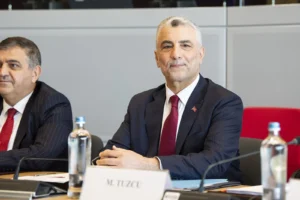
Turkish Interior Minister Mustafa Ciftci met governors from eight provinces and senior security officials in Tunceli to review the “Terror-Free Türkiye” process, saying that statements on the dissolution of the organisation and the laying down of arms would be carefully verified on the ground.
According to a statement published on 21 November by the Erzurum governor’s office, the meeting brought together the governors of Tunceli, Erzurum, Adiyaman, Bayburt, Elazig, Erzincan, Malatya and Sanliurfa. Gendarmerie Commander General Ali Cardakci, Police Director General Ali Fidan, provincial gendarmerie commanders and provincial police chiefs also attended.
Participants discussed shifting political balances in the surrounding region and the impact of cross-border developments on Türkiye’s security. Ciftci described “Terror-Free Türkiye” as a strategic state project and said the goal should be reached together in line with President Recep Tayyip Erdogan’s “Century of Türkiye” vision. He called a lasting end to terrorism a responsibility to future generations after half a century of heavy costs, adding that the sensitivities of the families of fallen security personnel and veterans would be taken into account at every stage.
Ciftci said lessons from past processes meant the government would act carefully and cautiously, and that no threat or provocation against national unity, public order or citizens’ safety would be tolerated. The ministry will carry out its security role through a “3T” approach, short for detection, tracking and elimination, while developments inside and beyond the borders are assessed together.
The minister asked governors to be present in every district and village and to listen to shopkeepers, young people, families, village heads and civil society. He said gains in the fight against terrorism should translate into peace and security in daily life, and announced a stepped-up fight against organised crime, loan sharking, drug trafficking, fraud and theft.
Background
The provinces represented cover a large part of eastern and south-eastern Türkiye. Police and gendarmerie units are to work in coordination under the governors, share verified information between institutions and assess in time the possible effects of cross-border developments on the provinces.
Why it matters
The statement sums up the government’s security roadmap for the process: disarmament pledges will not be taken at face value but checked on the ground. The instruction to governors to stay close to residents, together with the focus on everyday crime, suggests Ankara wants to measure success not only through security data but also through the sense of safety people feel in their daily lives.
Source: Erzurum Valiliği · Image: Crumou, CC BY-SA 4.0