Claim The information in this story comes from a media outlet of one of the parties to the conflict (Mehr Haber Ajansı) and has not been independently verified.
Iranian Foreign Minister Abbas Araghchi has said Tehran is seeking a “good, honourable” agreement that protects the country’s standing in its indirect contacts with the United States, and will not accept any text that falls short of that. He also said communication between Iran and the US currently runs only through Qatar and Pakistan.
In remarks carried on Saturday morning by the Mehr news agency, which is close to the Iranian state, Araghchi said the gains Iran says it secured during the war would not be handed over at the negotiating table. “Nobody wants a deal that would call our dignity into question. We all agree that just as we won in the war, we must also win in the agreement,” he said.
Araghchi claimed Iran had gone through negotiations and war three times in the past two years. According to the minister, Iran was attacked while the first two rounds of talks were under way; in the third, an agreement was reached and implementation began, but the other side violated it and started the war again. He noted that fighting resumed only 15 days after the last agreement, and that roughly eight months separated the 12-day war from the 40-day war. No US response to these claims was reported.
The minister said Iran wanted to move out of a state of “neither war nor peace”, but only once conditions were in place that guarantee a new war will not begin. A rushed deal that is soon violated again would serve no purpose, he argued; any agreement must be lasting and final and must prevent the war from restarting.
Araghchi said Qatar and Pakistan were carrying messages between the two sides and passing on ideas and proposals that were being reviewed. He dismissed reports that other countries would join the mediation as speculation, saying some states were trying to get involved but Tehran saw no reason at this stage to replace, reduce or add mediators. He also said the contacts were not secret, pointing out that his recent meeting with Pakistan’s army chief Asim Munir during a visit to Pakistan had been made public, as had talks with a Qatari delegation. Rejecting suggestions that every plane arriving from the region carries a mediator, he said that because of flight disruptions Iranian economic delegations mostly travel to neighbouring countries on charter flights, and some of those countries have provided aircraft. All contacts, he added, are overseen by Iran’s competent authorities, which receive detailed reports of every meeting and decide the next steps.
Background
Iran and the United States are not holding direct talks; messages are passed through mediators. A day earlier, Araghchi said the US naval blockade on Iran had to be broken for the country to resume oil exports.
Why it matters
Araghchi’s comments suggest Tehran has not closed the door on a deal but is making guarantees of permanence a precondition. Keeping the mediation limited to Qatar and Pakistan also signals that other countries seeking a role are unlikely to get one for now. The next step will be the responses Washington and Tehran give to the proposals carried by the two mediators.
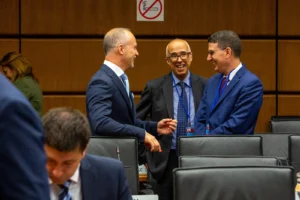
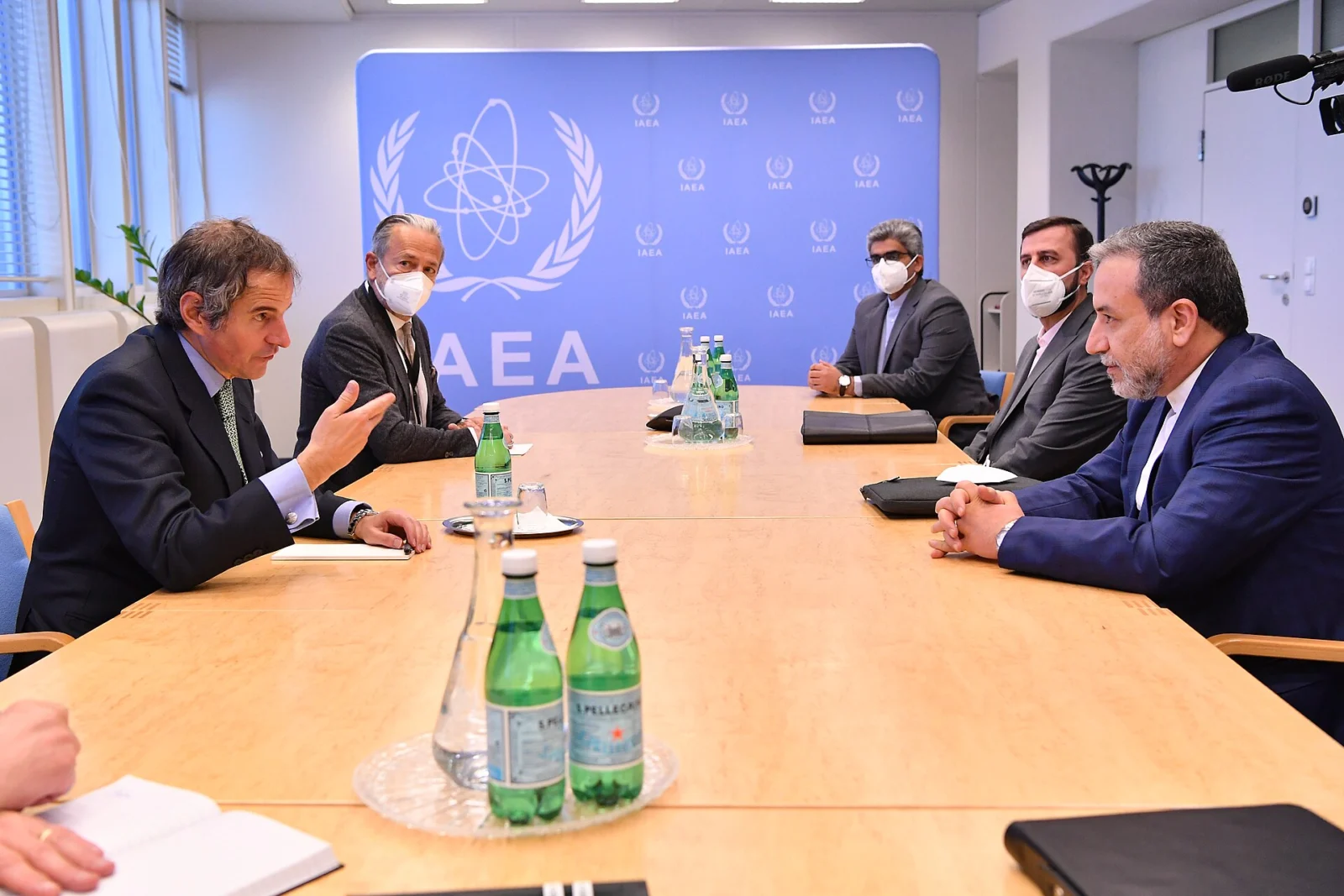
Source: Mehr Haber Ajansı · Image: IAEA Imagebank, CC BY 2.0