Nearly a decade of armed conflict in Cameroon’s English-speaking Northwest and Southwest regions has driven children from their homes and their classrooms. Official figures cited by UNICEF in September show that 223,749 children in the two regions are completely out of school and 2,463 schools are not operating.
According to a report published by the citizen media site Global Voices, children whose families fled to Buea, capital of the Southwest Region, have found relative safety, but their burdens have not ended. Some sell bleach, plantains, ginger, garlic and oranges at the city’s OIC Market before school and at weekends to help support their households.
Eleven-year-old Lorane told the outlet that in Buea there are no gunshots and the family no longer has to hide in the bush. Fourteen-year-old Joy travels from Mutengene to Buea at weekends to sell sachets of bleach that her mother repackages, at CFA 100 (about $0.17) each, with daily sales reaching CFA 10,000-15,000. Sidoine, also 14, lost four years of schooling after her family’s house in Ekona was burned. Susan Achuagoh, a mother of five whose home was also burned, now sells oranges in Buea and said the family could not manage without the children’s help.
Godiva Ndang, education and partnerships officer at Street Child UK-Cameroon, said the prolonged crisis has increasingly become a crisis of childhood. Children exposed to violence and displacement can suffer anxiety, difficulty concentrating and social withdrawal, and work that eats into time for learning, rest and play can affect their development. She stressed that helping in a family business is not automatically child labour; the distinction depends on the child’s age, the duration and risks of the work, and whether it interferes with education.
Local partners run mobile and satellite learning corners in accessible places such as village chiefs’ homes, churches and schools, with close to 100 corners supported across the two regions. Help with enrolment, uniforms, learning materials and tutoring also continues. The children interviewed said they still hope to become engineers, lawyers and computer engineers.
Background
Cameroon’s Anglophone crisis began in 2016 when teachers and lawyers protested over the perceived marginalisation of English-language education and the common-law system in favour of French. The protests widened and met a government crackdown, and in 2017 the situation turned into armed conflict between government forces and separatist groups seeking independence for the two regions as “Ambazonia”. The UN refugee agency UNHCR estimates that between 2.1 and 2.2 million people have been displaced by the violence and insecurity.
Why it matters
Although the conflict receives little international attention, it is directly affecting a generation’s education. With more than 223,000 children out of school, the regions face an education and development gap that will last for years even if the fighting ends. Experts say protecting children depends on strengthening family livelihoods and creating safe places to learn.
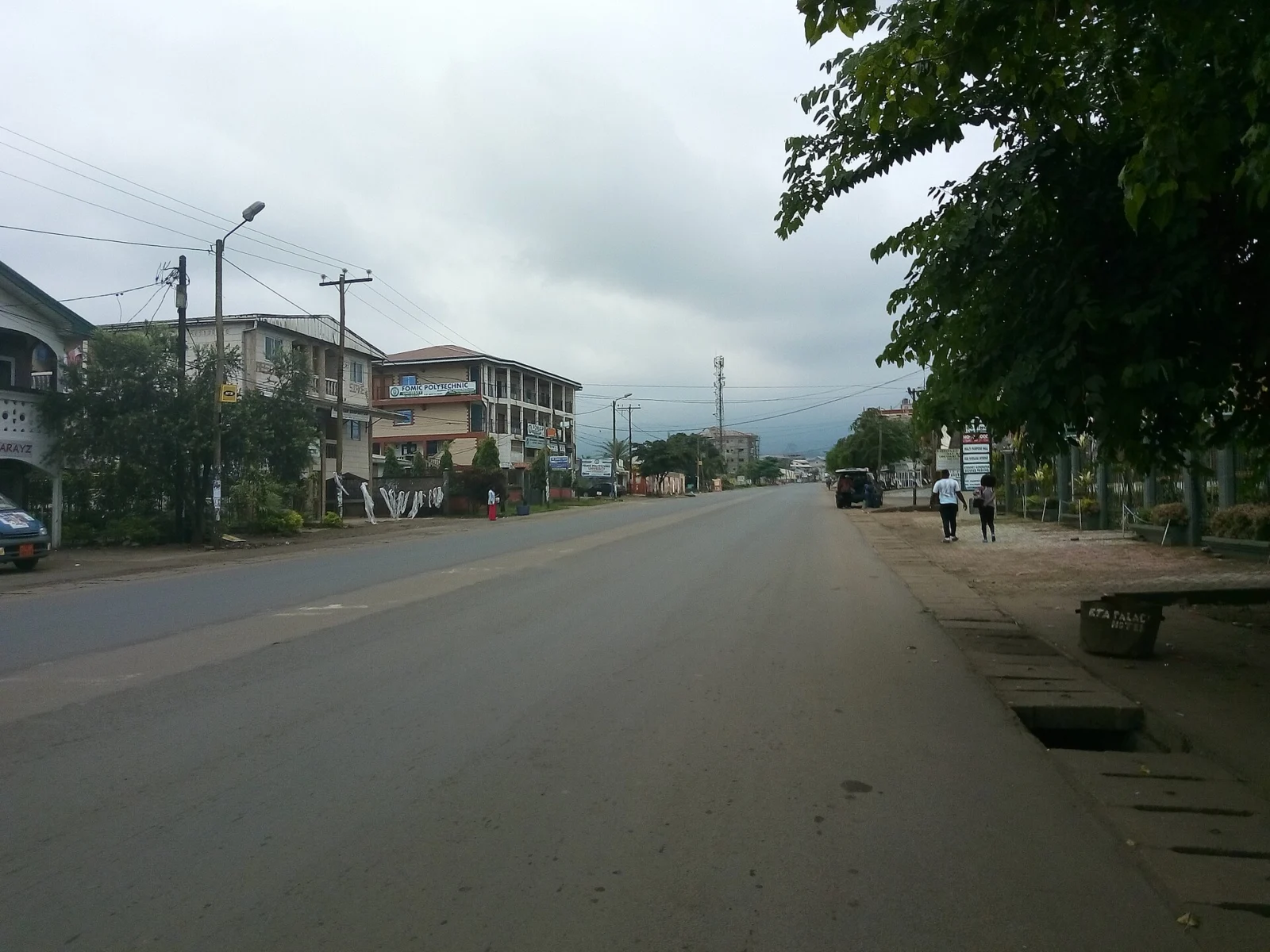
Source: Global Voices (Cynthia Ebot Takang) · Image: DrAgach, CC BY-SA 4.0