
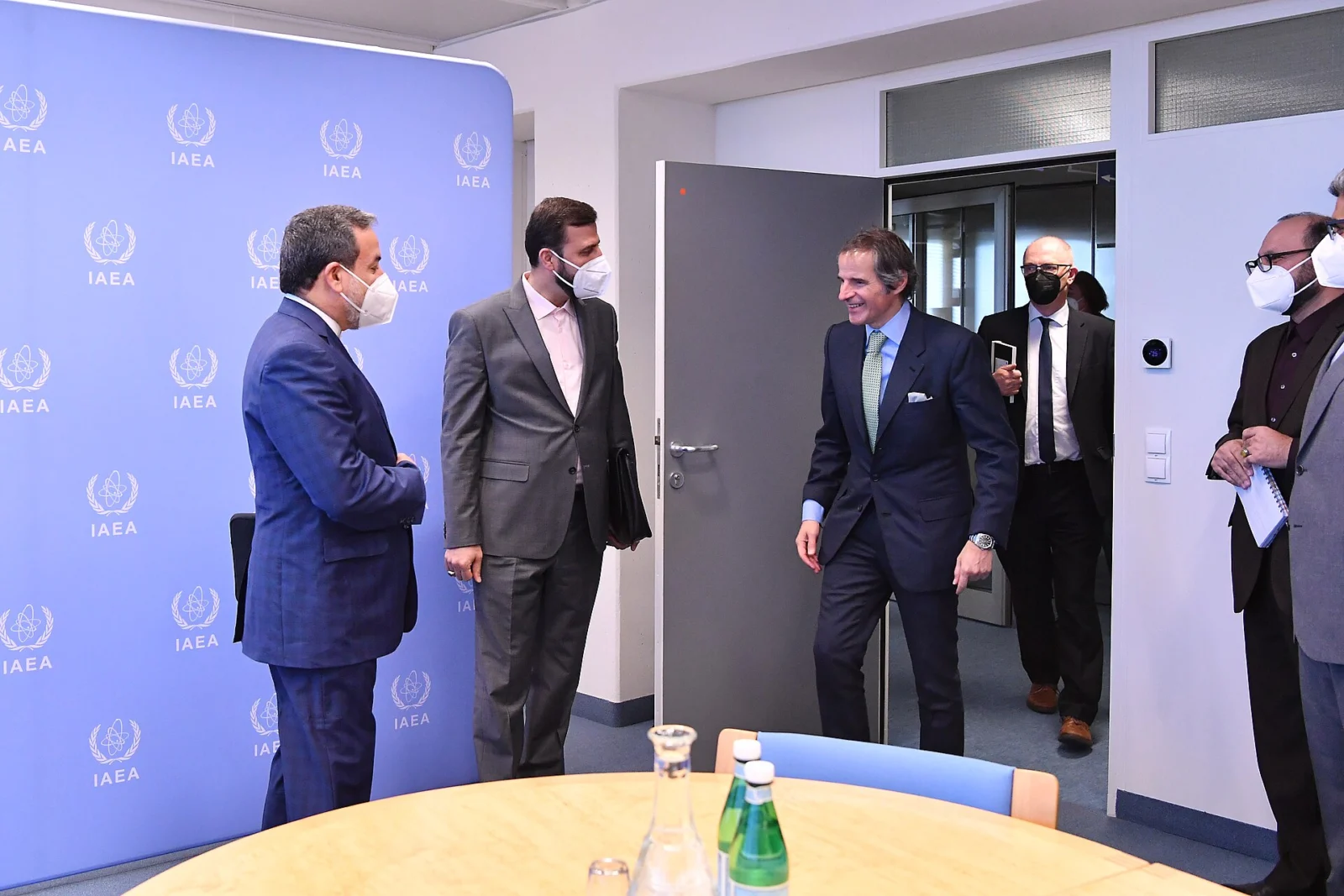
Iranian Foreign Minister Abbas Araghchi said the US naval blockade on Iran must be broken so that the country can resume its oil exports. His remarks followed a report by tanker-tracking firm TankerTrackers that Iran was preparing to restart crude sales by sea.
Araghchi spoke to reporters in Tehran on Friday, 20 November, when he was asked about reports that Iran was preparing to challenge the US blockade. “We are making every possible effort regarding oil exports and negotiations. The naval blockade must be broken,” he said, according to Middle East Monitor. He gave no details on how or when such a step might be taken.
On the same day, Iran’s Fars news agency addressed the issue with a symbolic reference. It published an illustration based on the story of Fereydun from the Shahnameh, the epic poem by Ferdowsi, showing an obstacle Fereydun and his army faced while trying to cross the Shatt al-Arab, known in Iran as the Arvand River, during their battle against the ruler Zahhak. The illustration also showed numerous oil tankers flying the Iranian flag, apparently alluding to calls to break the blockade.
Citing Reuters, Mehr reported that TankerTrackers said on Thursday, 19 November, that an oil tanker in the Gulf had loaded Iranian crude through a ship-to-ship transfer. The firm said that if the tanker manages to leave the area covered by the US blockade, it would be the first successful seaborne shipment of Iranian crude since mid-July. There was no comment from the US administration.
Background
Iran closed the Strait of Hormuz on 2 March after the United States and Israel launched their war against Iran. Washington responded on 13 April by imposing a naval blockade on Iran, which has severely disrupted the country’s oil exports, a major source of its income. According to TankerTrackers, Iran has not completed a successful seaborne crude shipment since mid-July.
Why it matters
An Iranian attempt to run the blockade could raise the risk of a direct confrontation with the US Navy at sea. A successful shipment, on the other hand, would call the blockade’s effectiveness into question and add supply to the world oil market. By linking oil exports with negotiations, Araghchi signalled that Tehran wants to keep the blockade on the agenda both at sea and at the diplomatic table.
Source: Middle East Monitor, Mehr · Image: IAEA Imagebank, CC BY 2.0