
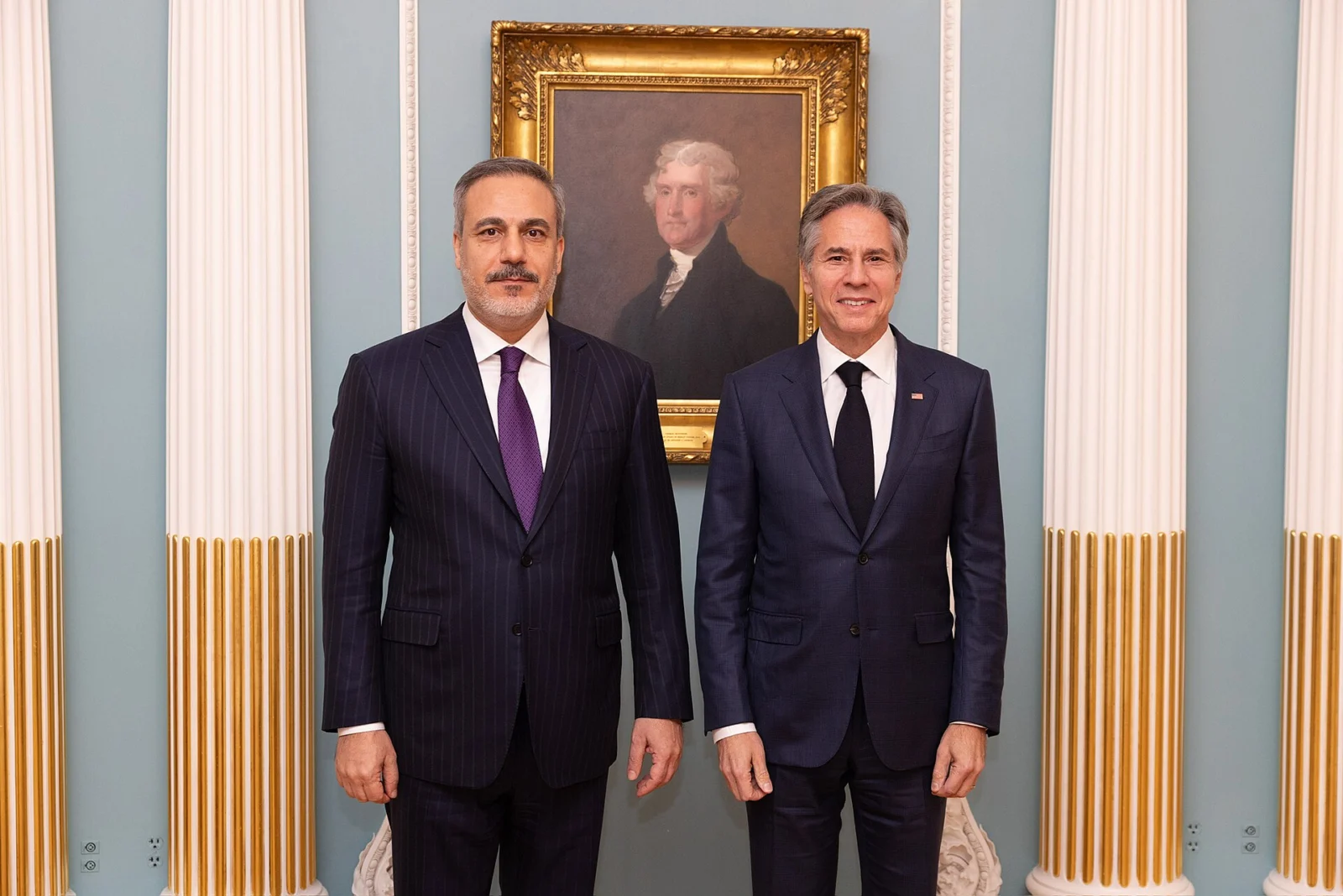
Turkish Foreign Minister Hakan Fidan on Tuesday urged Israel to abandon policies that harm neighbouring countries, speaking at a joint news conference in Ankara with Syrian Foreign Minister Asaad Hassan al-Shaibani, who called Türkiye an “indispensable partner” in regional stability.
“Israel must now realize that it cannot ensure its own security by harming its neighbors and must abandon this policy,” Fidan said. “A country’s security cannot be built on the instability of its neighbors.” He said Israel’s actions aimed at destabilising the region and Syria were continuing and threatened the security and connectivity architecture that Türkiye and other regional states were trying to build. Fidan said Israel must end its attacks on southern Syria and that a security arrangement should be based on the 1974 Disengagement Agreement.
Al-Shaibani firmly rejected Israeli attacks on Syria and violations of its sovereignty, reaffirming Damascus’s commitment to the 1974 agreement. “Syria’s stability is the cornerstone of the stability of the Middle East,” he said. Turkish Defence Minister Yasar Guler and Syrian Defence Minister Maj. Gen. Murhaf Abu Qasra also attended the talks.
According to al-Shaibani, bilateral trade rose by more than 40 percent in 2025 to nearly $3.78 billion, and the two countries aim to reach $10 billion. They are working to raise the capacity of their electricity interconnection to 500 megawatts. Direct flights now link Damascus with Antalya and Izmir, and work is under way to reopen the Qamishli-Nusaybin border crossing. The two sides also agreed to speed up plans for a railway running from Türkiye through Syria to Jordan and the Gulf.
Fidan announced an agreement to establish a joint Türkiye-Syria University in Damascus. He said the Damascus Heart Hospital had begun serving patients and that the International Recep Tayyip Erdogan Turkish School in Damascus opened its academic year last month. Al-Shaibani said more than 700,000 Syrians had returned home, stressing that housing, basic services and livelihoods were needed for returns to last, and said Syria’s embassy in Ankara is expected to open early next month.
Al-Shaibani condemned attacks on Gulf states, calling Gulf security an inseparable part of Syria’s national security, and stressed the need to protect freedom of navigation in the Strait of Hormuz and Bab el-Mandeb. Fidan said strong interest in the Mecca Defense Alliance, set up by Türkiye, Saudi Arabia and Pakistan in August, showed the positive impact of peace-oriented efforts in the region.
Background
After the fall of the Assad government in December 2024, Israel moved into the buffer zone in southern Syria set by the 1974 Disengagement Agreement and has kept forces in the area since. Relations between Ankara and Damascus have expanded quickly under Syria’s new leadership in trade, energy and security. The European Union also decided this week to move forward with an association agreement with Syria.
Why it matters
The meeting shows Türkiye seeking a leading role in Syria’s reconstruction and in regional transport projects, while taking a common position with Damascus against Israel’s presence in southern Syria. If the trade, power and rail targets are met, Syria could become a transit corridor between Türkiye and the Gulf.
Source: Middle East Monitor · Image: U.S. Department of State from United States, Public domain