Child casualties in Ukraine have reached a four-year high, the UN Children’s Fund (UNICEF) said, with at least 114 children killed and 1,030 injured in the first 10 months of 2026, more than three children killed or injured every day.
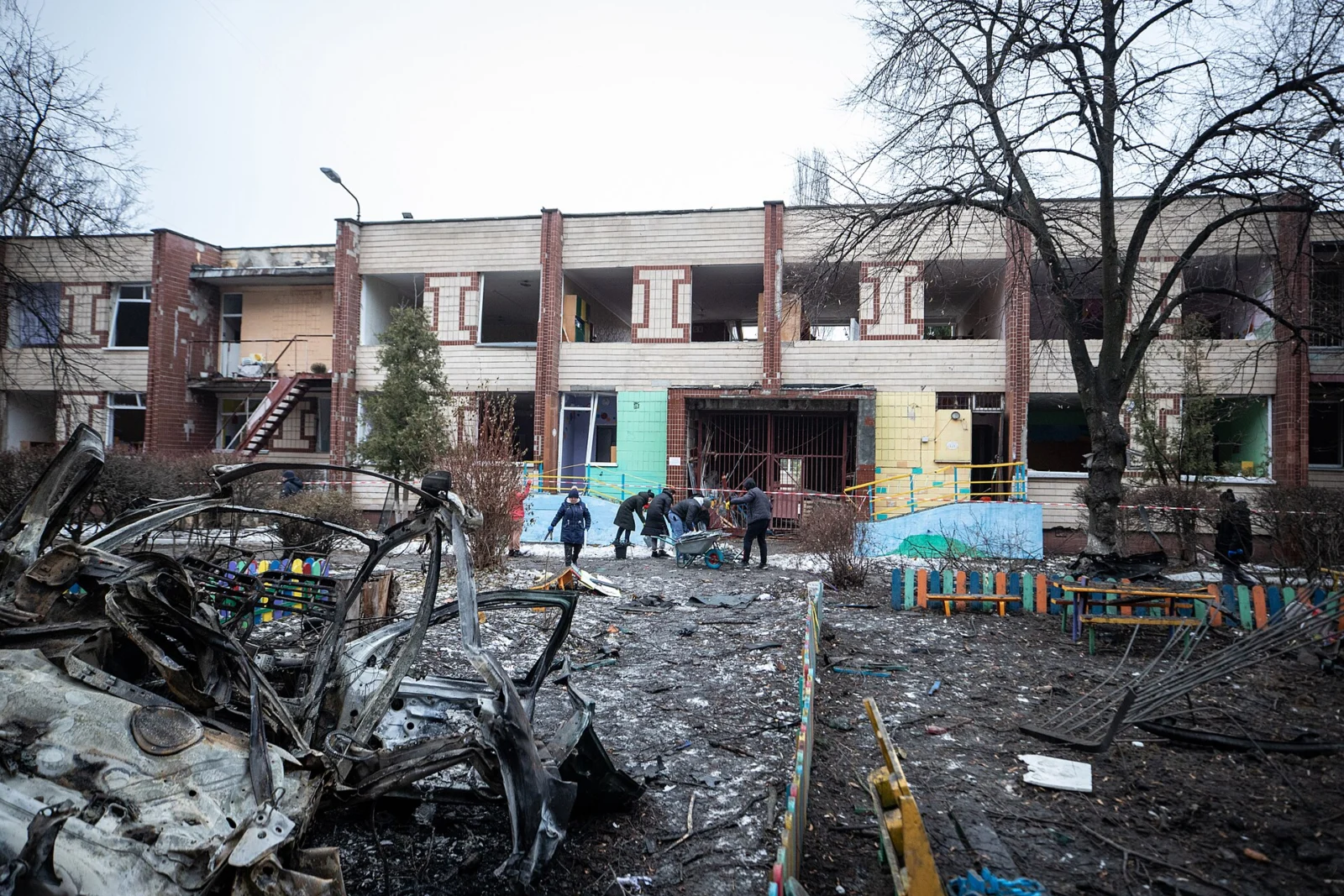
Louise Wateridge, UNICEF’s acting communications chief, briefed journalists in Geneva on 20 November from Kyiv, standing in the ruined playground of a kindergarten that was hit at night on 7 November while it was empty. She said the room behind her, where children once took their afternoon naps, had been completely destroyed, and that air raid alarms in the capital had intensified dramatically in recent weeks. “Night after night, we are jolted awake by sirens and explosions,” she said.
The figures come from the UN Human Rights Monitoring Mission in Ukraine (HRMMU). At least 146 children were killed or wounded last month alone, a 150 per cent rise compared with October 2025. According to Wateridge, the number of children killed this year has already surpassed the total for all of 2025 by more than 20 per cent, while the number injured has risen by almost 60 per cent.
The briefing followed new overnight strikes on Kyiv and other regions. Government officials reported six civilians killed in Kyiv alone, and critical infrastructure was damaged. With heating and power plants heavily battered, scheduled blackouts of four to 18 hours are in force across most of the country, and early November saw cuts of more than 12 hours.
Because outages also disrupt water systems, homes, schools and hospitals are left without safe water for drinking and hygiene, raising the risk of disease. Last winter, nearly two million children were left without heat, electricity and water as temperatures fell below minus 20°C, and humanitarian officials warn the same crisis is unfolding again.
UNICEF is supporting district energy projects to keep heating running for around three million people in the hardest-hit municipalities, installing alternative power in health facilities and solar power at water sites serving about 2.5 million people. Wateridge said a 300-metre borehole was being drilled at a cancer hospital in Kyiv to give it a reliable water supply through the winter.
Background
The briefing coincided with World Children’s Day on 20 November. Maysa Jalbout, director of the UN global fund Education Cannot Wait, recalled that the Convention on the Rights of the Child was adopted 37 years earlier, and said the promise of education is broken every day for 258 million children affected by crisis. The fund announced a $52 million investment to help more than 300,000 children in Lebanon, Myanmar and South Sudan, but still faces a $58 million shortfall to reach children in other crisis-hit countries such as Afghanistan.
Why it matters
The data show that, as the war enters another winter, children are increasingly harmed both by direct attacks and by the collapse of energy and water systems. Casualties already exceeding the whole of the previous year point to escalating violence on the ground despite talk of peace efforts, while long blackouts threaten health and education services throughout the winter.
Source: BM Haberler · Image: Olexiy Samsonov / Kyiv City State Administration, CC BY 4.0