
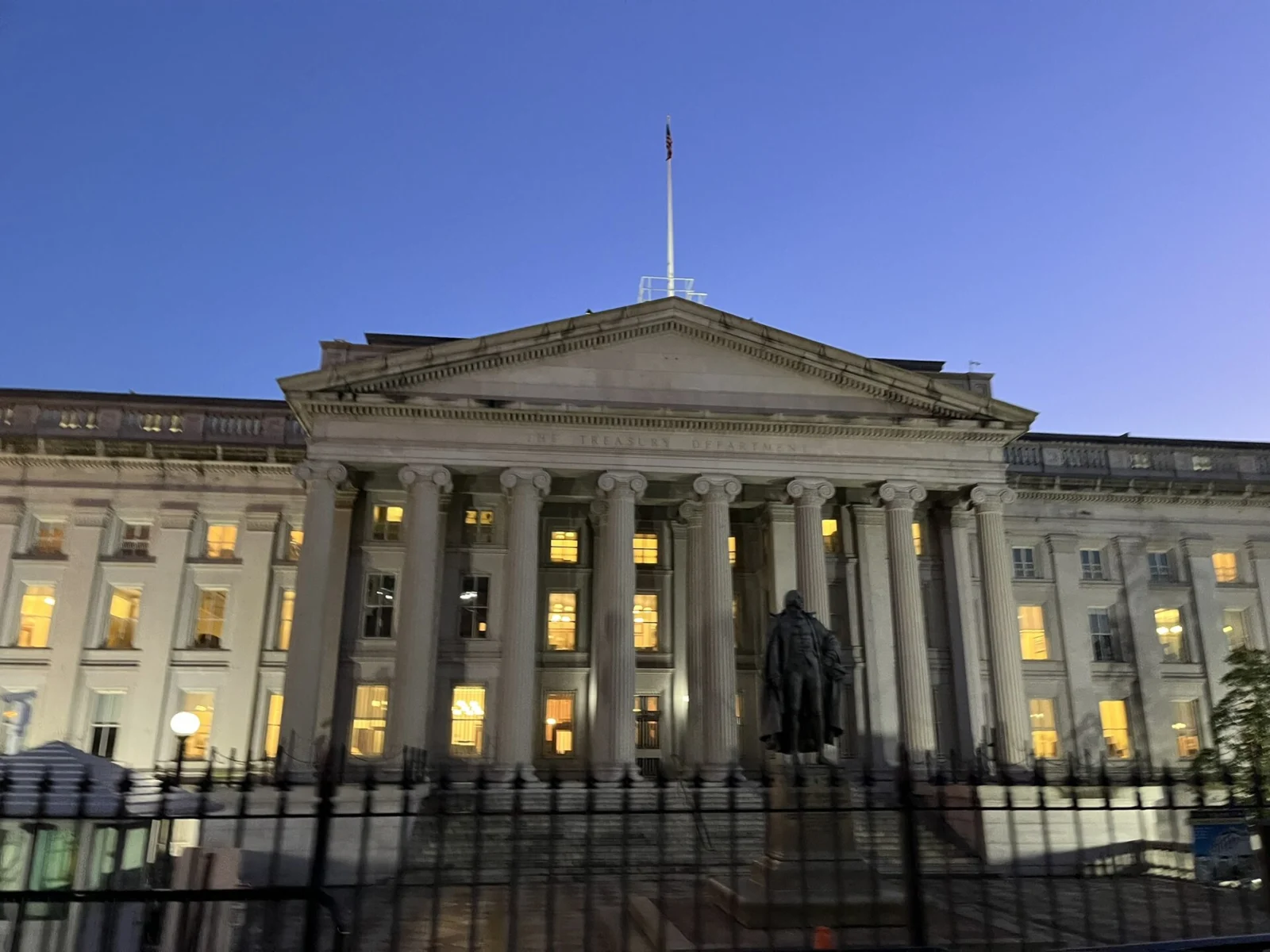
The US Treasury Department has imposed sanctions on four people it says Iran relies on to collect revenue from oil sold abroad, among them a former intelligence officer of the Islamic Revolutionary Guard Corps (IRGC) and the son of the head of the Iranian airline Mahan Air.
According to Treasury’s statement of 20 November, the designations are part of Operation Economic Outcast, a campaign launched in August. The department said there was no Iranian oil on the water outside the US military blockade and that no oil had been loaded onto vessels since the operation began. It said Tehran was now trying to recoup billions of dollars from its overseas “oil trustees”, many of whom had kept the revenue for personal gain.
The first two names are Mohammad Javad Bavand and Majid Taj, the brother of the Iranian Football Federation’s president. Treasury said Bavand, a former IRGC intelligence officer, had entrusted a group of personal contacts, including Taj, with recovering Iranian oil funds held in third countries. It added that Bavand had worked with Sepehr Energy Jahan Nama Pars, a US-designated company that sells oil for the Iranian Armed Forces General Staff.
The third is Mohammadhossein Servati, son of IRGC Brigadier General Mohsen Servati, who Treasury said held executive roles at Sepehr Energy companies including Xin Rui Jin Trad Co., Limited and Sepehr Energy Hamta Pars, which handled Iranian oil shipments to Chinese independent “teapot” refineries. The fourth is Mojtaba Arabnejad, son of Mahan Air’s designated chief executive Hamid Arabnejad. Treasury said he bought aircraft parts for the airline and procured weapons for the Iranian military under the cover of agricultural companies, and oversaw oil sales.
“The regime has exhausted its seaborne oil supply, and it may never see the revenue from the oil it has already sold. The ship is sinking,” Treasury Secretary Scott Bessent said. State Department spokesman Tommy Pigott said Mahan Air was used to move weapons and fighters for the IRGC-Qods Force. Any assets of those designated in the US or under the control of US persons are now blocked.
Background
Treasury says Bessent announced the operation on 24 August 2026, calling it “Economic D-Day”, and that it is being carried out with the European Union, the United Kingdom and Gulf partners. The designations rely on Executive Order 13902, which targets Iran’s petroleum, petrochemical and aviation sectors, and the counterterrorism order E.O. 13224. On the same day, Iranian Foreign Minister Abbas Araghchi said the US naval blockade had to be broken for Iran to resume oil exports.
Why it matters
By Washington’s account, Iran’s seaborne oil sales have effectively stopped and Tehran is chasing payment for oil it has already sold. The new measures target the people who manage that money. The US also repeated that non-US companies and banks still doing business with Iran risk being cut off from the US financial system, raising the pressure on Chinese refiners and intermediaries that buy Iranian crude.
Source: ABD Hazine Bakanlığı, ABD Dışişleri Bakanlığı · Image: Wisneyykarin, CC BY-SA 4.0