
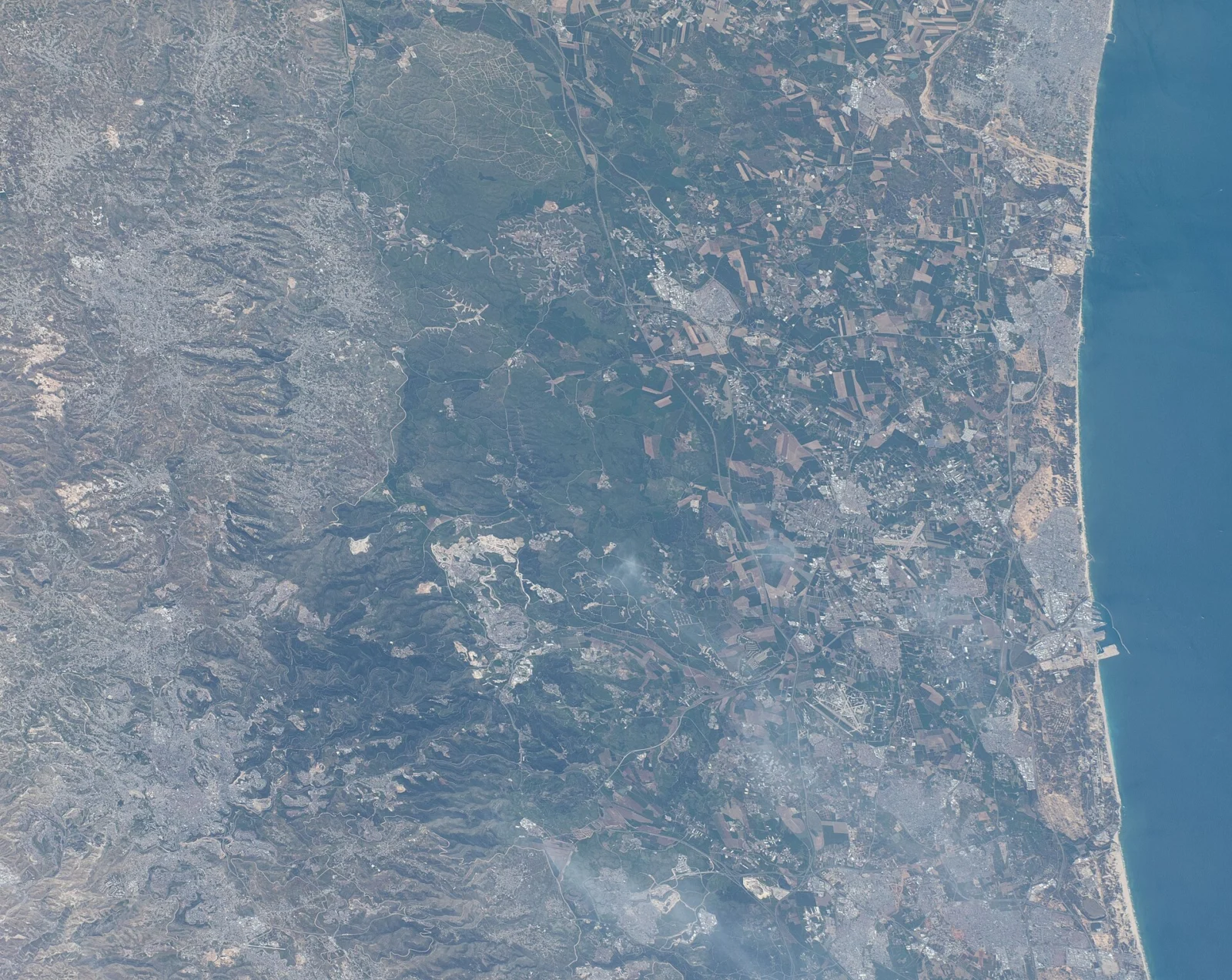
The Gaza Strip is a 365-square-kilometre Palestinian territory on the eastern coast of the Mediterranean, wedged between Israel and Egypt. Home to about two million people, it is one of the most densely populated places in the world, and much of it has been destroyed in the war that began in October 2023.
Where is the Gaza Strip?
The Strip lies along the Mediterranean, with Egypt to the south-west and Israel to the north and east. It has a 51-kilometre land border with Israel, an 11-kilometre border with Egypt near Rafah and 40 kilometres of coastline. The boundary with Egypt was set in 1906 between the Ottoman Empire and the British.
How big is it and what are its main towns?
The territory is 41 kilometres long and between 6 and 12 kilometres wide. English Wikipedia gives its area as 365 square kilometres, Turkish Wikipedia as 363. It is divided into five governorates: North Gaza, Gaza, Deir al-Balah, Khan Yunis and Rafah, which contain 25 municipalities. Gaza City is the largest city. The climate is hot and semi-arid, with most rain falling between November and February.
How many people live in Gaza?
Figures vary by source and year. According to data cited by Turkish Wikipedia, the population was 2,375,000 at the end of 2022. English Wikipedia cites an estimate of 2.1 million for the end of 2024, a 6 percent fall in one year because of the war, and about 2,050,000 for 2025. That means roughly 6,000 people per square kilometre. The population is very young: 43.5 percent are aged 14 or under, and the median age was 18 in 2014. Sunni Muslims make up 99.8 percent of residents, alongside a Christian community of 2,000 to 3,000.
Why are most residents refugees?
Most Gazans are Palestinians who fled or were expelled from what is now Israel during the 1948 war, and their descendants. The UN agency for Palestine refugees, UNRWA, says refugees account for two thirds of the population and lists 1,587,367 registered refugees in Gaza. UNRWA has worked there since 1950 and provides services in eight refugee camps: Beach (Shati), Bureij, Deir al-Balah, Jabalia, Khan Younis, Maghazi, Nuseirat and Rafah.
Who has ruled Gaza through history?
The area was under Ottoman rule from the 16th century and was part of British Mandatory Palestine from 1920 to 1948. After the 1948 war it came under Egyptian control. Israel occupied Gaza in 1956 during the Suez Crisis and withdrew in March 1957. It captured the territory again in June 1967 and built 21 settlements there. Under the Oslo Accords, most of the Strip was handed in 1994 to the Palestinian Authority led by Yasser Arafat. In 2005 Israel dismantled its settlements and pulled out its troops.
How did Hamas rule and the blockade begin?
Hamas won 74 of the 132 seats in the Palestinian Legislative Council in the 2006 election and took control of Gaza in June 2007 after fighting with Fatah. Israel and Egypt then closed their crossings, and the blockade became indefinite. A 2022 UN report put unemployment at 45 percent and poverty at 65 percent, with 80 percent of residents dependent on international aid.
How do people and goods get in?
Gaza’s links to the outside world run through land crossings, and Israel controls six of the seven. The best known are Erez (Beit Hanoun) in the north, leading into Israel; Kerem Shalom in the south, used for cargo; and Rafah, which opens into Egypt. Yasser Arafat International Airport opened in November 1998, closed after October 2000 and had its runway destroyed in January 2002. The Port of Gaza is also under blockade. Although Israel withdrew in 2005, Wikipedia notes that Gaza is still considered occupied territory under international law, and 157 UN member states recognise it as part of the State of Palestine.
What has happened since 2023 and who governs now?
After the Hamas-led attack of 7 October 2023, Israel launched a war in Gaza. Most of the population was displaced, and the global food security monitor IPC declared on 22 August 2025 that famine was under way. According to Gaza’s Health Ministry, the death toll has reached 74,695. A study published in The Lancet had estimated 64,260 deaths from traumatic injuries up to June 2024 alone.
A provisional ceasefire that began on 19 January 2025 ended on 18 March. The first phase of a US-led peace plan took effect in October 2025: the 20 living Israeli hostages were freed, about 2,000 Palestinian prisoners were released and the Israeli army withdrew from 47 percent of the Strip. The UN Security Council endorsed the plan on 17 November 2025, with Russia and China abstaining. In July 2026 Hamas dissolved its civilian administration and handed over to the National Committee for the Administration of Gaza. According to Wikipedia, more than half of the Strip remains under Israeli military control, while Hamas retains effective control of less than half.
Why it matters
Gaza is where the Israeli-Palestinian conflict is felt most intensely: two million people, most of them refugees and very young, live on a small strip of land whose entry and exit points are almost entirely controlled by others. Deaths continue despite the ceasefire, and shelter is becoming the main concern as winter approaches: Australia, Canada, Italy and the United Kingdom have said 150,000 tents are being held at the border. Who will govern the territory, when Israel will withdraw and how reconstruction will be carried out are questions on the agenda of almost every diplomatic meeting in the Middle East.
Source: Vikipedi (İngilizce), Gaza Strip, UNRWA, The Gaza Strip, Vikipedi (Türkçe), Gazze Şeridi · Image: Earth Science and Remote Sensing Unit, NASA Johnson Space Center, Public domain