
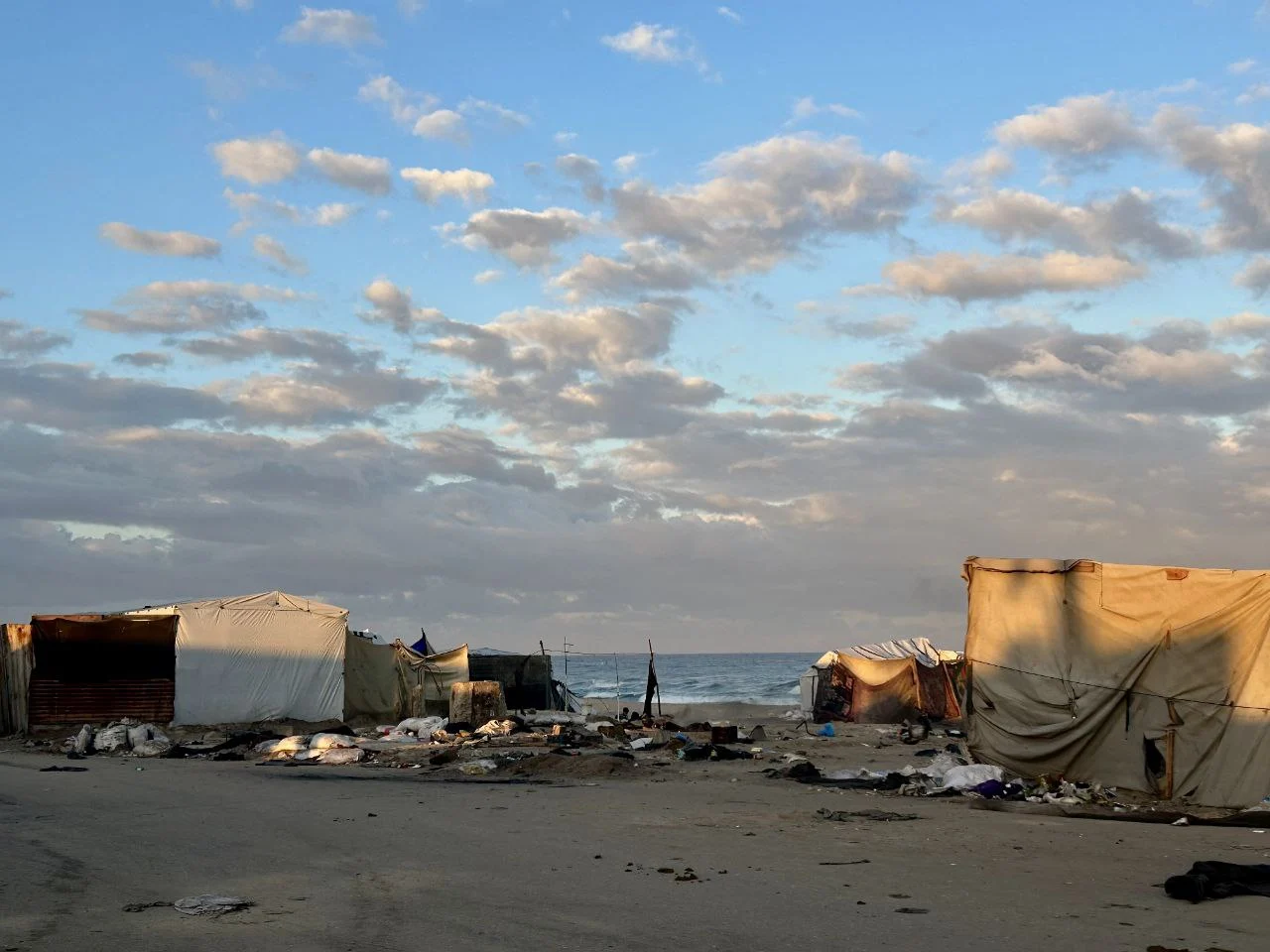
The International Organization for Migration (IOM) and the UN World Food Programme (WFP) warned on 17 November, in a joint statement issued from Geneva and Rome, that critical funding shortfalls and continued access restrictions are threatening humanitarian operations in Gaza as winter sets in. According to the agencies, more than 1.7 million people remain displaced, 1.4 million face acute hunger and 1.98 million need shelter assistance.
The agencies stressed that recent improvements in food security in Gaza remain fragile. They said the gains have been driven largely by humanitarian assistance rather than by any recovery of livelihoods, markets or local food systems, and that severe winter conditions could reverse them by damaging shelters and food supplies.
Since early November, at least 40,000 additional shelters have reportedly been damaged or destroyed. IOM said it and its partners are still delivering emergency shelter aid, but stocks are being depleted quickly. The agency needs 173 million US dollars for tents, tarpaulins, blankets and shelter-repair materials. More than half of Gaza’s 1,700 displacement sites are in flood-prone areas, with the population pushed into less than 40 per cent of the territory. Most sites need sandbags to reinforce shelters and pathways, and more than 40 per cent require drainage and ground-improvement work. A further 9 million dollars is sought for drainage channels, lighting and community heating points.
On the food side, two-thirds of the population continues to face extreme levels of hunger. Funding shortfalls have already forced WFP to scale back: hot meals are now provided every other day, and food parcels and cash assistance have also been cut. Flooding has destroyed household food supplies, while sewage contamination adds food-safety and health risks. Cooking gas and firewood are scarce and unaffordable, so many families burn rubbish to prepare food. Eighty per cent of the population is unemployed. WFP faces a shortfall of 436 million dollars over the next six months to reach 2 million people across Palestine. The latest Integrated Food Security Phase Classification (IPC) assessment found that as many as 1.9 million people, or 90 per cent of Gaza’s population, could face acute food insecurity by the end of 2026 if assistance is not sustained.
“Displaced families in Gaza need the basics to get through this winter: a shelter that won’t flood, blankets and clothing to protect children and fuel to cook warm meals,” said Karl Baker, IOM Regional Crisis Coordinator. Shaun Hughes, WFP Palestine Country Director, said families are facing “their first sleepless nights of a very long winter ahead” and warned that without immediate support to scale up the response, “we risk this becoming not only a shelter crisis but also a deeper food security crisis.”
The agencies noted that Kerem Shalom (Kerem Abu Salem) remains the only authorized crossing for humanitarian and commercial goods entering Gaza, which increases transport times and costs. Restrictions on the main north–south route add to the difficulty, while items essential for winter operations, including water pumps, spare parts, heaters, fuel, engine oil, heavy machinery and wood, continue to face delays or entry restrictions.
Background
A ceasefire has been in place in Gaza since October 2025, but winter weather is worsening the humanitarian picture. On 13 November the Health Ministry in Gaza announced that a nine-month-old baby had died from the cold, the first such case this winter. The Humanitarian Country Team in Palestine, which brings together UN agencies and aid groups, said the destruction caused by the latest rainstorm was “preventable”. On 16 November the foreign ministers of Australia, Canada, Italy and the United Kingdom said 150,000 tents were being held at the border and called for the crossings to be opened.
Why it matters
The statement shows, with figures, that the two UN agencies running shelter and food operations in Gaza are running short of resources at the very start of winter. Their central point is that the improvement achieved so far depends on aid: if assistance shrinks, or supplies cannot move in sufficient volume through a single crossing, hunger indicators could deteriorate again. A combined funding appeal of more than 600 million dollars, together with the demand for access, makes the steps taken by donor countries and Israel in the coming weeks decisive for how the winter unfolds.
Source: IOM ve WFP ortak açıklaması (ReliefWeb) · Image: Hla.bashbash, CC BY-SA 4.0