Claim The information in this story comes from a media outlet of one of the parties to the conflict (Mehr) and has not been independently verified.
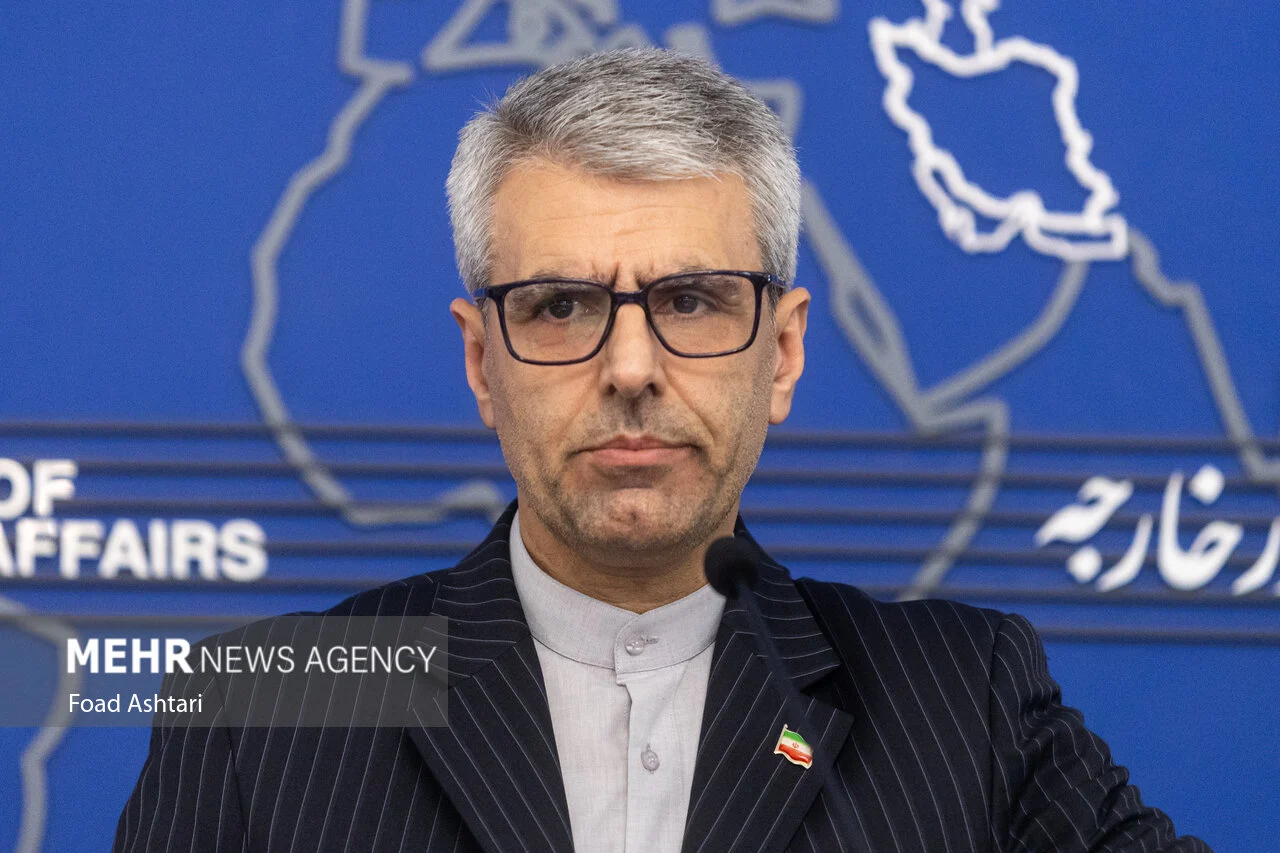
Iran remains a member of the Treaty on the Non-Proliferation of Nuclear Weapons (NPT) and is still bound by its obligations, Foreign Ministry spokesman Esmaeil Baqaei said on Monday. He repeated that the Strait of Hormuz could be reopened quickly only if the United States meets Iran’s conditions.
Speaking at his weekly news conference, as reported by Iran’s semi-official Mehr news agency, Baqaei noted that Iran has been a party to the NPT since 1970 and proposed a Middle East free of nuclear weapons in 1974. He also referred to the religious edict by Iran’s previous leader banning the production of nuclear weapons, and said one reason for joining the treaty was to exercise the right to peaceful nuclear energy.
Asked about a domestic debate on leaving the treaty, Baqaei said Tehran respected the discussion but that no decision had been communicated to the Foreign Ministry. He accused the United States and its backers of distorting the treaty’s purpose and said member states with nuclear arsenals should explain why they hold them.
On Hormuz, Baqaei said Foreign Minister Abbas Araghchi’s remark that the strait could be opened within two hours should be read carefully. If Washington meets Iran’s conditions, he said, the strait could reopen in a short time, but that does not erase the complexity of the issue. He described Iran’s seven conditions as legitimate rights of the Iranian people rather than extraordinary demands or preconditions.
Baqaei also addressed Armenia’s launch of the project known as the “Trump route”, saying Yerevan had assured Tehran that no military or security forces would be deployed near Iran’s border. “There is good trust between the two countries, but we do not trust third parties,” he said. He announced that the Economic Cooperation Organization (ECO) leaders’ summit will be held in Tehran on 3-4 December, mostly at the level of heads of state and government. Asked about Pentagon reports on how Iran might respond to a possible attack, he said: “The best scenario is for the US to leave us alone.” There was no immediate US response to his remarks.
Background
Amid the ongoing war with the United States and Israel, Iran is restricting passage through the Strait of Hormuz and has tied its reopening to a seven-point list of conditions. Araghchi made a similar statement at the weekend. Some voices inside Iran have called for leaving the NPT after the war, but Tehran has not announced any formal decision to withdraw.
Source: Mehr · Image: Foad Ashtari, CC BY 4.0