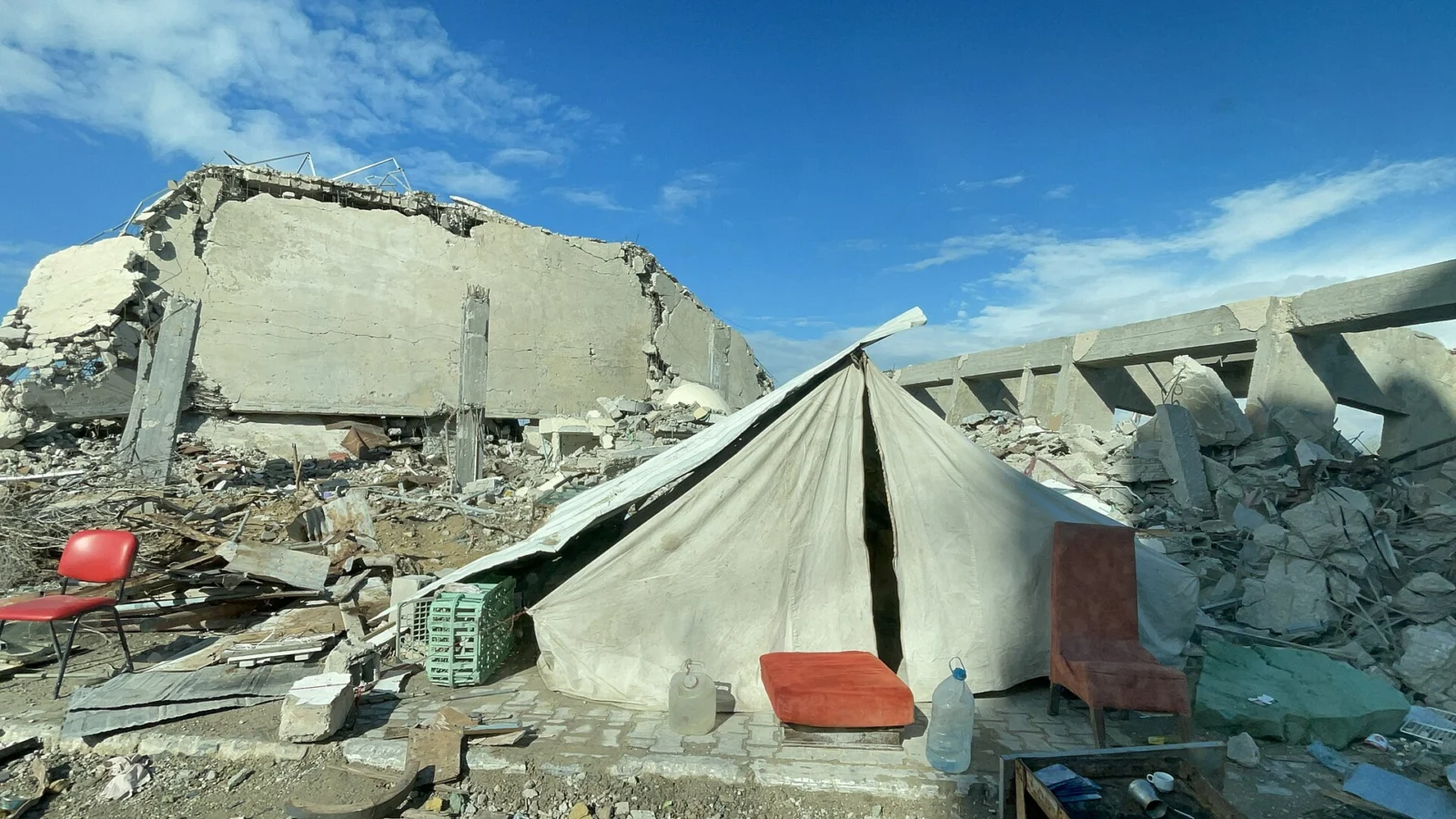
The International Committee of the Red Cross (ICRC) has warned that displaced Palestinians in the Gaza Strip face a stark choice as winter approaches: stay in worn-out tents that offer little protection from rain, or shelter in damaged buildings that could collapse. The organisation said the territory’s fourth winter is expected to bring flooding and a high risk of disease.
Speaking on Friday, ICRC spokeswoman Amani al-Nawouq said that for many families, finding adequate shelter means facing impossible choices. “No one should have to make such a decision,” she said, adding that heavy rainfall and flooding are expected to make conditions extremely harsh, with streets at risk of turning into rivers and tents being swept away.
According to a report published on Thursday by the UN Office for the Coordination of Humanitarian Affairs (OCHA), around 1.36 million people, or 65% of Gaza’s population, are living in tents or other temporary shelters. Heavy rain on 6 November flooded tents, caused war-damaged buildings to collapse and damaged humanitarian facilities, the UN said. On 17 November, the International Organization for Migration and the World Food Programme reported that at least 40,000 more shelters had been damaged or destroyed since the start of the month. More than half of Gaza’s roughly 1,700 displacement sites lie in flood-prone areas.
Al-Nawouq said flooding is also a major public health threat. Gaza’s sewage system has stopped functioning entirely, and large parts of the water network and most health facilities have been damaged. The World Health Organization recorded 692 suspected meningitis cases in Gaza between 1 October and 23 November, most of them among infants under one year old.
Only 35% of the $283 million needed for minimum winter shelter requirements has been funded, according to the UN. Available stocks cover less than 20% of needs for blankets, mattresses and solar lamps, and less than 1% of winter clothing needs. Al-Nawouq said restrictions on materials needed for durable housing and infrastructure repairs make it difficult for people to get through the winter in health and dignity.
Background
A ceasefire has been in place in Gaza since 10 October 2025 and provides for increased aid flows, but Israel continues to restrict the entry of humanitarian aid. Gaza’s Health Ministry says ceasefire violations had killed 1,705 people and injured 6,163 as of Thursday. Palestinian authorities put the total death toll since October 2023 at 74,772, with 176,298 injured, and around 90% of Gaza’s infrastructure has been damaged or destroyed. On 11 November, UN humanitarian chief Tom Fletcher called for winter supplies to be allowed in without delay.
Source: Middle East Monitor · Image: Jaber Jehad Badwan, CC BY-SA 4.0