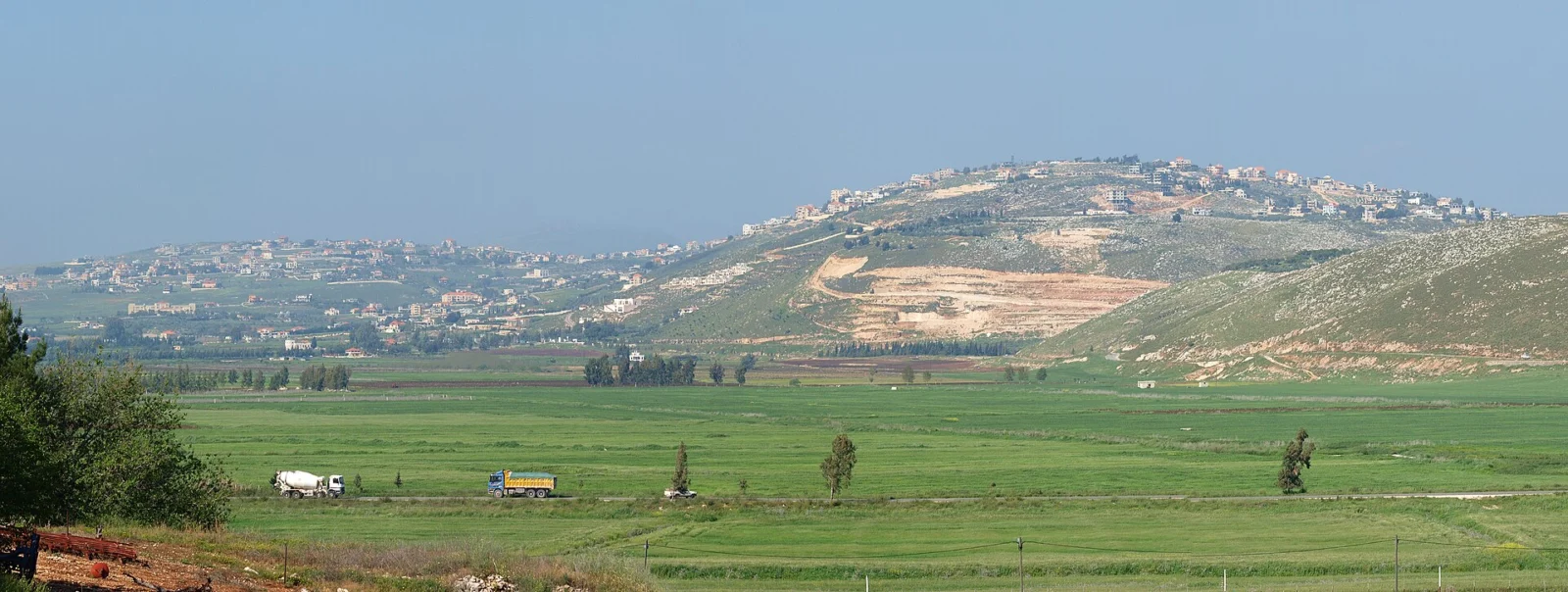
The Israeli army carried out a series of attacks on towns in southern Lebanon on Saturday, 21 November, using drones, artillery and machine-gun fire, Lebanon’s state-run National News Agency (NNA) reported. The attacks spread across the Nabatieh, Bint Jbeil and Marjayoun districts, and olive trees were uprooted on a hill in Khiam.
According to NNA, an Israeli drone exploded on the roof of a house in the Deir neighbourhood of Nabatieh al-Fawqa. Early on Saturday, a second drone exploded near the cooperative building in the town of Shoukin, also in the Nabatieh district. The report did not say whether anyone was killed or wounded in the blasts.
In the same district, Israeli military vehicles were seen moving through the town of Zawtar al-Sharqiya while machine guns were fired into residential neighbourhoods. The outskirts of Mayfadoun, Zawtar and Nabatieh al-Fawqa came under intermittent artillery shelling overnight, and the Israeli army set off an explosion between Zawtar and Kfartabnit, the agency said.
In the Bint Jbeil district, Israeli forces fired machine guns towards the town of Barashit early on Saturday as military vehicles moved along its outskirts. In the Marjayoun district, Israeli forces uprooted olive trees overnight on Al-Shariqa Hill in the town of Khiam, and military vehicles could be heard in the surrounding area.
The report carried no comment from the Israeli army on the attacks, and the details provided by NNA have not been independently verified.
Background
Israeli attacks on southern Lebanon have continued since 2 March, despite a US-brokered framework agreement reached between Lebanon and Israel in June. The understanding provides for security arrangements, including the withdrawal of Israeli forces from areas they occupy and the deployment of the Lebanese army there to take over security responsibilities.
The strikes have been relentless in recent days: on 20 November, four districts, including Nabatieh and Bint Jbeil, were hit by air, artillery and drone attacks. The UN peacekeeping force in Lebanon, UNIFIL, has documented that the Israeli army fired 2,840 artillery shells into southern Lebanon in October, carried out 90 air strikes and violated Lebanese airspace 870 times.
Why it matters
The June framework agreement was meant to bring lasting calm to the border area through an Israeli withdrawal and the deployment of the Lebanese army in the south. Daily drone blasts, artillery fire and military movements show that the deal is not being implemented on the ground, and that civilians in border towns still live under constant threat. Actions targeting farmland, such as uprooting olive trees, also hit the livelihoods of local residents directly.
Source: Middle East Monitor (NNA'ya dayanarak) · Image: Staselnik, CC BY-SA 3.0