NASA has completed a major design review for Space Reactor-1 (SR-1) Freedom, which is set to become the first fission-powered spacecraft to travel beyond Earth orbit. Targeted for launch in late 2028, it will demonstrate nuclear electric propulsion in deep space for the first time.
According to a NASA statement on 24 November, experts from NASA, the U.S. Department of Energy and industry met at the agency’s Glenn Research Center in Cleveland in October. Decisions taken there moved the mission from an early concept to a defined spacecraft design. “This mission will be the first freight run on the railroad of the solar system, and the decisions we’re making now are laying the tracks for every nuclear-powered spacecraft that follows,” said Steve Sinacore, SR-1 Freedom program director.
SR-1 will use both nuclear and solar power to deliver SkyFall, a capsule carrying three next-generation helicopters, to Mars. The helicopters are to study Martian geology and climate history, explore new terrain and search for signs of subsurface ice. NASA Administrator Jared Isaacman first presented the concept in March at the agency’s Ignition event.
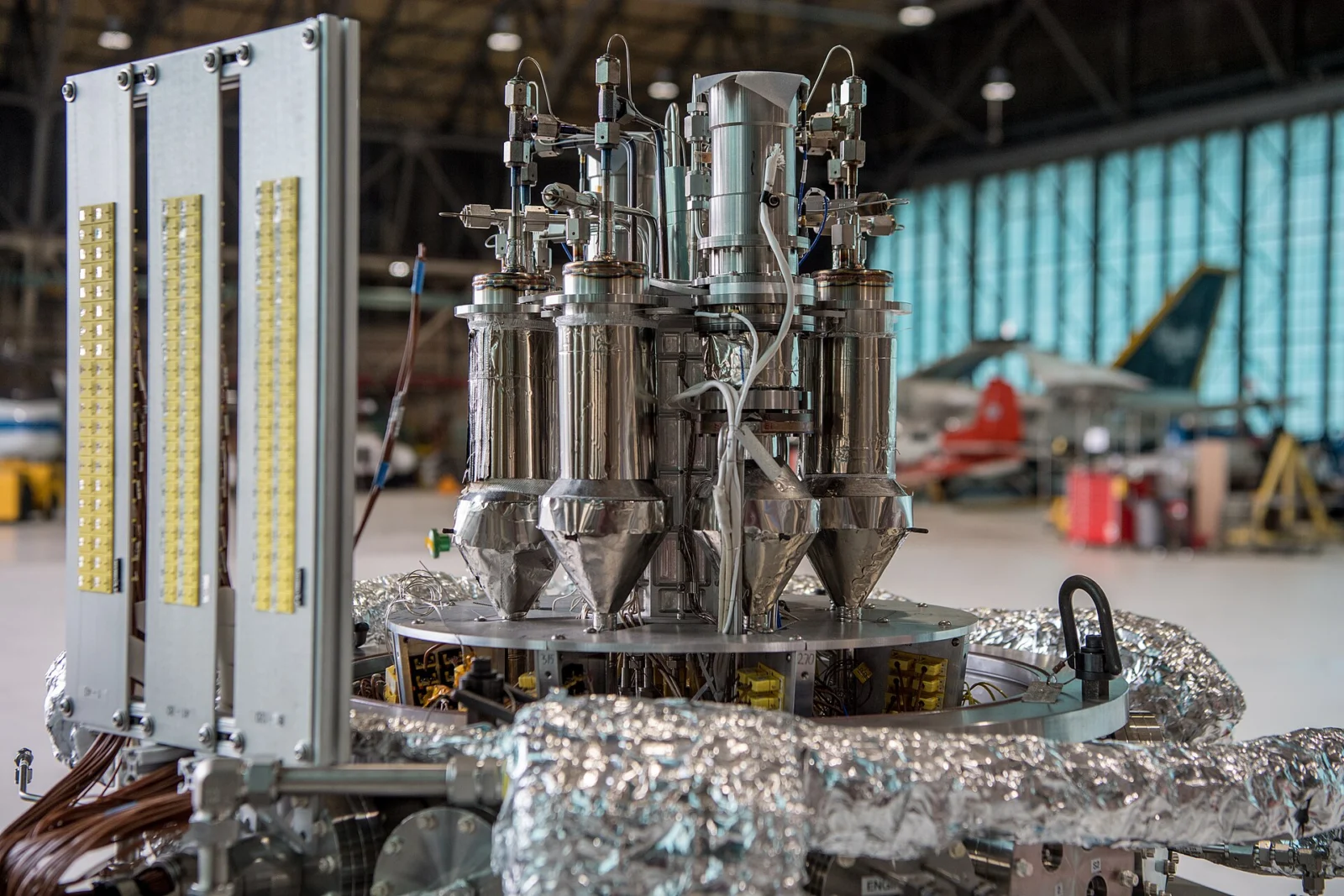
A key change is a shorter boom separating the reactor from the spacecraft’s main body, the Power and Propulsion Element, which will cut weight and simplify assembly. Improved shielding and design will let the reactor sit closer to the rest of the craft while keeping the radiation protection needed for its electronics and for SkyFall. Teams are still evaluating the number of radiator panels, the output power of the nuclear power module and how long the reactor will run. The spacecraft will use larger X-band antenna dishes to send data back to Earth.
NASA awarded a $39.3 million contract to Johns Hopkins University’s Applied Physics Laboratory to develop the system that removes excess heat from the nuclear power module, with Advanced Cooling Technologies supplying heat pipe and composite radiator technology. Under the mission plan, the spacecraft will activate its reactor after leaving Earth orbit and gradually raise power, run it for an initial period while sending data, then shut it down and cruise to Mars on solar arrays. The reactor will be restarted after SkyFall is delivered to Martian orbit.
Background
NASA says future spacecraft and surface operations will need far more power than current systems provide, particularly where sunlight is limited or unavailable. The agency says SR-1 will show how fission power can enable long-duration missions and pave the way for reliable surface power for its planned Moon Base. The craft is being built to meet the next Mars launch window.
Source: NASA · Image: NASA Glenn, Public domain