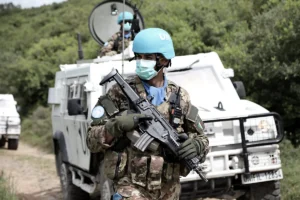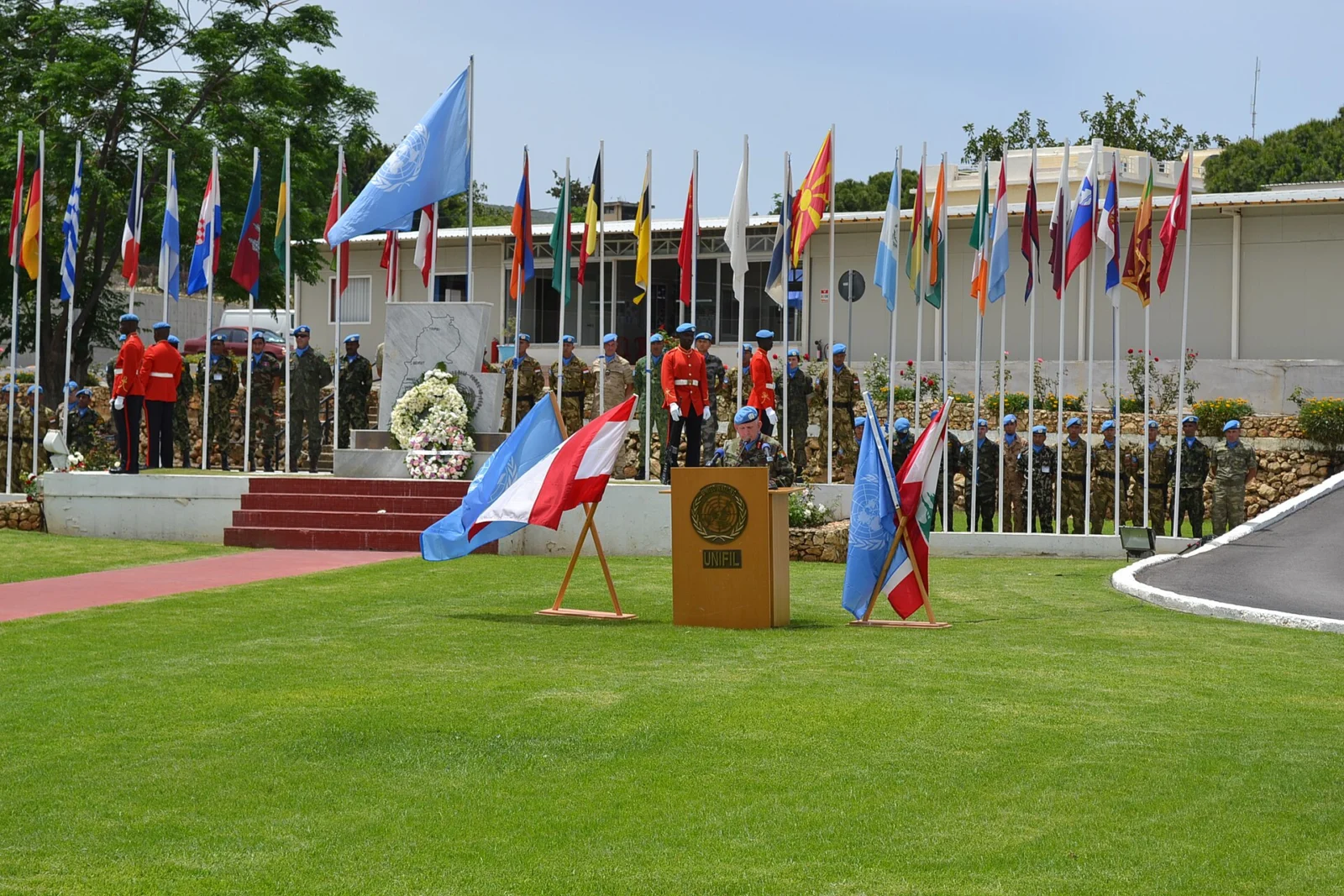
Lebanese President Joseph Aoun said Lebanon has proposed that the UN Interim Force in Lebanon (UNIFIL) continue carrying out its duties during its withdrawal period, in order to prevent a security vacuum in the south and allow enough time to agree on a replacement force.
Aoun made the remarks on Friday during a meeting with Jens Plötner, State Secretary at Germany’s Federal Ministry of Defence. He stressed that UN Security Council Resolution 1701 should provide the legal framework for any force that replaces UNIFIL.
The president said the “Framework Agreement” provides for extending the authority of the Lebanese army, which still needs continued international military support. He added that residents of southern Lebanon want international forces to stay. “Southern residents have expressed their commitment to the Lebanese state, their attachment to their homeland and their confidence in state institutions,” Aoun said, calling for residents to be given the means to sustain their livelihoods and remain on their land.
Plötner said the reconstruction of southern Lebanon depended on steady progress towards stability. He described Aoun as a unifying figure across Lebanese society and an ideal partner in achieving peace, and said Germany would contribute through a European support mission that would provide the legal framework for continued bilateral cooperation and German support for the Lebanese Navy.
Background
On 28 August 2025, the UN Security Council adopted Resolution 2790, extending UNIFIL’s mandate for the final time until 31 December 2026, with a gradual withdrawal planned throughout 2027. Deployed in southern Lebanon since 1978, UNIFIL had its mandate significantly expanded under Resolution 1701 in 2006. It monitors the cessation of hostilities and the Blue Line between Lebanon and Israel, reports violations and supports the deployment of the Lebanese army south of the Litani River. Lebanon and Israel signed the US-mediated Framework Agreement last June, providing for a gradual Israeli withdrawal alongside the deployment of the Lebanese army, but Israel still holds parts of southern Lebanon.
Source: Middle East Monitor · Image: Irish Defence Forces from Ireland, CC BY 2.0