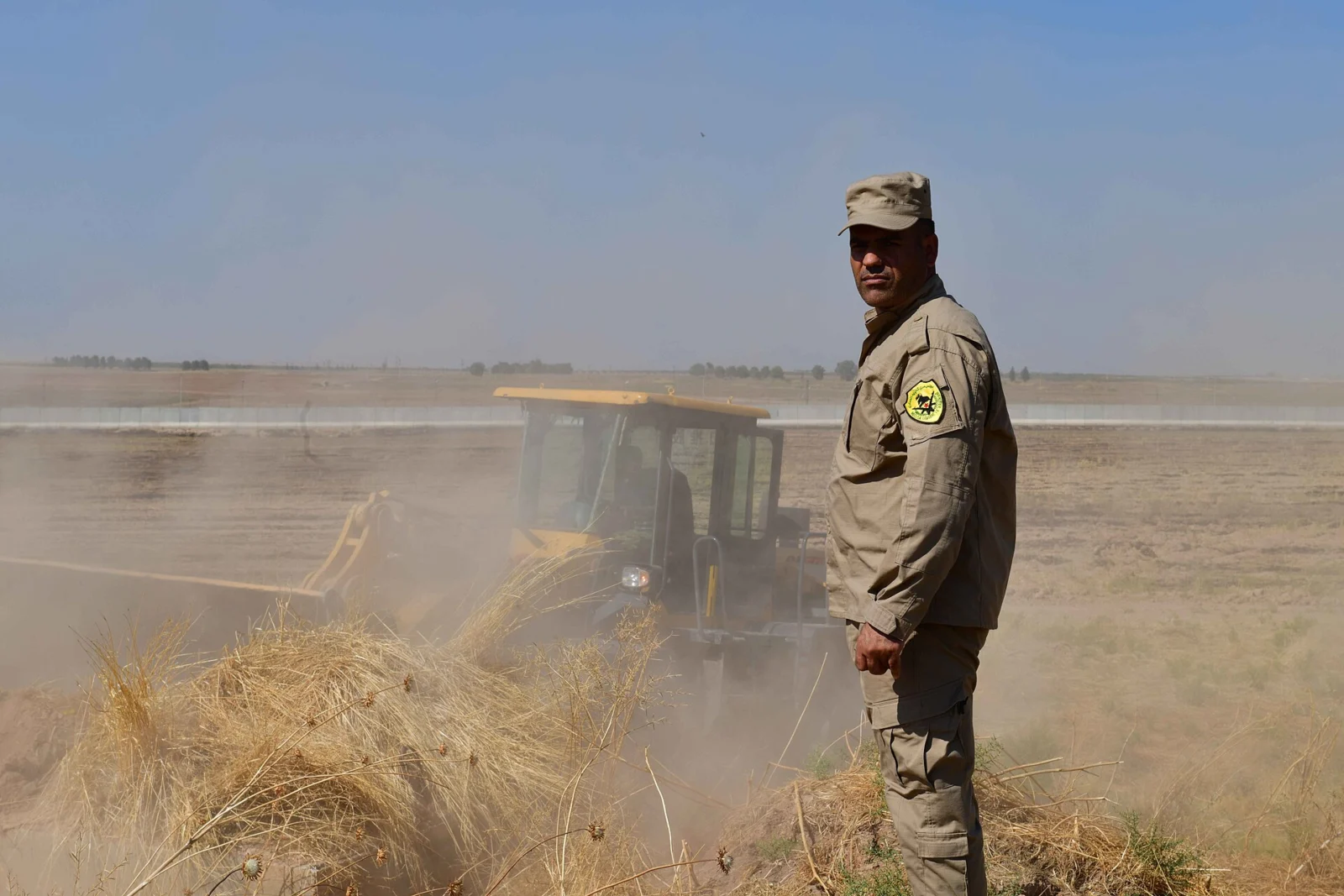
The Syrian Democratic Forces (SDF) were an armed alliance founded in 2015 to fight the Islamic State, led by the Kurdish YPG and made up of Arab, Assyrian/Syriac, Turkmen and Armenian groups, and served as the military force of the autonomous administration in northeastern Syria. After handing most of its territory to Damascus following a government offensive in January 2026, the SDF announced on 25 August 2026 that it had dissolved and joined the Syrian army.
When was the SDF founded, and by whom?
The SDF’s creation was announced in al-Hasakah in October 2015. Sources differ by a day or two: English Wikipedia gives 10 October as the founding date and 11 October for the press conference, while Turkish Wikipedia says the founding declaration was signed by 13 groups on 12 October 2015. The founders included the Kurdish People’s Protection Units (YPG) and Women’s Protection Units (YPJ), the Syriac Military Council, the al-Sanadid Forces of the Arab Shammar tribe and several Free Syrian Army factions. On 10 December of the same year the Syrian Democratic Council was set up as its political wing. The alliance’s stated goal was a secular, democratic and federal Syria.
What was the relationship between the SDF and the YPG?
The YPG provided the SDF’s military leadership and backbone. Türkiye regarded the YPG as the Syrian extension of the PKK and designated it a terrorist organisation; Qatar also listed the YPG as a terrorist group. In 2017 Raymond Thomas, then head of US Special Operations Command, said the group had been given a new name containing the word “democratic” because of Turkish concerns. Its make-up changed over time: the US Department of Defense reported an Arab majority in the SDF in 2017, and a 2019 Wilson Center survey of 391 fighters found 68.7% of respondents were Arab and 17.2% Kurdish.
Which areas did the SDF control?
The SDF was the official military force of the Democratic Autonomous Administration of North and East Syria, known to Kurds as Rojava. At different times the administration included the sub-regions of Afrin, Jazira, Euphrates, Raqqa, Tabqa, Manbij and Deir ez-Zor. Its main cities were Qamishli, al-Hasakah, Kobani and Raqqa, and the area also held the Tabqa Dam, Syria’s largest, and the oil fields of the Jazira region. According to English Wikipedia, the SDF controlled about a quarter of Syria’s territory in 2022. An estimate from January 2018 put the population living under the administration at around 2 million.
What role did it play in the war against the Islamic State?
The SDF was the US-led coalition’s main ground partner in Syria. By 2019 it had driven the Islamic State out of al-Hawl, Shaddadi, the Tishrin Dam, Manbij, Tabqa and Raqqa, the group’s de facto capital. On 23 March 2019 it announced the capture of Baghuz, the last Islamic State territory in Syria. The Pentagon confirmed in October 2015 that it had dropped 45 tons of arms and ammunition over SDF territory, and in May 2017 direct supplies of heavy weapons to the YPG were approved. After the fighting ended, tens of thousands of Islamic State suspects and relatives were held in SDF camps and detention sites; in April 2024 Amnesty International reported that more than 56,000 people were held indefinitely in that system and described serious abuses.
What happened between Türkiye and the SDF?
Türkiye saw a YPG-held strip along its border as a security threat and carried out a series of operations in the region. Operation Euphrates Shield in August 2016 prevented the Kurdish-held cantons from linking up, and Operation Olive Branch in 2018 took Afrin out of SDF hands. In Operation Peace Spring in October 2019, Ras al-Ayn and Tell Abyad came under the control of Türkiye and the Turkish-backed Syrian National Army; the withdrawal of US troops from the border shortly before the operation drew international criticism.
What changed after Assad fell?
After the Assad government collapsed in December 2024, SDF commander Mazloum Abdi met Syrian President Ahmed al-Sharaa on 10 March 2025 and agreed that the SDF would join state institutions. Implementation stalled, both sides accused each other of obstruction and sporadic clashes followed. In January 2026 the Syrian army launched an offensive, first against the Sheikh Maqsood and Ashrafiyah districts of Aleppo and then against SDF areas in Raqqa and Deir ez-Zor. During the offensive, Arab SDF units in Arab-majority cities such as Raqqa defected en masse. On 18 January a 14-point ceasefire brokered by US envoy Tom Barrack was announced: Raqqa and Deir ez-Zor were handed to the government, along with the camps holding Islamic State members, the border crossings and the oil fields. According to English Wikipedia, up to 80% of the administration’s territory passed to the government in this process, leaving it in de facto control only of al-Hasakah.
How was the SDF dissolved, and where do things stand now?
On 20 August 2026 in Qamishli, Mazloum Abdi said the integration of military, security and administrative institutions into the Syrian state had been completed. At a press conference in Damascus on 25 August he announced that the SDF had been dissolved and had joined the Syrian army. Under the arrangement reached, most SDF members were to be organised into three brigades attached to the army’s 60th Division, with a brigade from Kobani joining a division in Aleppo. According to the sources, the women’s units of the YPJ and some pro-SDF Arab units were left out of the arrangement. In his mid-November briefing to the Security Council, Claudio Cordone, the UN’s Deputy Special Envoy for Syria, said implementation of the agreement in the northeast was continuing and that former SDF members had been assigned to security duties.
Source: Vikipedi (İngilizce), Syrian Democratic Forces, Vikipedi (İngilizce), Democratic Autonomous Administration of North and East Syria, Vikipedi (Türkçe), Suriye Demokratik Güçleri · Image: Sgt. 1st Class Jason Kriess, Public domain