The Bab el-Mandeb is a narrow strait between Yemen on the Arabian Peninsula and Djibouti and Eritrea in the Horn of Africa, linking the Red Sea to the Gulf of Aden and the Indian Ocean. Because almost every ship heading to or from the Suez Canal passes through it, it is one of the world’s most important maritime chokepoints.
Where is the Bab el-Mandeb?
The strait lies at the southern end of the Red Sea and is bordered by Yemen, Djibouti and Eritrea. It is about 50 km long, with an average depth of 186 metres. At its narrowest, between Ras Menheli in Yemen and Ras Siyyan in Djibouti, it is about 26 km (14 nautical miles) wide. Oil and gas cargoes moving from the Gulf to the Suez Canal pass through both the Bab el-Mandeb and the Strait of Hormuz.
What does the name mean?
In Arabic, “bab” means gate and “mandab” means grief, so the name is usually rendered as the “Gate of Grief”. According to Wikipedia, it refers either to the dangers of navigating the strait or to an Arab legend about people drowned in an earthquake that separated Arabia from the Horn of Africa. Over the last 100,000 years, changes in sea level alternately opened and closed the strait, which may have been a route for the earliest migrations of modern humans out of Africa.
Which islands lie in the strait?
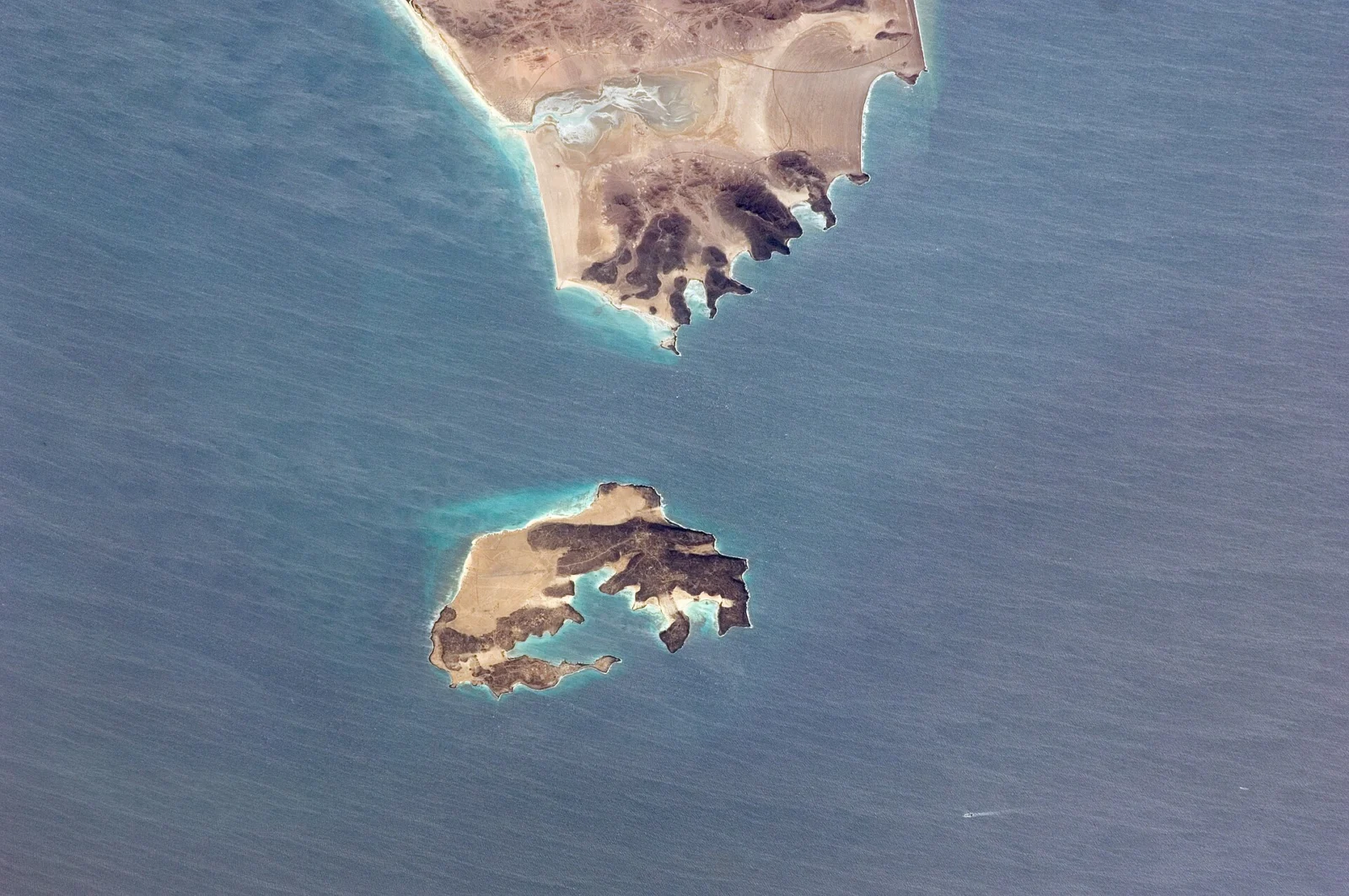
Yemen’s Perim Island splits the strait in two. The eastern channel, Bab Iskender (Alexander’s Strait), is about 5.4 km wide and 29 metres deep, while the western Dact-el-Mayun is about 20 km wide and 310 metres deep, according to measurements in the 1878 edition of Encyclopaedia Britannica. Tanker traffic is limited to two channels, each about 2 miles wide, for inbound and outbound shipments. Other islands include Djibouti’s Seven Brothers, the Doumeira Islands between Djibouti and Eritrea, and Yemen’s Hanish Islands.
What is the strait’s history?
The opening of the Suez Canal in 1869 turned the Bab el-Mandeb into a strategic chokepoint. The British East India Company seized Perim in 1799; Britain asserted ownership in 1857 and built a lighthouse there in 1861. The island served as a coaling station for steamships until 1935. British presence ended in 1967, when Perim became part of South Yemen. A “Bridge of the Horns” linking Yemen and Djibouti was announced in 2008, but the project was delayed in 2010 and has not advanced since.
How much oil passes through it?
Wikipedia puts flows at an estimated 3.3 million barrels per day in 2006 and 5.1 million in 2014; in 2017 the strait carried about 9% of seaborne-traded petroleum. Figures from the US Energy Information Administration (EIA), updated in March 2026, show total oil flows of 8 million barrels per day in 2022 and 9.3 million in 2023, falling to 4.1 million in 2024 and 4.2 million in the first half of 2025, roughly half the 2023 level. LNG transits dropped from 4.2 billion cubic feet per day in 2023 to zero in 2024.
How did the Red Sea crisis affect shipping?
After the Gaza war began, the Houthis started attacking commercial ships in the Red Sea. Wikipedia dates the start of the crisis to 19 October 2023, while the EIA says the attacks began in November 2023. According to Wikipedia, at least 30 ships were damaged, two were hijacked, and four cargo ships, one UK-owned and three Greek-owned, were sunk. The US-led Operation Prosperity Guardian began on 18 December 2023 and the EU’s Operation Aspides on 19 February 2024. Many ships rerouted around the Cape of Good Hope: EIA data show oil flows there rising from 6.2 million barrels per day in 2023 to 9.3 million in 2024. The EIA says losing the Suez route adds about 15 days to a voyage from the Arabian Sea to Europe.
Who has military bases near the strait?
Djibouti hosts most foreign bases on the strait. The United States took over Camp Lemonnier from France in 2002, and China, Japan and Italy also have military bases there. France has committed to Djibouti’s security since its independence in 1977. Saudi Arabia has set up a logistics hub in the country, and Russia maintains military ties with Eritrea. Legally, the strait is an international strait where transit passage applies under the UN Convention on the Law of the Sea; Eritrea is not a party to the convention.
Why it matters
The Bab el-Mandeb is the southern gate of the shortest sea route between Asia and Europe, so any security problem there feeds into oil and freight prices, Suez Canal revenue and humanitarian deliveries to the region. According to Wikipedia, the Houthis halted attacks on shipping in October 2025 after the Gaza peace plan, but during the 2026 Iran war they resumed attacks on Israel on 28 March and on Saudi Arabia on 13 July, and on 20 July 2026 announced a blockade of Saudi ships transiting the strait. Fighting in Yemen has also moved closer to the strait’s shores, as the Houthis advanced towards Aden and Saudi Arabia’s King Salman replaced the coalition commander. Alongside Hormuz, the Bab el-Mandeb remains one of the places where the region’s wars touch the global economy most directly.
Source: Vikipedi (İngilizce), Bab al-Mandab Strait, Vikipedi (İngilizce), Red Sea crisis, ABD Enerji Bilgi İdaresi (EIA), World Oil Transit Chokepoints · Image: NASA, Public domain