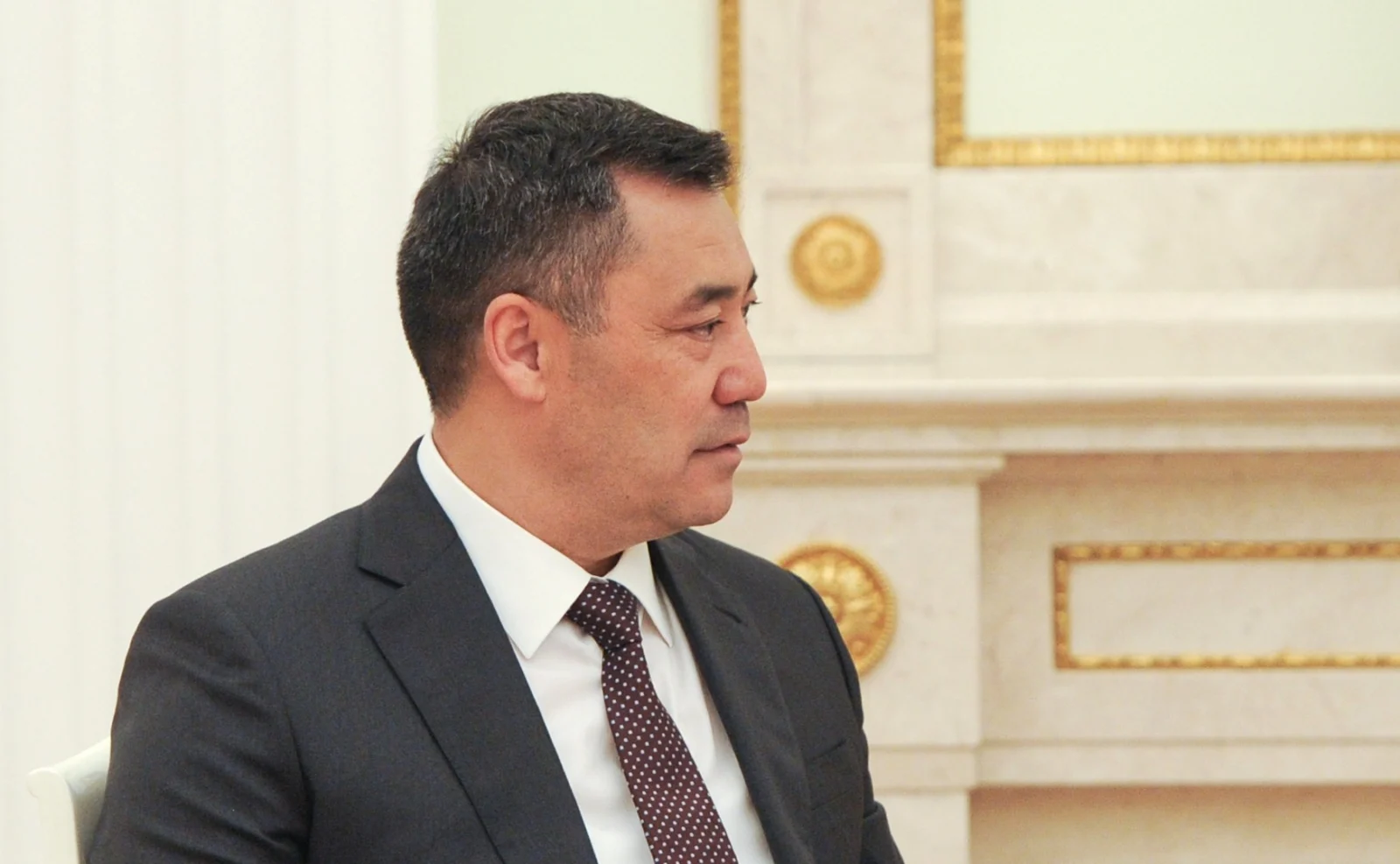
Public meetings held by Kyrgyz President Sadyr Japarov in all seven of the country’s provinces in October and November turned from formal events into appeals for justice. Writing for Global Voices, Nurbek Bekmurzaev says the meetings exposed deep distrust in the country’s judicial and law enforcement bodies.
According to the author, the most common complaint concerned the work of police and courts. At a meeting in the southwestern Batken province on 11 October, a woman said her former husband had accused her of forging their marriage certificate and framed her for crimes she did not commit to avoid dividing assets after their divorce. She alleged he had bribed the police and courts. Japarov condemned the former husband and said he should have left everything to her and their children.
On 26 October, at a meeting in the Kazarman district of Jalalabad province, a man said his father had been jailed for allegedly offering a 2,000 som (about $23) bribe to a police officer during a traffic stop. A district court had acquitted the father, but after an appeal by prosecutors a provincial court found him guilty and sentenced him to two years in prison. Angered to learn that the provincial court took seven months to reach its verdict, Japarov asked whether the traffic officer and the prosecutor were in league, adding: “to have someone imprisoned over two thousand soms — that’s a disgrace.” The man was released shortly after Japarov’s intervention and a subsequent pardon.
Bekmurzaev says similar complaints came up repeatedly at meetings in other provinces. Japarov, for his part, concluded after the meetings that distrust of the courts had fallen, but admitted that problems in the judiciary remain and must be solved quickly.
Background
Japarov came to power in October 2020. In the World Justice Project’s Rule of Law Index, Kyrgyzstan ranked 99th out of 144 countries in 2026, down from 87th in 2020. The article is part of a November 2026 Global Voices series on “justice as infrastructure” produced with the Hague-based HiiL.
Source: Global Voices (Nurbek Bekmurzaev) · Image: Presidential Executive Office of Russia, CC BY 4.0