An emergency vaccination round against a polio outbreak in Syria’s eastern Deir ez-Zor governorate reached 54,382 children in November, according to the World Health Organization’s first situation report, dated 22 November. The next campaign is planned for 30 November in six districts of the governorate.
The report says Syria’s Ministry of Health mounted a swift response, in coordination with partners, after initial reports in October of children with acute flaccid paralysis in Deir ez-Zor. The ministry is leading the response, with WHO, UNICEF and other partners supporting intensified surveillance and vaccination.
The first round in October reached 34,720 children. The November round reached 54,382, or 111% of the target of 49,000. WHO attributes the high coverage to population movement and says more work is needed to determine the target population for future rounds. World Vision and the International Rescue Committee funded the first two rounds, while the Global Polio Eradication Initiative (GPEI) is providing technical and financial support.
The 30 November round will combine vaccination with child nutrition assessments, checks of chlorine levels in drinking water and chlorine distribution. An expanded campaign is to follow in December. The ministry’s Incident Management Team meets weekly at its Emergency Operations Centre, and Syria’s remaining 13 governorates have been advised to step up surveillance and preparedness.
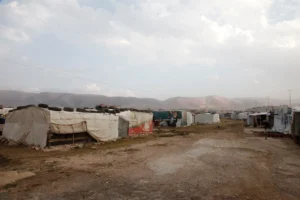
The report warns that the risk of further spread within Syria and to neighbouring countries, including Iraq, remains a concern because of uneven vaccination coverage and immunity gaps, particularly among displaced, mobile and underserved populations.
Background
According to WHO, conflict, displacement, interrupted immunization and population movement have created immunity gaps in Syria. In February, an unrelated vaccine-derived type 1 poliovirus (VDPV1) was detected in wastewater in the same area. WHO says cross-border coordination with Iraq is particularly important, given population movements and the history of wild poliovirus transmission across that border in 2013.
Source: DSÖ – ReliefWeb · Image: Brejnev (WP user), Chadi Samaan (author), CC BY-SA 3.0